Developing counting skills Addition Worksheets for Ages 4-9
3 filtered results
-
From - To
Our "Developing Counting Skills: Addition Worksheets for Ages 4-9" are perfect for young learners taking their first steps in math. These printable worksheets are designed to make counting and addition engaging and accessible. Through colorful images and fun activities, children gradually build a solid foundation in basic math skills, including counting objects, solving simple addition problems, and recognizing number patterns. The worksheets cater to different skill levels, ensuring a tailored learning experience that grows with your child. With a focus on interactive learning, our resources aim to boost confidence and enjoyment in math from an early age.
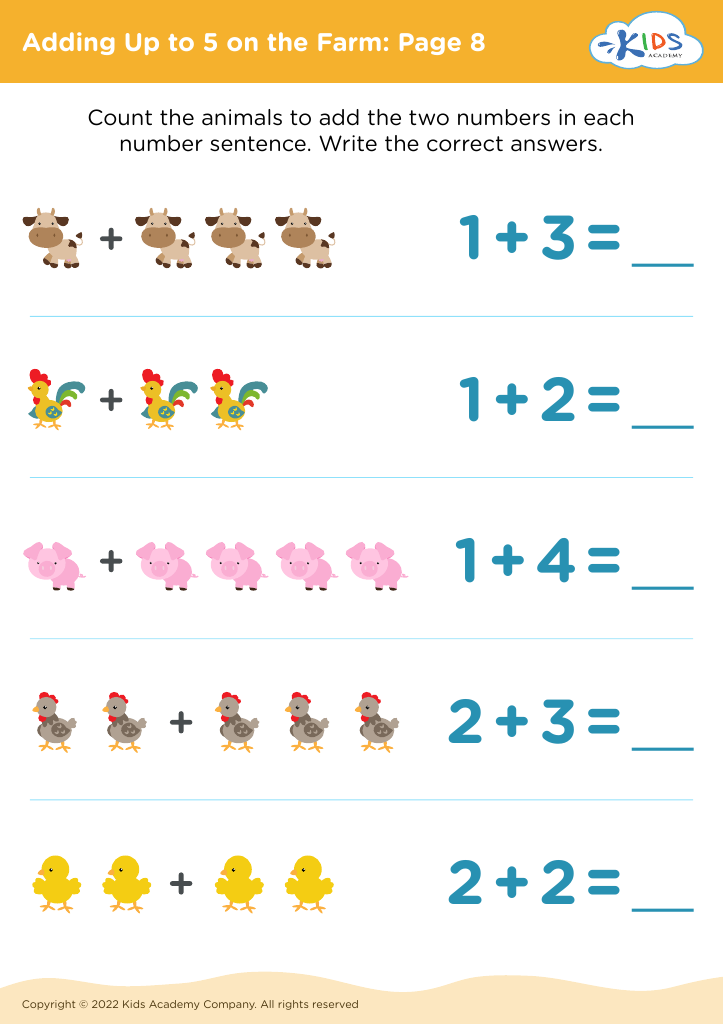
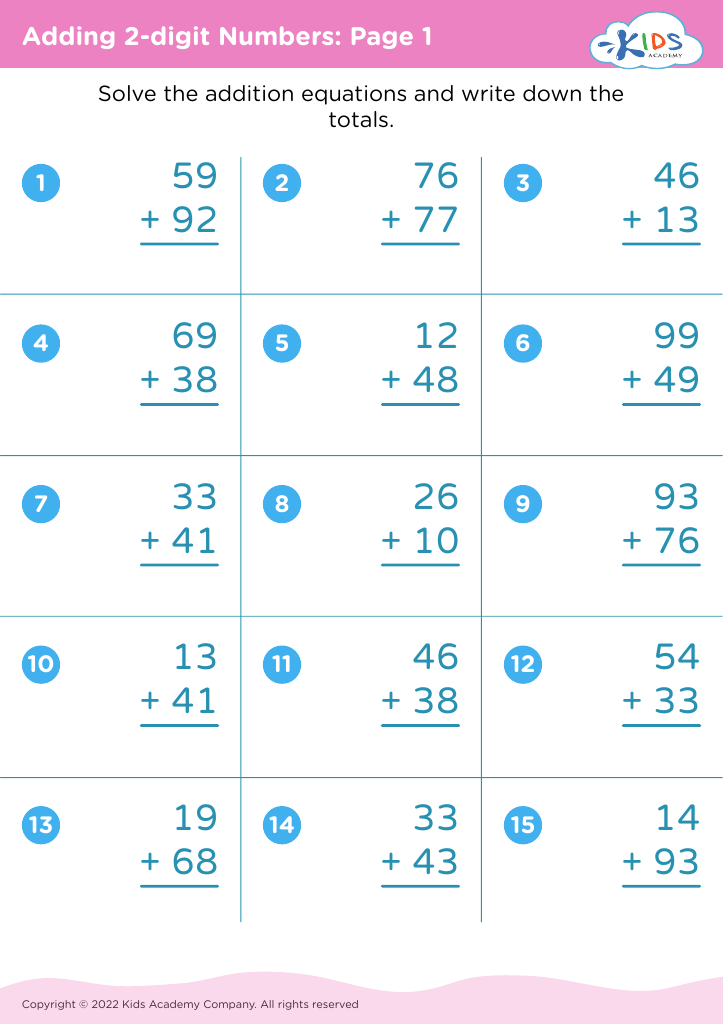
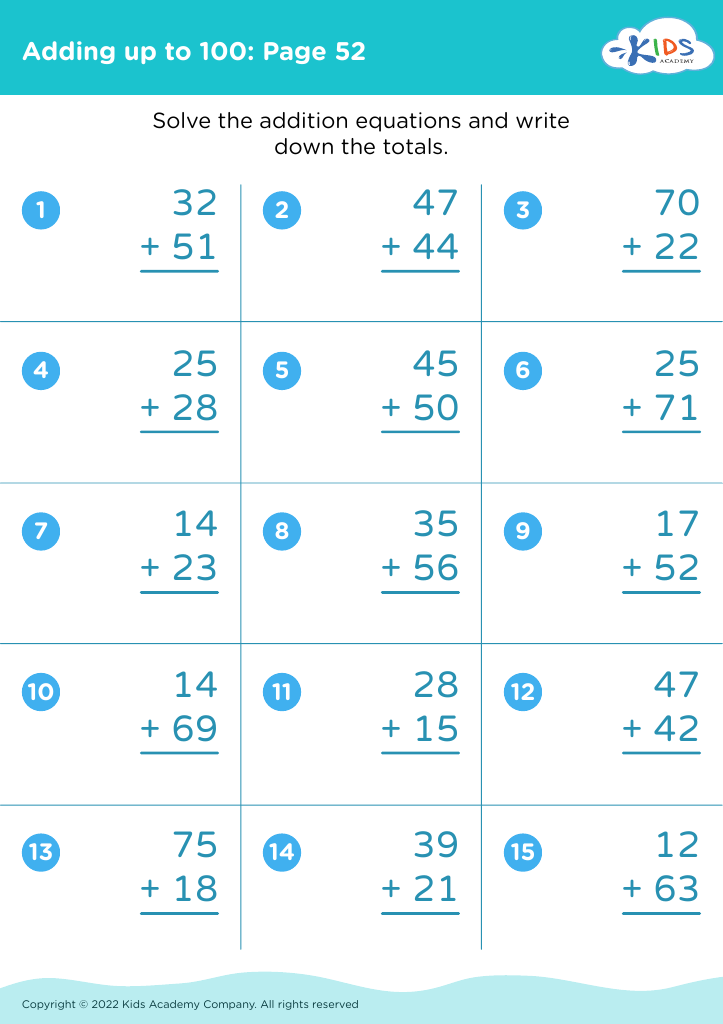








Developing counting skills and addition for children aged 4-9 is foundational for their overall mathematical understanding and future academic success. Early exposure to these basic arithmetic concepts sharpens cognitive abilities and problem-solving skills. Counting helps children grasp the concept of numbers, quantity, and sequence, which are crucial building blocks for more complex mathematics.
When children learn to add, it provides them with the tools to solve everyday problems and introduces them to logical thinking. Proficiency in early math boosts confidence and fosters a positive attitude towards learning. Moreover, research shows that early math skills are strong predictors of later academic achievement, more so than early reading abilities.
Parents and teachers can significantly influence this learning phase by incorporating counting and addition into playful activities, making the learning process engaging and relatable. Activities such as counting toys, adding items during grocery shopping, or interactive math games can make learning intuitive.
Fostering these skills also helps develop children's fine motor skills, memory, and concentration. Hence, it is essential for educators and parents to support young learners in acquiring robust counting and addition skills, setting the stage for a lifelong appreciation and competence in mathematics.








