Fraction simplification Addition Worksheets for Ages 4-9 - Page 3
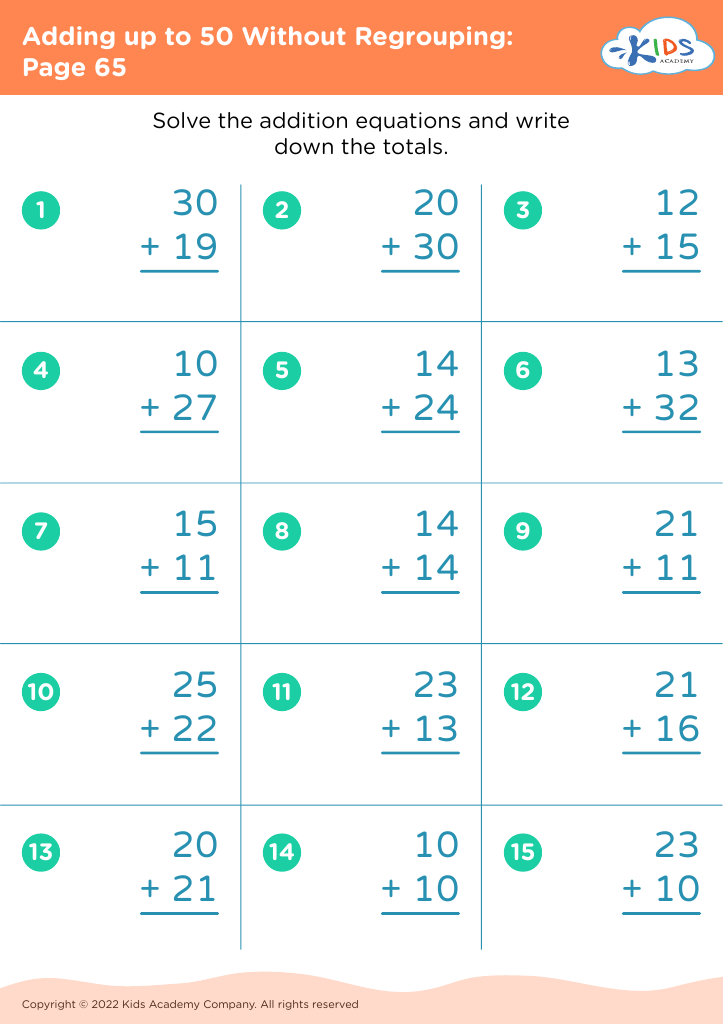
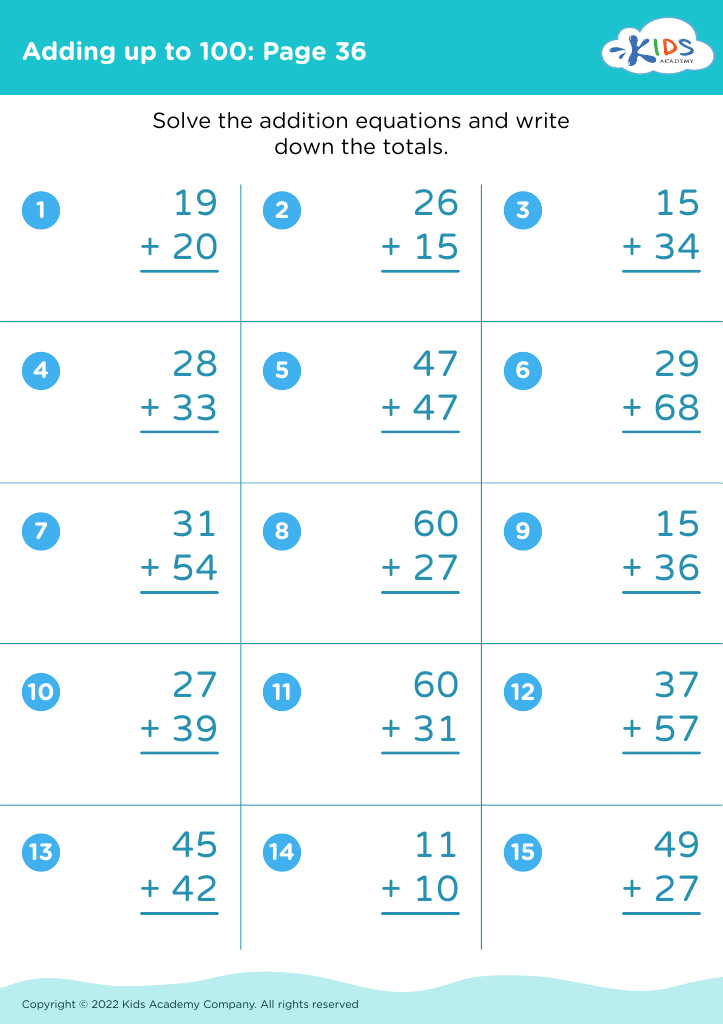
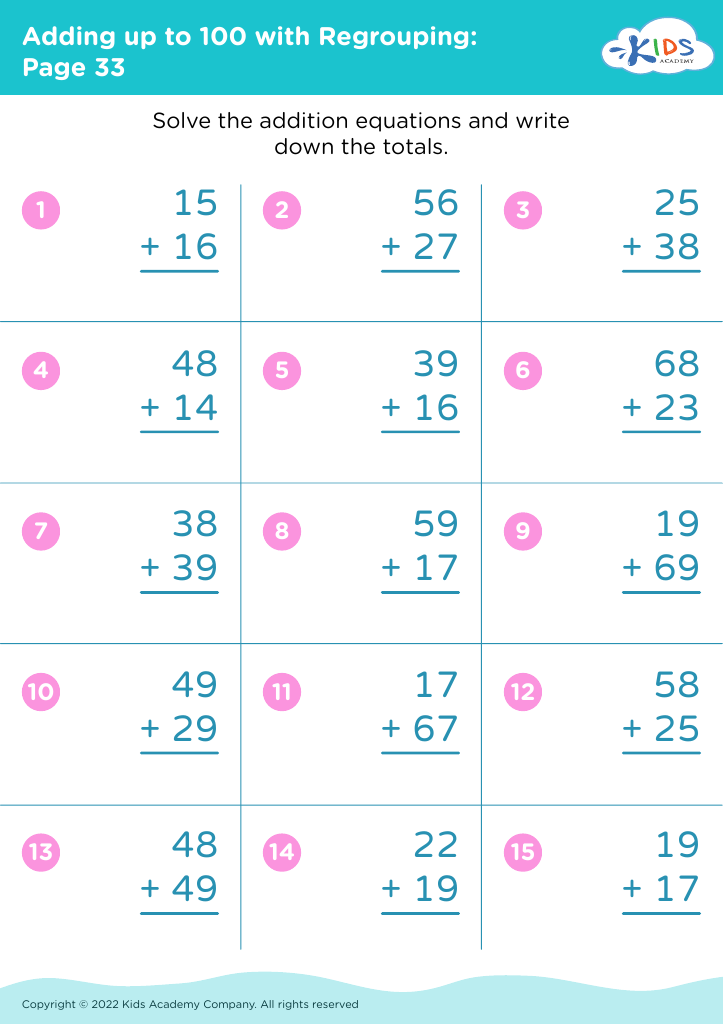
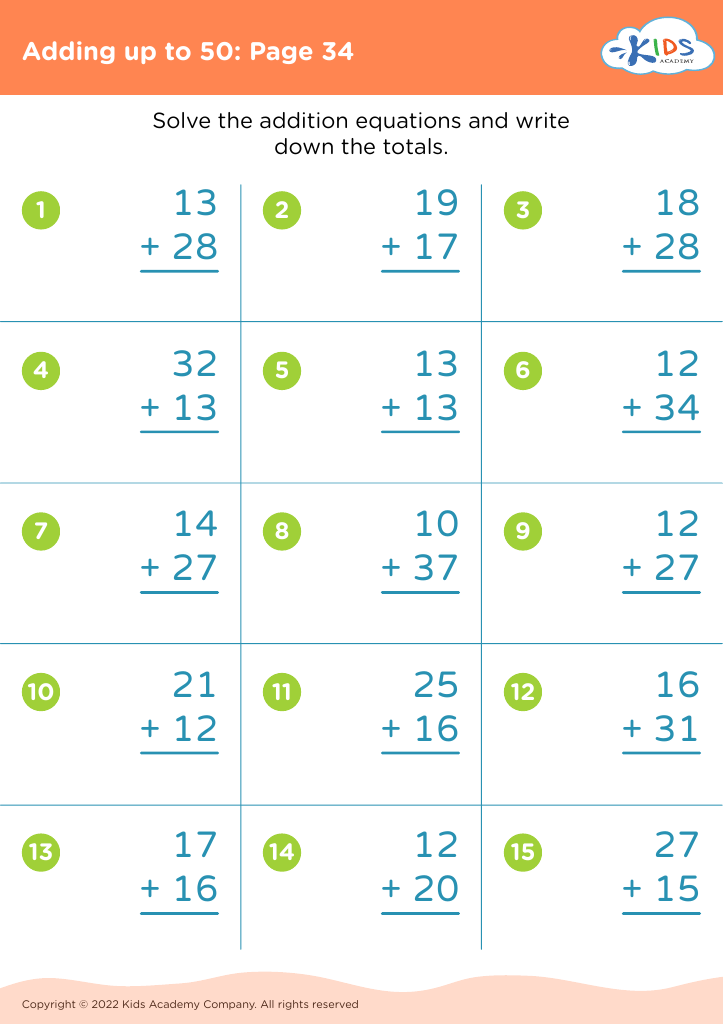








Fraction simplification and addition are essential skills for young learners aged 4-9. Understanding these concepts lays the foundation for more advanced mathematical reasoning in later years. At this age, children begin to grasp the idea of parts of a whole, which is crucial for their overall mathematical development.
Teaching fraction simplification helps students recognize equivalent fractions, fostering critical thinking and problem-solving skills. For instance, if a child simplifies 2/4 to 1/2, they develop a deeper understanding of numbers and relationships between them. This not only enhances their math skills but also boosts their confidence in handling various problems.
Moreover, engaging children in fraction addition helps them develop number sense and mental math skills. When children learn how to combine fractions, such as 1/4 + 1/4, they not only practice basic addition but also understand the concept of summing parts to create a whole.
Parents and teachers play a crucial role by incorporating fun, hands-on activities that interest children, like using real-life objects or games. By making these concepts accessible and enjoyable, they nurture a child's love for math, preparing them for future academic challenges while fostering good learning habits early on.








