Improving reading skills Addition Worksheets for Ages 4-9
4 filtered results
-
From - To
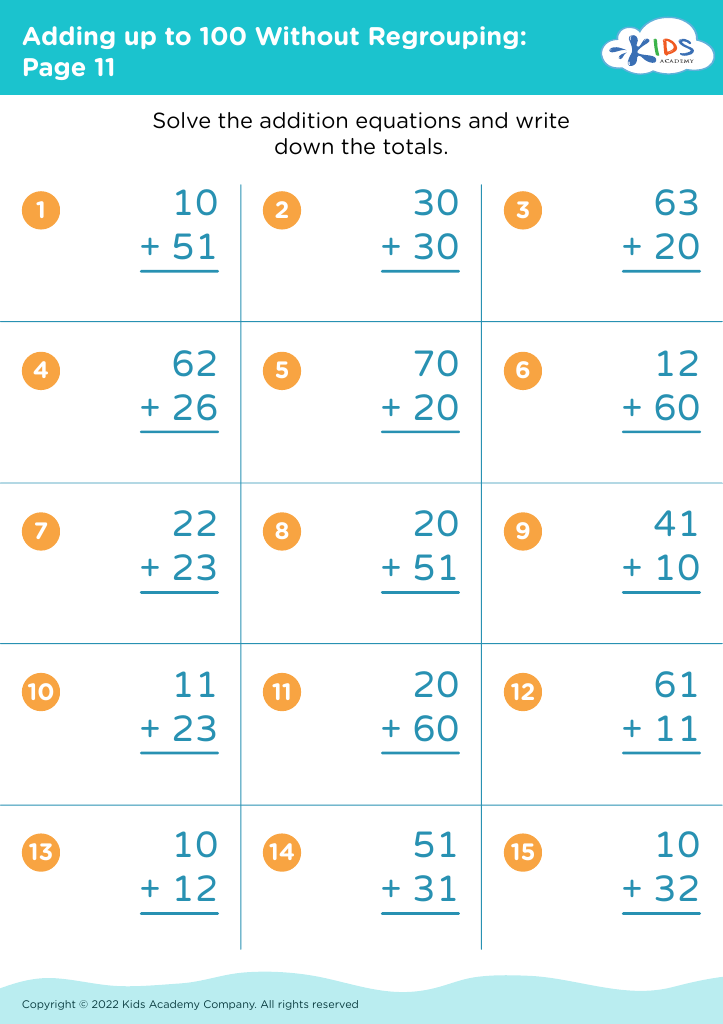
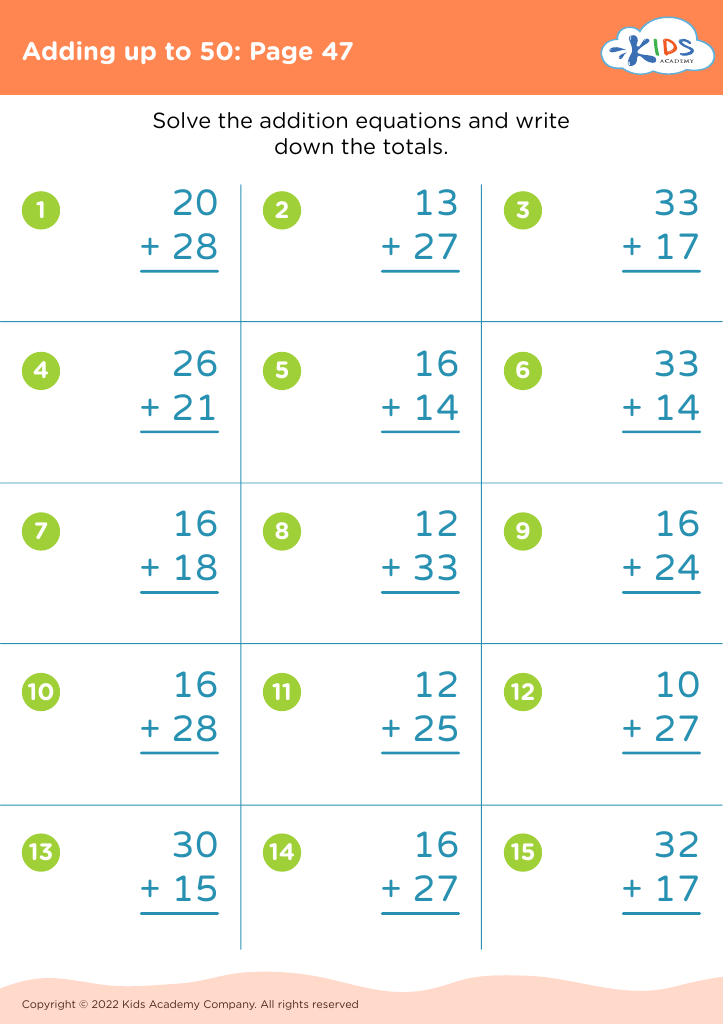
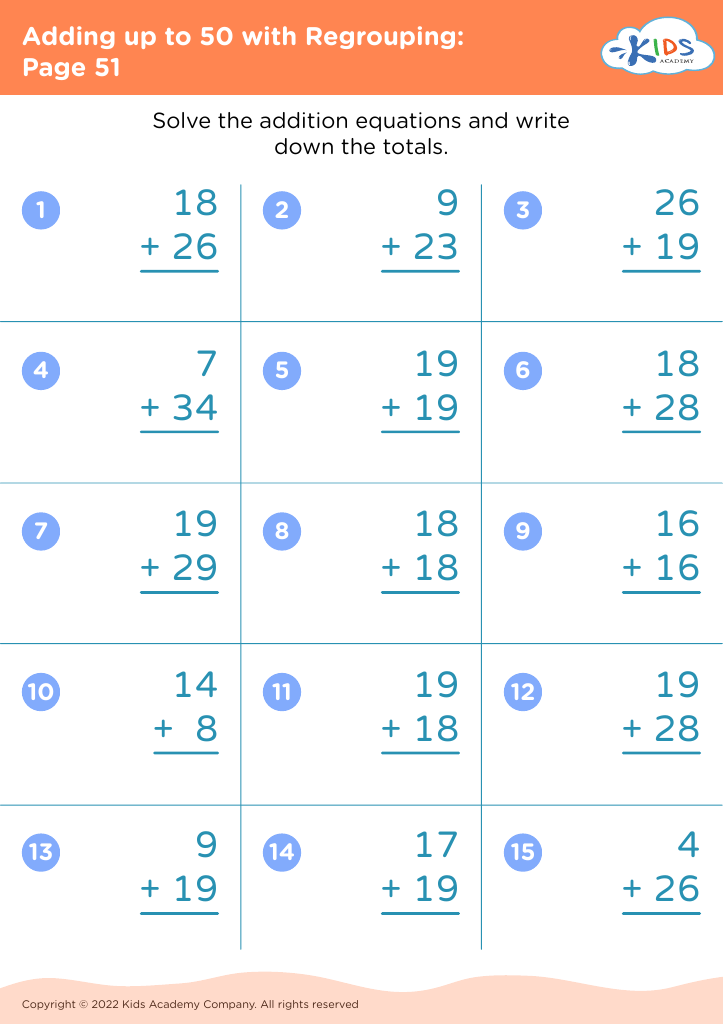
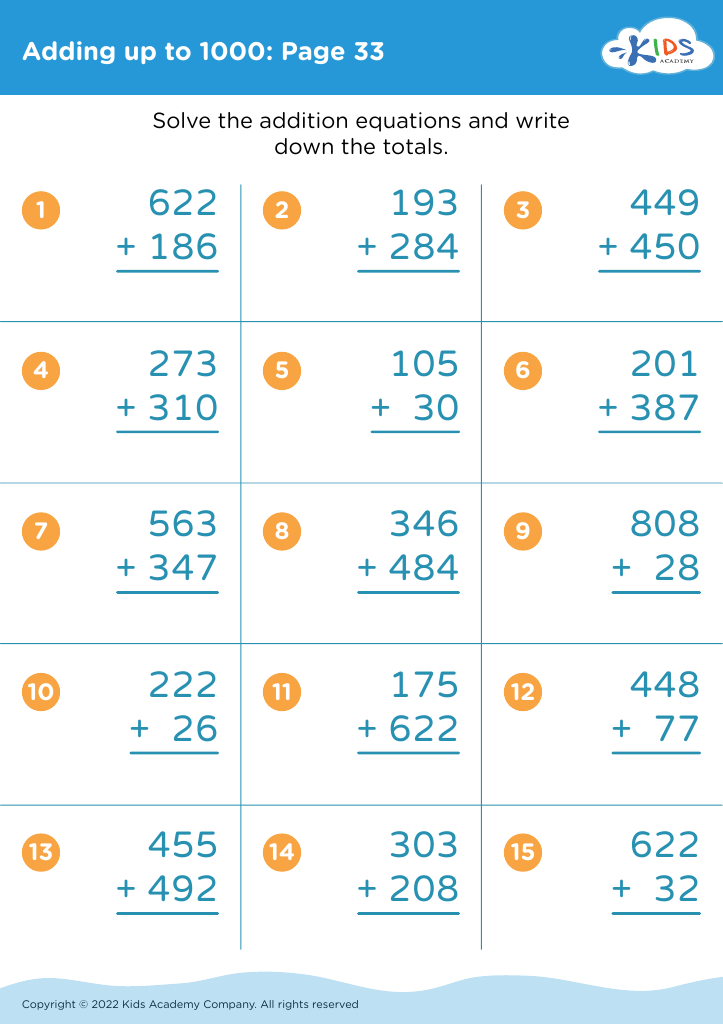
Enhance your child's reading and math skills with our engaging "Improving Reading Skills Addition Worksheets" for ages 4-9! Designed to meet young learners at their level, these worksheets combine fun addition exercises with reading comprehension tasks. Each activity helps children practice their math skills while simultaneously improving vocabulary and reading abilities. Ideal for school or home use, our worksheets foster critical thinking and problem-solving skills in an entertaining way. Encourage a love for learning as children explore exciting themes and vibrant illustrations that captivate their attention and boost confidence. Download now and watch your child thrive in reading and math!








Improving reading skills and addition abilities in children aged 4 to 9 is crucial for several reasons. First, literacy and numeracy form the bedrock of a child's educational journey. Strong reading skills enable children to comprehend stories, instructions, and classroom materials, fostering a love of learning. Early readers develop critical thinking and communication skills, which are essential for their overall academic success.
Likewise, early familiarity with addition helps children develop problem-solving skills and logical thinking. Math skills at this age not only enhance their number sense but also support cognitive development. Engaging in reading and math activities promotes curiosity and confidence, encouraging children to explore and ask questions.
Moreover, strong reading and math skills can bridge gaps in learning and provide the foundation for more complex concepts as students progress. This foundational knowledge directly impacts a child's self-esteem and social skills, as children who excel tend to participate more actively in class discussions and group activities.
Ultimately, supporting the development of these essential skills helps set the stage for a child's future success in academics and beyond, allowing for a well-rounded and enriching learning experience. Teachers and parents, therefore, play pivotal roles in nurturing these vital skills.








