Learn subtraction Addition Worksheets for Ages 4-9
4 filtered results
-
From - To
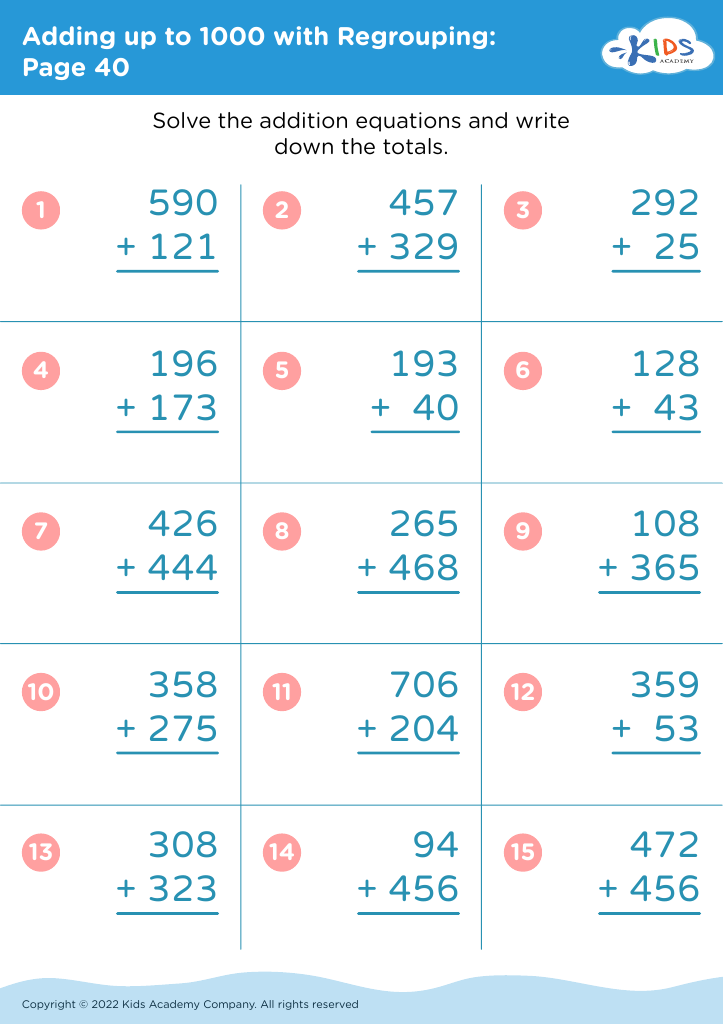
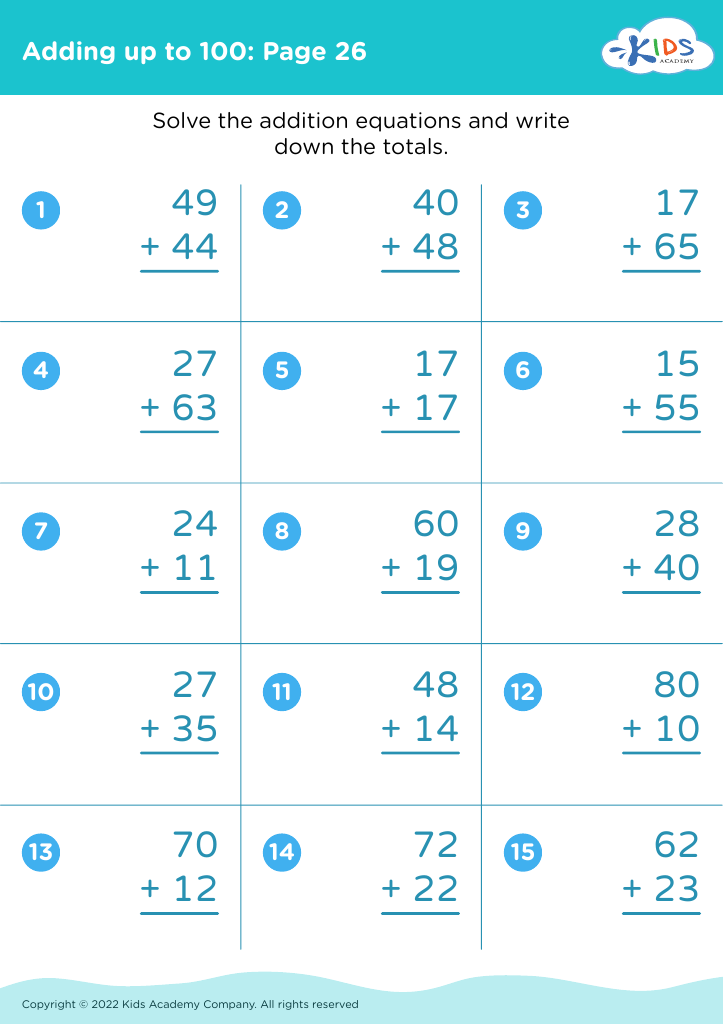
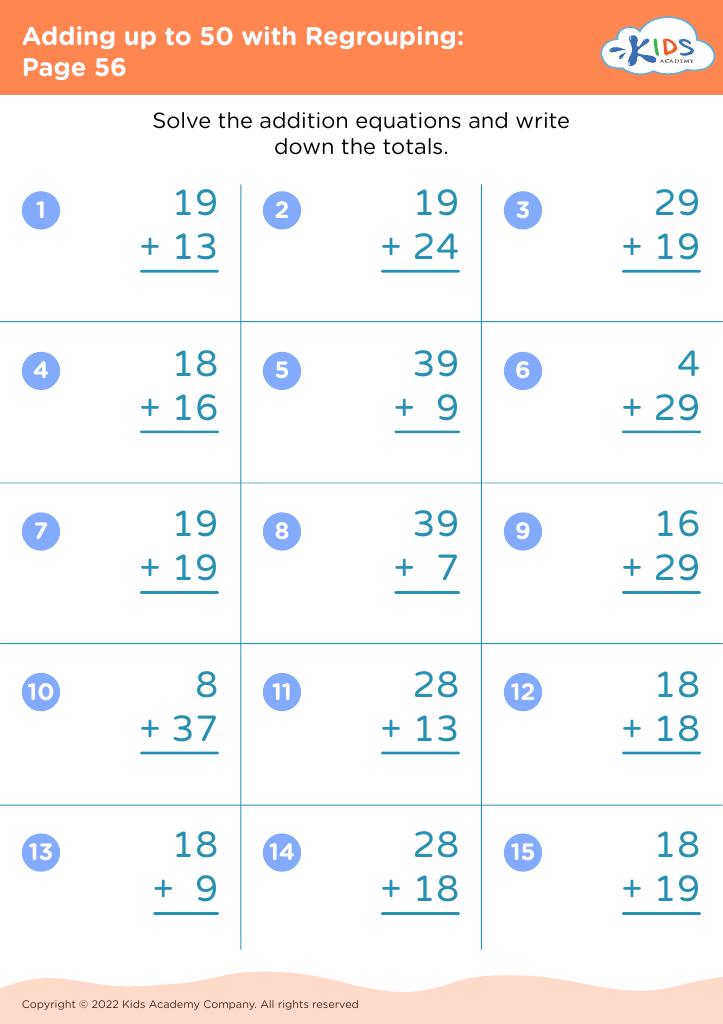
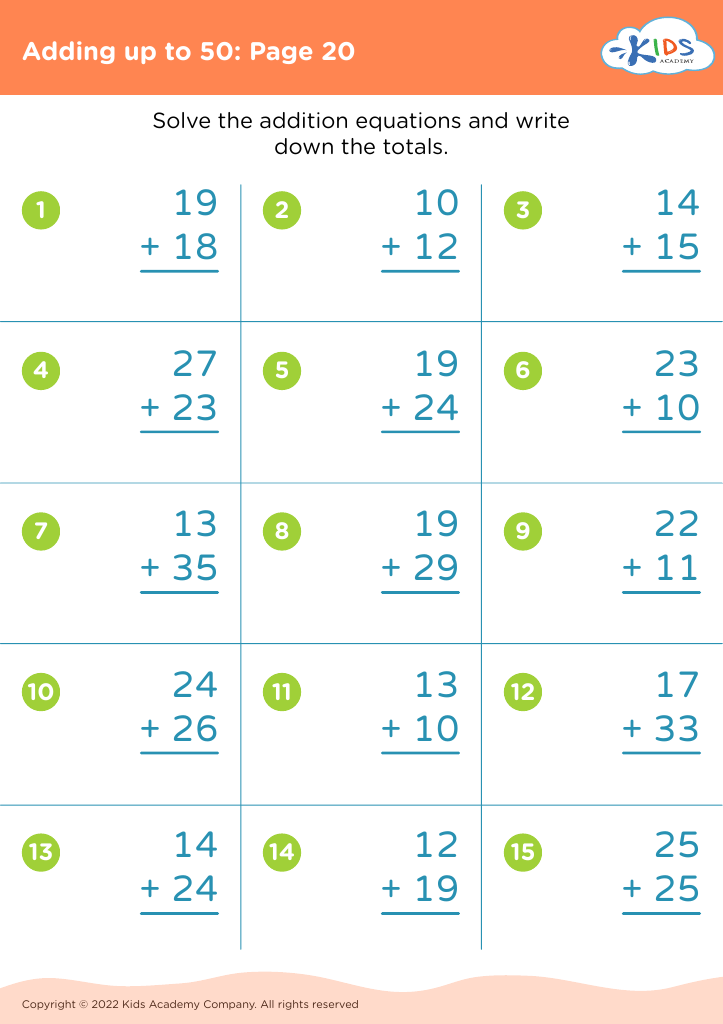
Explore our engaging subtraction and addition worksheets designed for children aged 4-9! Our resources make learning fundamental math skills fun and interactive, fostering a love for numbers from an early age. Each worksheet includes a variety of exercises that challenge young learners to practice and master addition and subtraction concepts. With vibrant illustrations and relatable scenarios, kids will stay motivated while developing critical thinking and problem-solving abilities. Perfect for homeschooling, classroom activities, or extra practice at home, our worksheets cater to diverse learning styles. Help your child build a strong mathematical foundation and boost their confidence with our interactive worksheets!








Parents and teachers should prioritize teaching addition and subtraction to children aged 4-9 because these foundational skills are crucial for overall cognitive development and future academic success. Mastering basic arithmetic helps young learners understand not just math, but also improves logical thinking, problem-solving, and critical reasoning skills. At this age, children are incredibly receptive to new concepts, making it an optimal time to introduce and reinforce these mathematical principles through engaging activities and games.
Furthermore, addition and subtraction form the building blocks for more complex math topics, such as multiplication, division, and algebra, that will be encountered later in their education. Proficiency in these areas builds confidence in children, enabling them to approach math challenges without fear.
Additionally, integrating real-life scenarios, such as shopping or sharing, into math lessons lends relevance to these skills and shows children how they apply in everyday situations. Understanding addition and subtraction not only prepares them academically, but also equips them with essential life skills like budgeting and resource management. Ultimately, promoting these fundamental concepts fosters a love for learning and prepares children well for their educational journey and beyond.








