Problem-solving abilities Addition Worksheets for Ages 4-9 - Page 2
29 filtered results
-
From - To
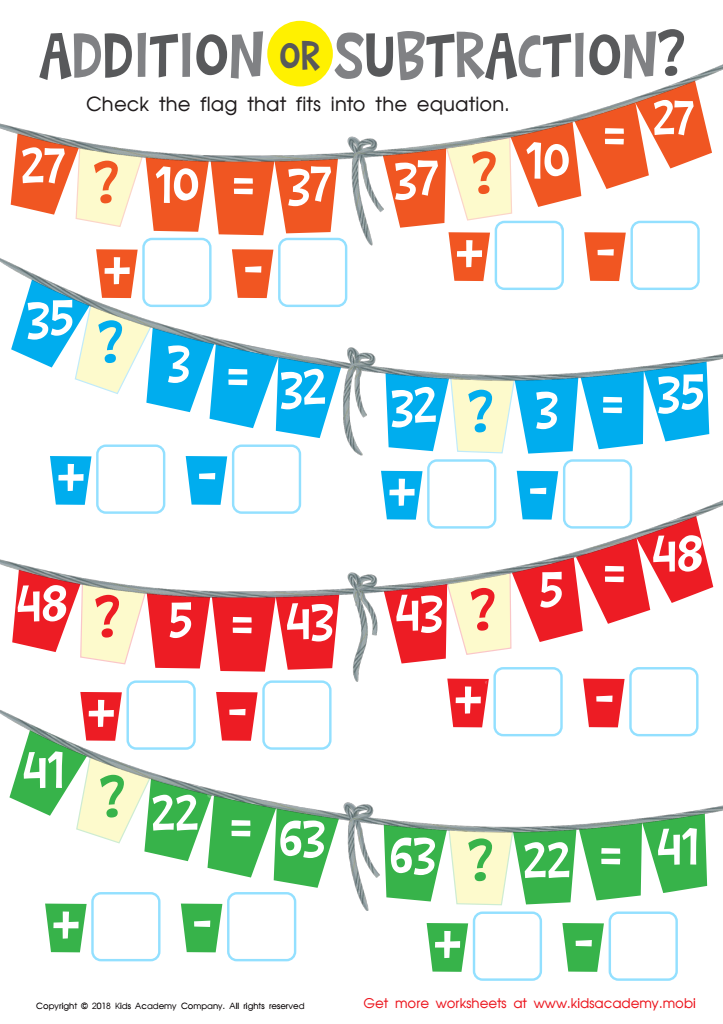
Addition or Subtraction? Worksheet
 Assign to My Students
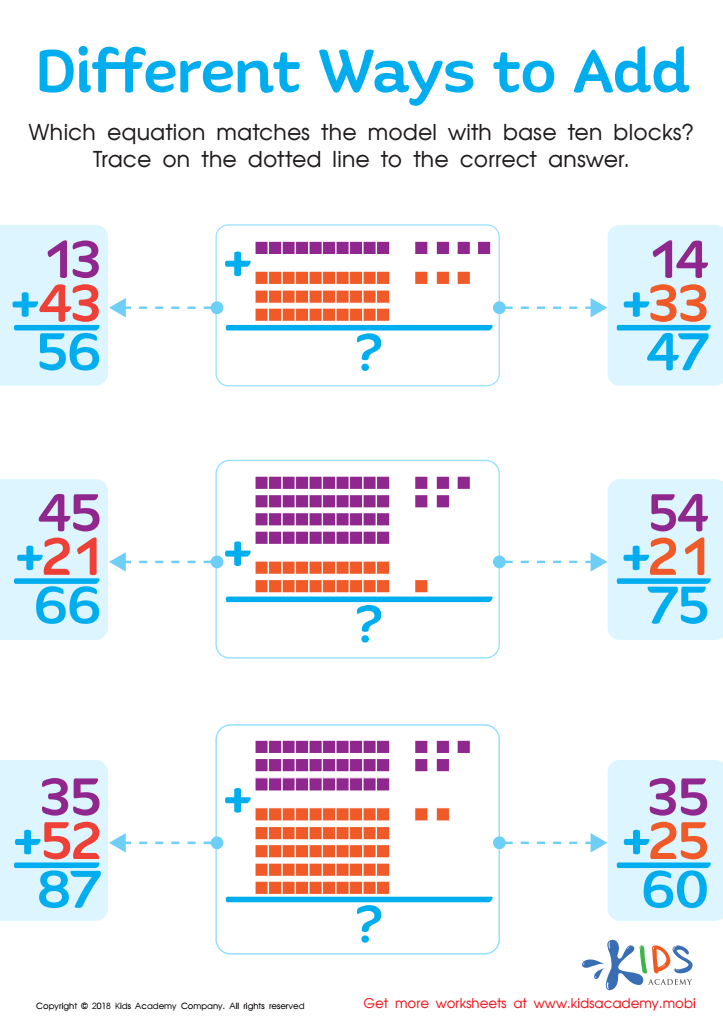
Different Ways to Add Worksheet







.jpg)
Problem-solving abilities, particularly in addition, are crucial for children aged 4-9. This early developmental stage lays the foundation for essential cognitive skills that extend beyond mathematics. Firstly, addition teaches critical thinking: as children engage with numbers, they learn to explore various solutions, enhancing their ability to think logically and strategically in everyday situations.
Moreover, mastering addition builds confidence. When children successfully solve problems, they experience a sense of accomplishment, which encourages a positive attitude towards learning and helps them tackle more complex problems in the future. Additionally, strong math skills are often linked to better performance in other academic areas, as they foster perseverance and a growth mindset.
Parents and teachers play a pivotal role in nurturing these abilities through interactive games, real-world problem scenarios, and encouraging exploration. Engaging children in problem-solving discussions also promotes language skills and social interaction, vital for holistic development.
Finally, these skills are essential for instilling a lifelong love for learning. By focusing on problem-solving in addition, adults can help children develop resilience, creative thinking, and the ability to approach challenges with confidence, setting them up for success both academically and in daily life.








