Shape identification Addition Worksheets for Ages 4-9
13 filtered results
-
From - To
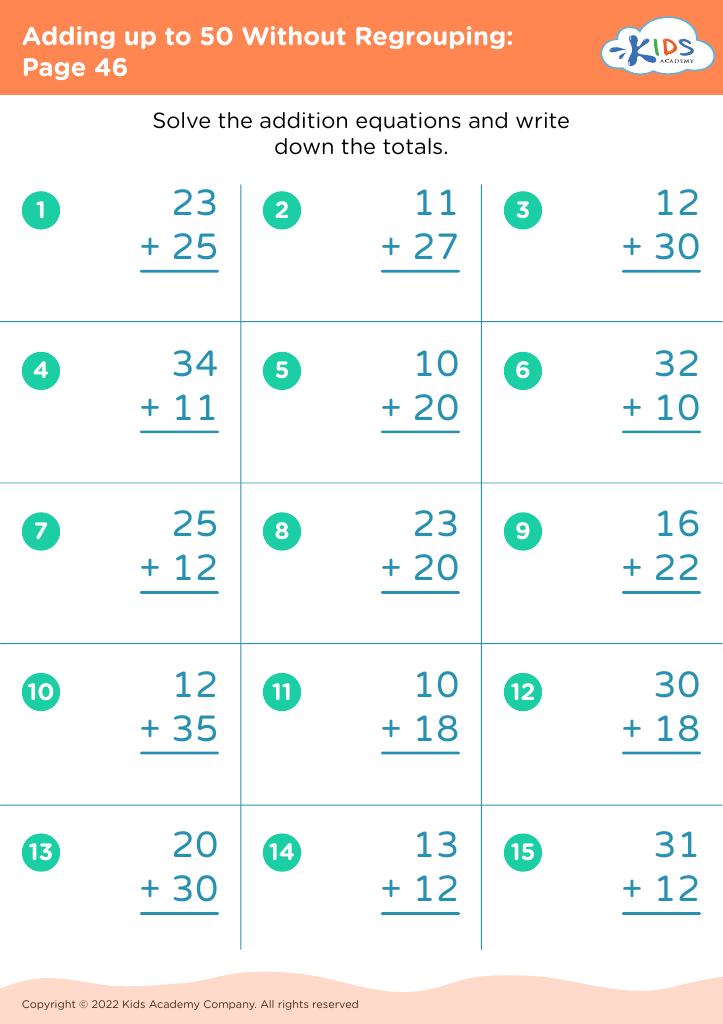
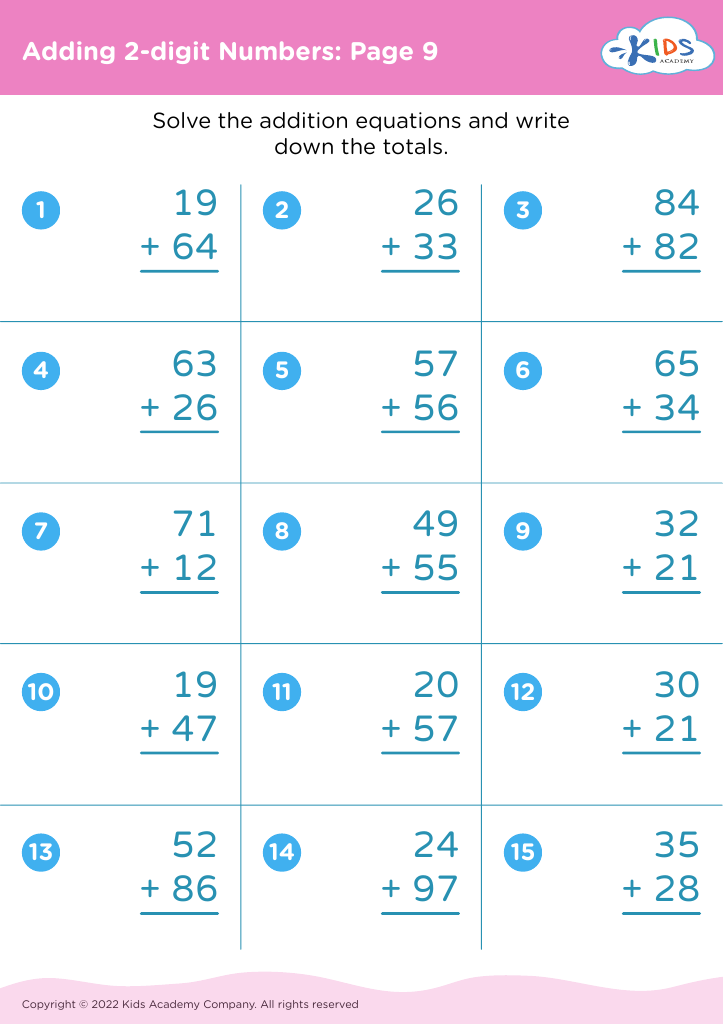
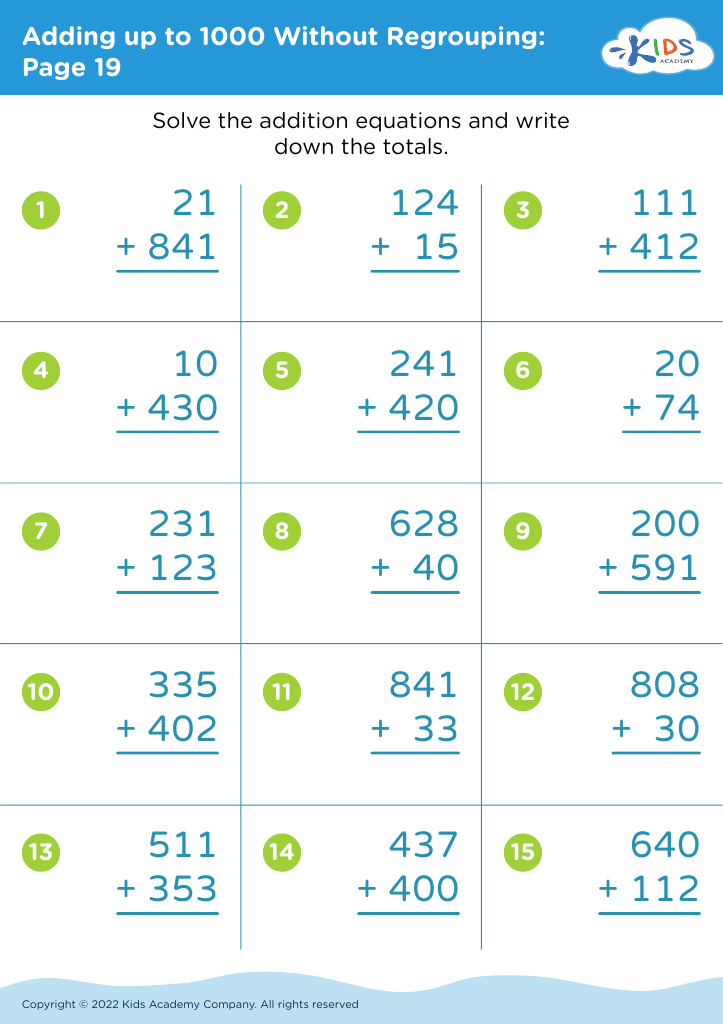
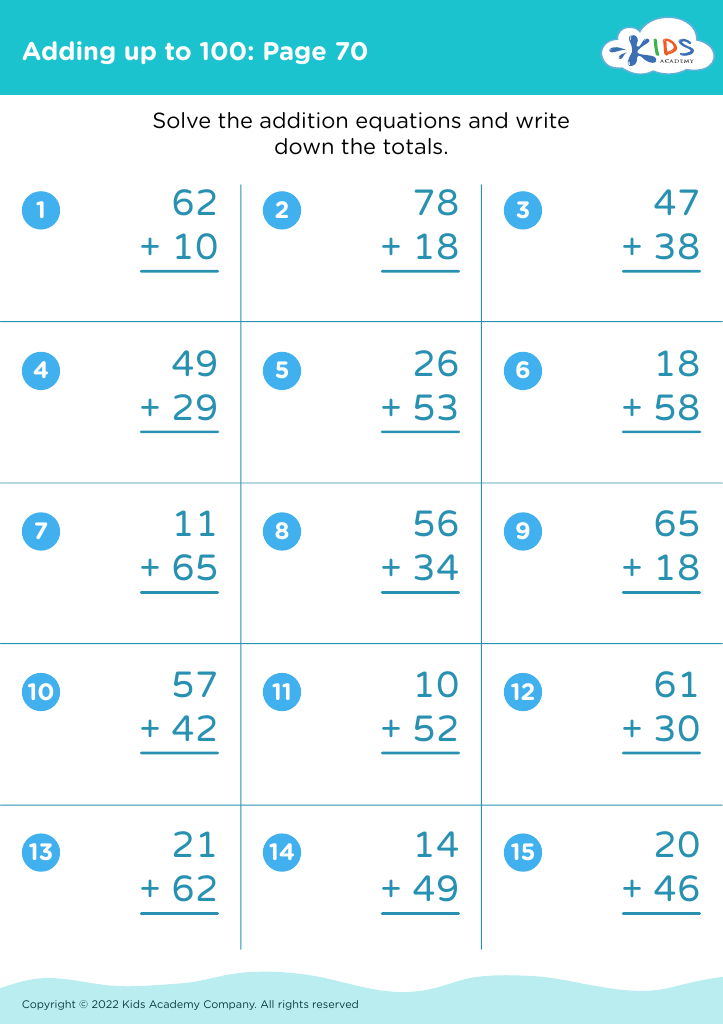
Unlock your child's potential with our engaging Shape Identification Addition Worksheets, designed specifically for ages 4-9. These interactive worksheets combine the essentials of addition with fun shape recognition activities, making learning enjoyable and effective. Children will identify various shapes while practicing their addition skills, all tailored to enhance visual and cognitive development. Perfect for classroom use or at-home practice, these worksheets provide a balanced approach to building math confidence. Whether your child is just starting their math journey or looking to reinforce their skills, our curriculum-focused resources offer the perfect mix of learning and play. Explore and inspire with Kids Academy today!
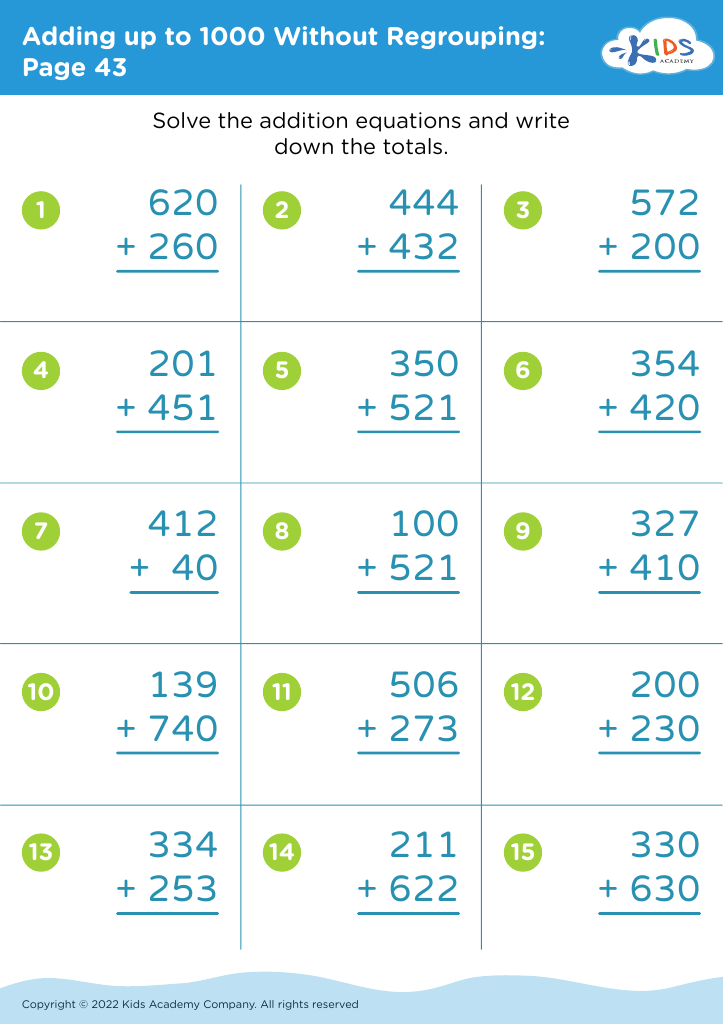








Shape identification and addition are foundational skills in early childhood education, essential for developing a child's cognitive abilities. For children aged 4-9, understanding shapes not only enhances their spatial awareness but also lays the groundwork for more complex mathematical concepts. By learning to identify various shapes, children can categorize objects in their environment, which promotes logical thinking and observational skills crucial for problem-solving in everyday situations.
Additionally, the integration of shape identification with addition fosters a deeper understanding of basic math concepts. Engaging children through playful activities involving shapes, such as sorting or creating patterns, makes learning enjoyable while reinforcing their mathematical literacy. When children can see the practical application of shapes in addition, such as adding the corners of a triangle to those of a square, it personalizes their learning experience.
Parents and teachers who prioritize these skills help create an early love for math and lay a strong academic foundation. Furthermore, developing these competencies promotes critical thinking and resilience in facing challenges, both in academics and life. Ultimately, equipping children with shape identification and addition skills prepares them for future learning while building confidence and a curiosity about the world around them.








