Understanding number relationships Addition Worksheets for Ages 4-9
5 filtered results
-
From - To
Help your child master addition with our "Understanding Number Relationships" worksheets designed specifically for ages 4-9. These engaging resources provide a fun way to explore foundational math concepts, allowing young learners to develop a strong grasp of how numbers work together. Through colorful illustrations and interactive activities, children will enjoy hands-on experiences that nurture their problem-solving skills. Our worksheets aim to foster a love for math while promoting confidence in addition. Whether at home or in the classroom, these educational tools are perfect for supporting your child's journey towards mathematical fluency. Start building a strong number sense today!
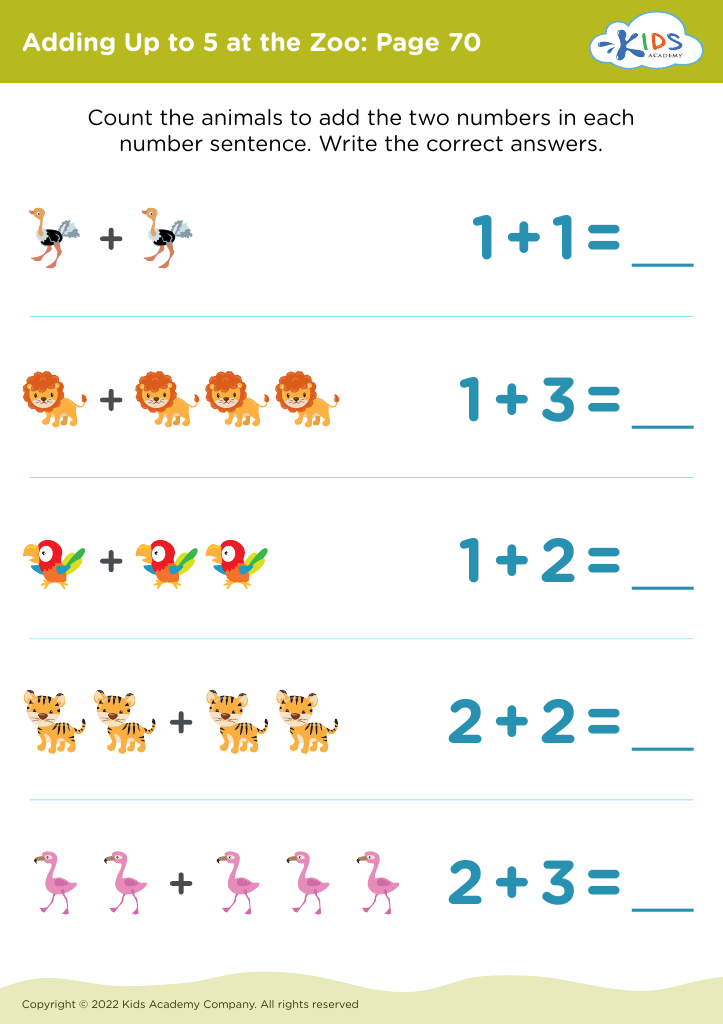
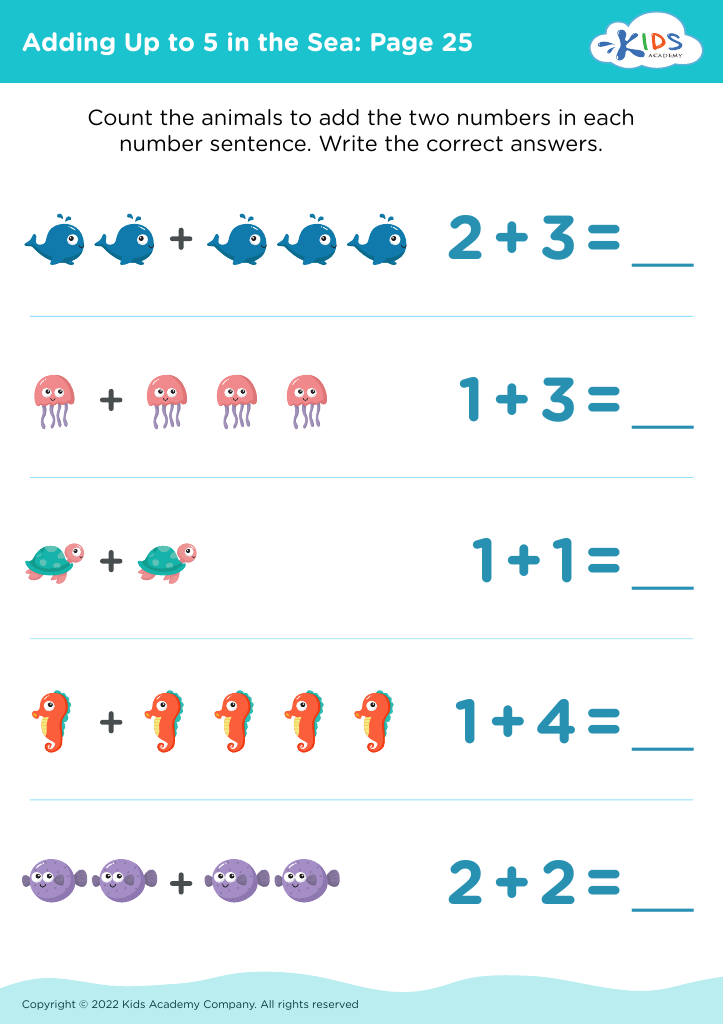
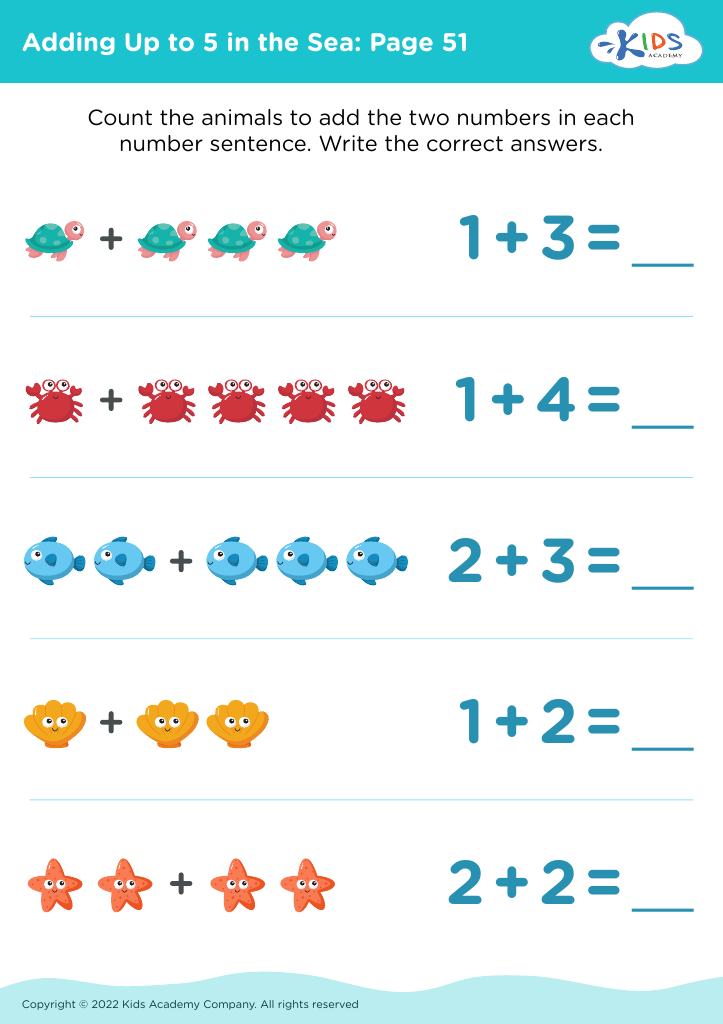
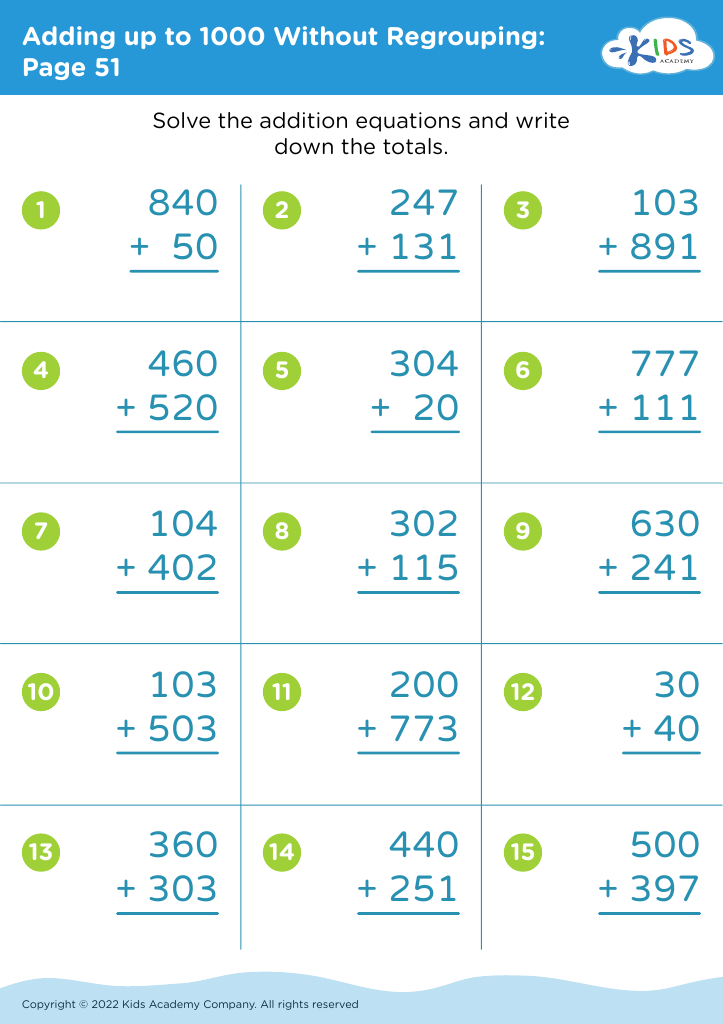
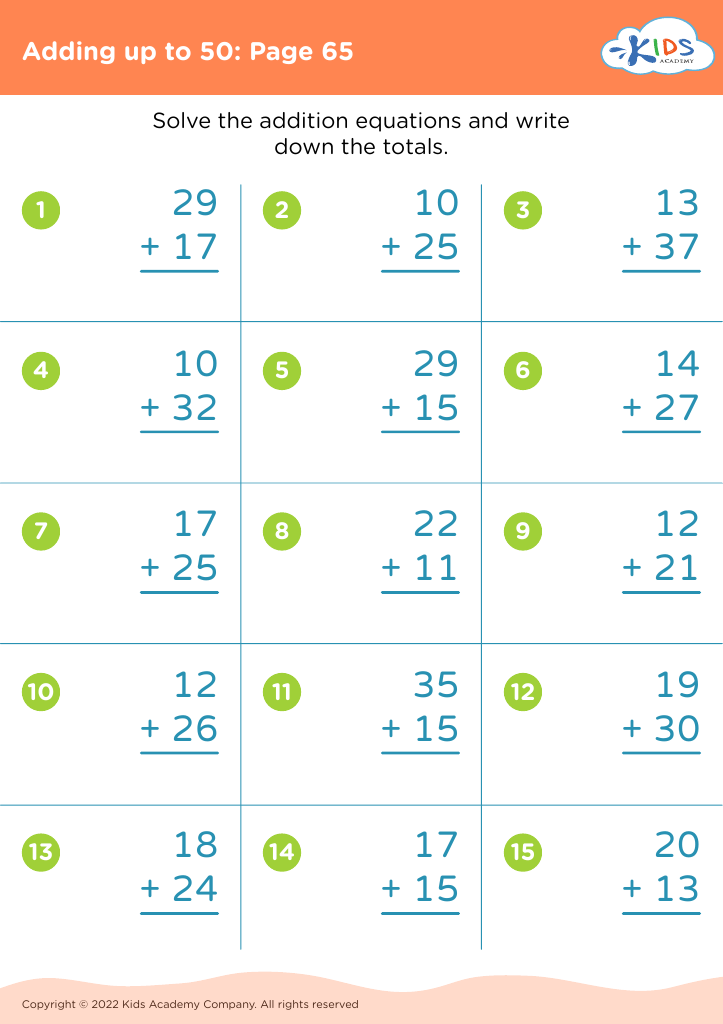








Understanding number relationships and addition is crucial for children aged 4-9, forming the foundation for their mathematical development. First, early proficiency in these concepts supports cognitive growth, enhancing problem-solving skills and logical reasoning. When children grasp how numbers relate to one another, they become adept at recognizing patterns and making connections, which are vital for future math concepts.
Additionally, fostering a robust understanding of addition helps to build confidence in young learners. When children see their progress in mastering basic operations, they are likely to develop a positive attitude toward math, reducing anxiety often associated with the subject later in school.
Moreover, strong numerical foundations improve literacy in everyday situations, enabling children to make sense of concepts like time, money, and measurement. For parents and teachers, nurturing these skills is not just about preparing for academic success but also ensuring children become confident problem-solvers equipped for real-life challenges. Ultimately, comprehension of number relationships and addition serves as a stepping stone for higher-level mathematics, impacting future educational opportunities and career paths. By prioritizing these skills now, we contribute to shaping well-rounded individuals capable of navigating the complexities of the world around them.








