Understanding number value Addition Worksheets for Ages 4-9
3 filtered results
-
From - To
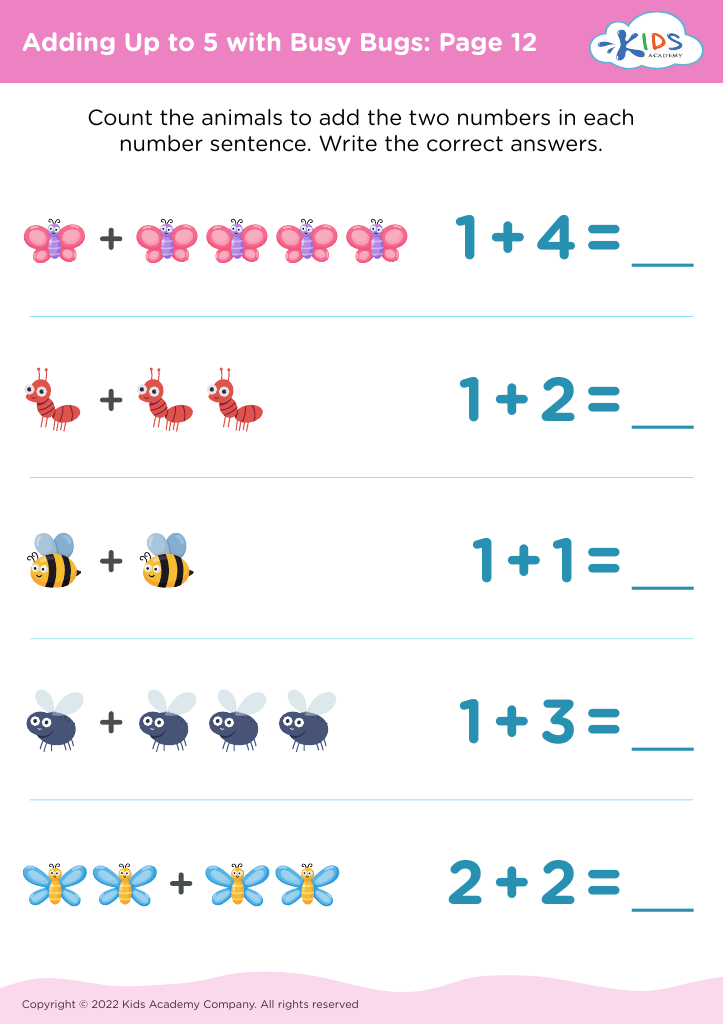
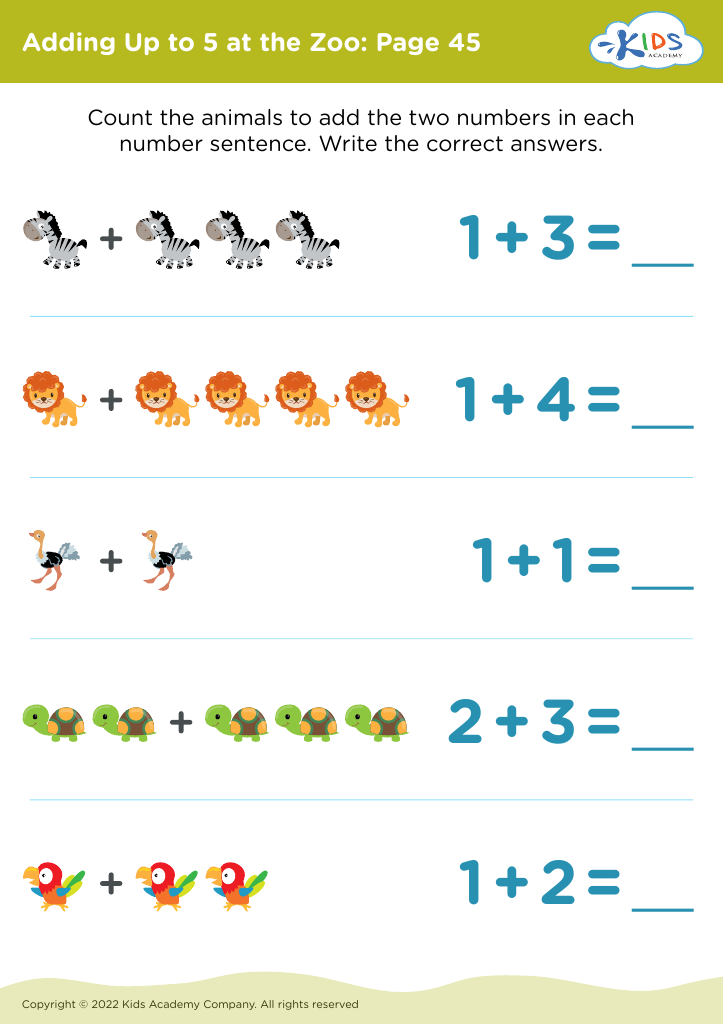
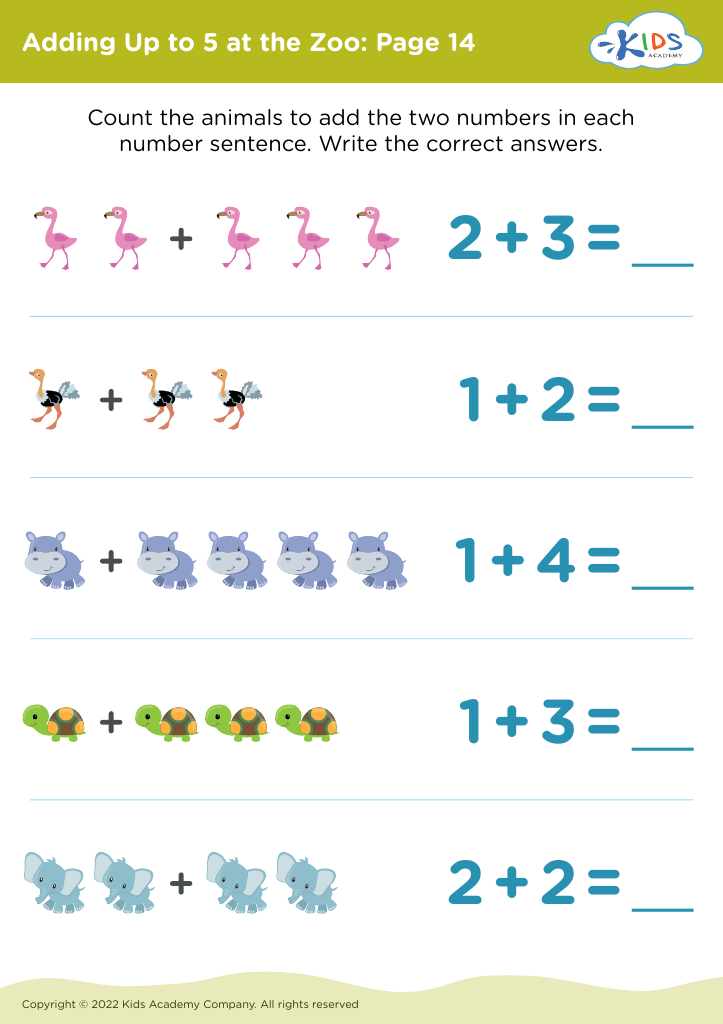
Introduce your child to the exciting world of math with our "Understanding Number Value Addition Worksheets for Ages 4-9." Designed to make learning fun and engaging, these worksheets help young learners grasp number values and improve their addition skills. Each worksheet is filled with colorful exercises that simplify complex concepts, guiding children through each step. Perfect for developing crucial math foundations, these resources encourage problem-solving, critical thinking, and a love for learning. Ideal for home or classroom use, watch your child’s confidence soar as they master addition in an enjoyable and interactive way. Start their math journey today!








Understanding number value and addition at an early age (4-9 years) is crucial as it lays the foundation for future mathematical learning and everyday problem-solving skills. During this formative period, children's brains are highly adaptable and can grasp foundational concepts that will make advanced mathematical operations easier to understand later on.
For parents and teachers, fostering a strong grasp of number value helps children comprehend the nature of numbers – that they represent quantities and can be manipulated. This understanding is essential for tasks ranging from managing money to measuring ingredients in a recipe. Moreover, basic addition skills are not just the groundwork for arithmetic but also cultivate logical thinking and pattern recognition.
Children who master these concepts early gain confidence in their mathematical abilities, which can enhance their overall academic performance. A confident student is more likely to participate actively in class and to persevere through challenging problems. The sense of achievement derived from understanding math can also boost a child's self-esteem and foster a positive attitude toward learning in general.
Thus, parents and teachers play a critical role in encouraging the development of these early math skills, providing appropriate tools and engaging activities to make learning not only effective but also enjoyable. This investment in their early education holds lifelong benefits.








