Understanding time Addition Worksheets for Ages 4-9
6 filtered results
-
From - To
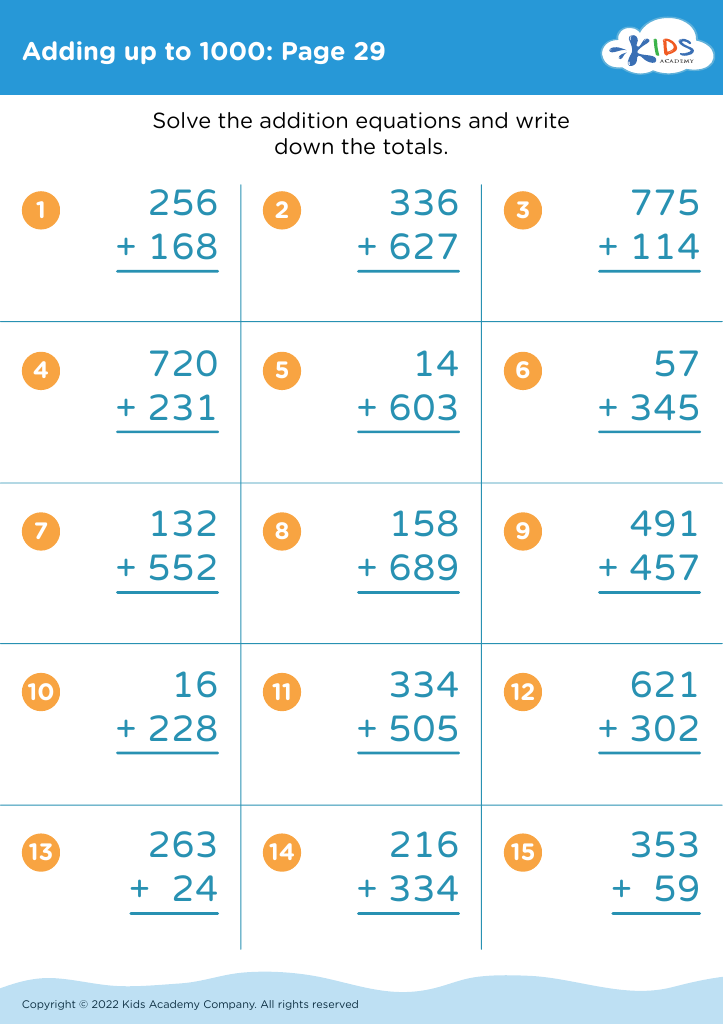
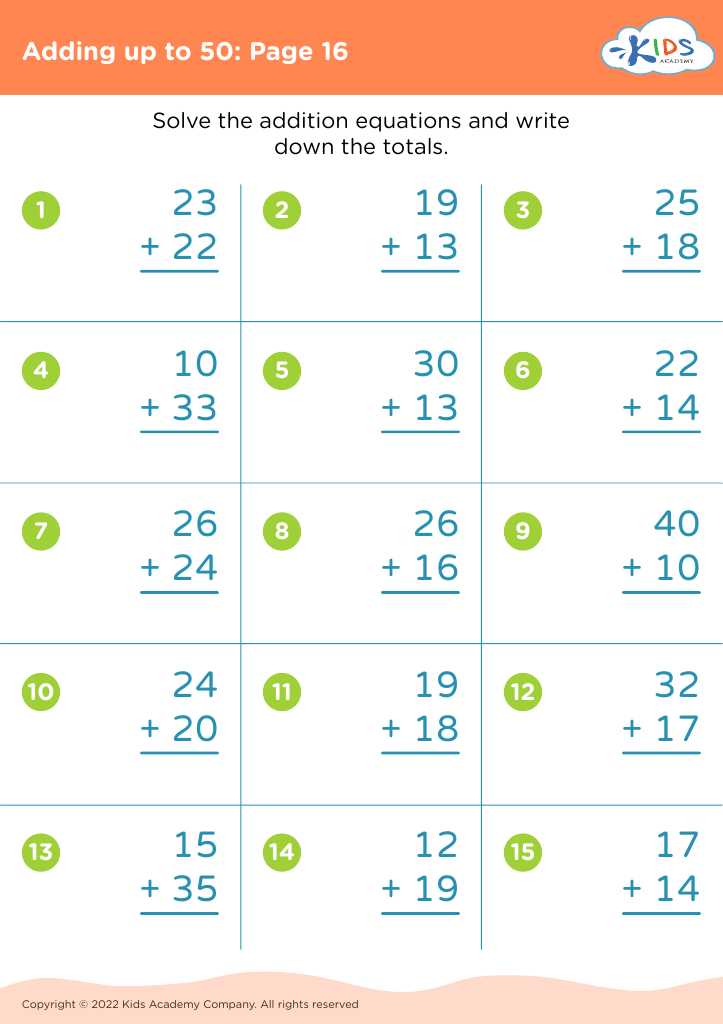
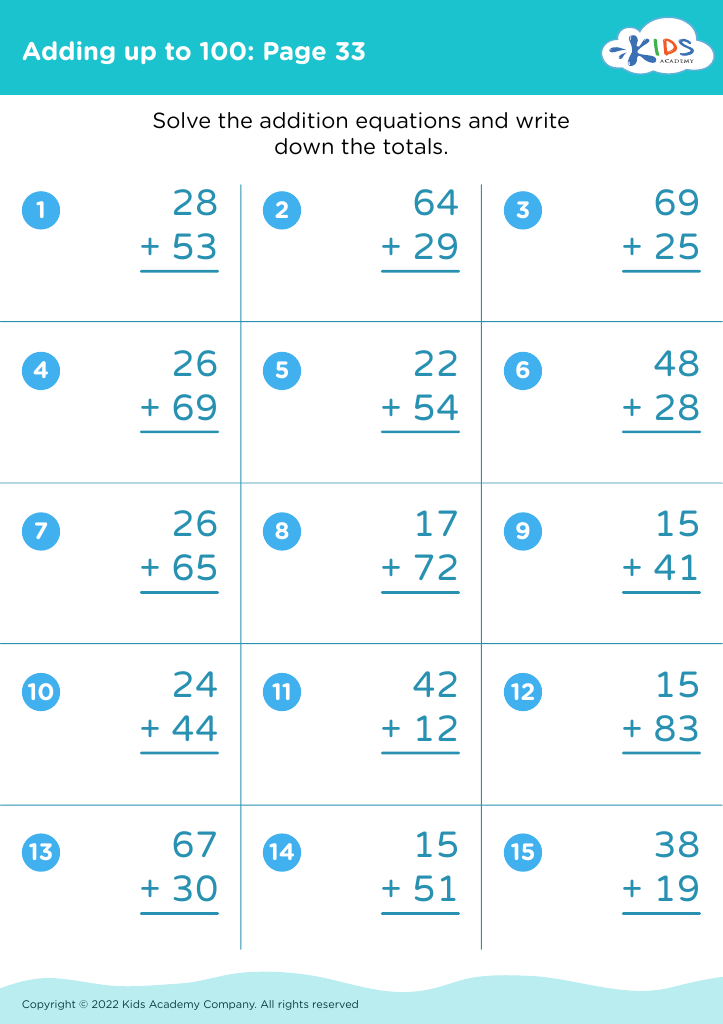
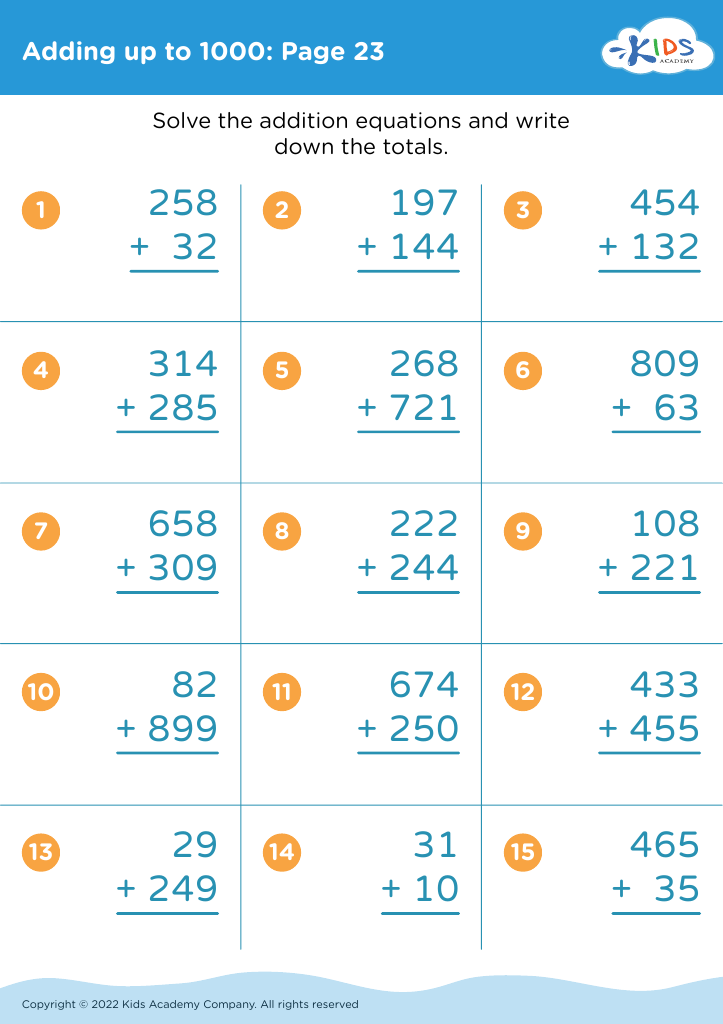
"Understanding Time Addition Worksheets for Ages 4-9" from Kids Academy make learning math fun and engaging for young learners. These expertly designed worksheets help children grasp the concept of time through addition exercises. Perfect for preschool through 3rd grade, each worksheet blends colorful visuals with simple math problems to create an enjoyable learning experience. These activities foster critical thinking and problem-solving skills while building a solid math foundation. With easy-to-follow instructions and increasing difficulty, they're ideal for both classroom use and at-home practice. Level up your child’s math skills today with Kids Academy’s Understanding Time Addition Worksheets!
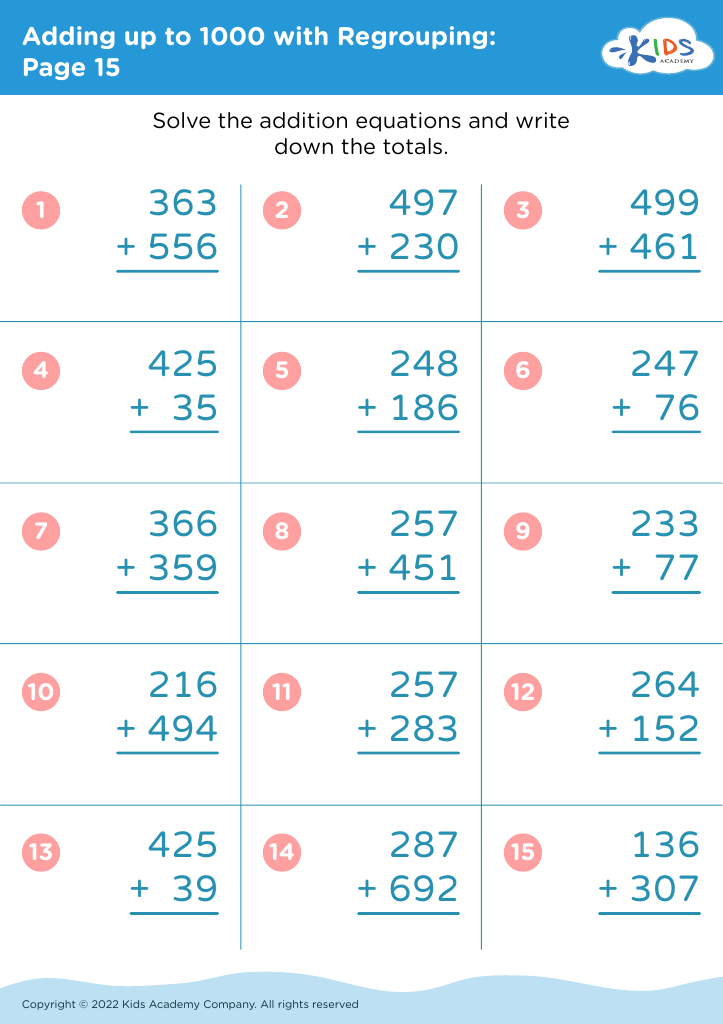
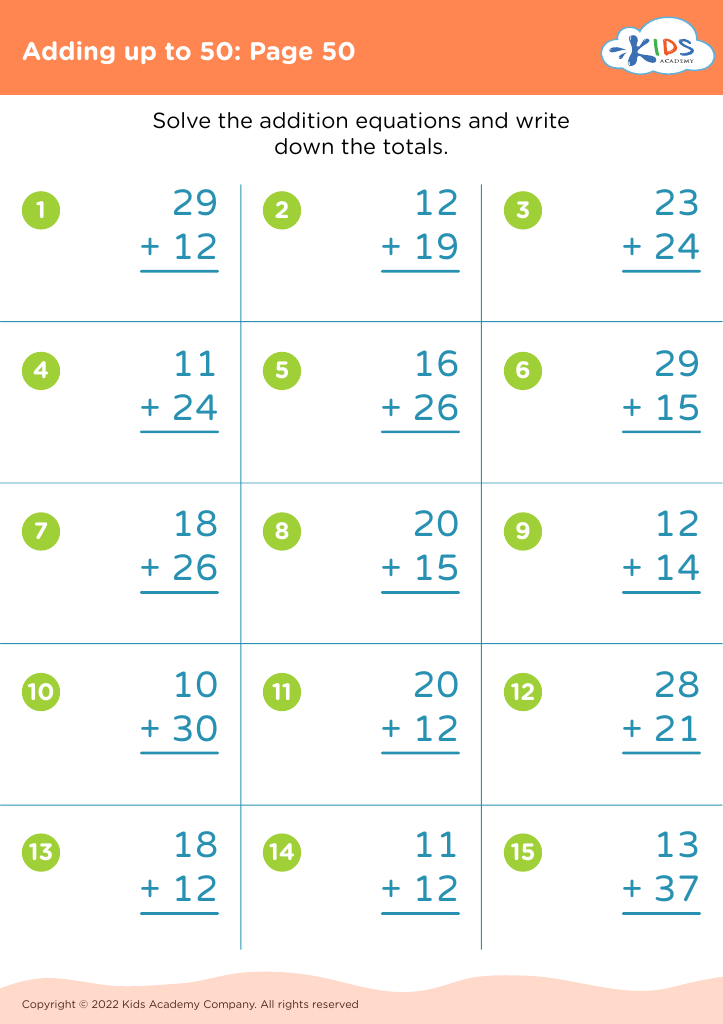




.jpg)



Understanding time and basic addition at an early age is crucial for children's development because it lays the groundwork for numerous essential life skills. For ages 4-9, absorbing these concepts is pertinent for several reasons.
Firstly, time-telling aids in managing daily routines, fostering a sense of structure and responsibility. When children learn to read the clock, they can better grasp schedules, which enhances their punctuality and time management skills. This positively impacts their ability to seamlessly transition between school, extracurricular activities, and personal time.
Equally important, early mastery of addition forms the basis of subsequent mathematical learning. By manipulating numbers through addition, children sharpen problem-solving and logical thinking abilities, key competencies for academic success. Addition also appears constantly in real-life scenarios, like counting objects, understanding money, or even preparing simple recipes, making it a practical and necessary skill.
Furthermore, developing these abilities in early childhood boosts confidence and encourages a positive attitude toward learning. When children feel competent in understanding time and engaging in arithmetic, they build a foundation of self-efficacy that supports their educational journey.
Parents and teachers engaging children in these fundamental concepts empower them to thrive academically while seamlessly navigating everyday tasks and responsibilities.








