Visual interpretation Addition Worksheets for Ages 4-9
5 filtered results
-
From - To
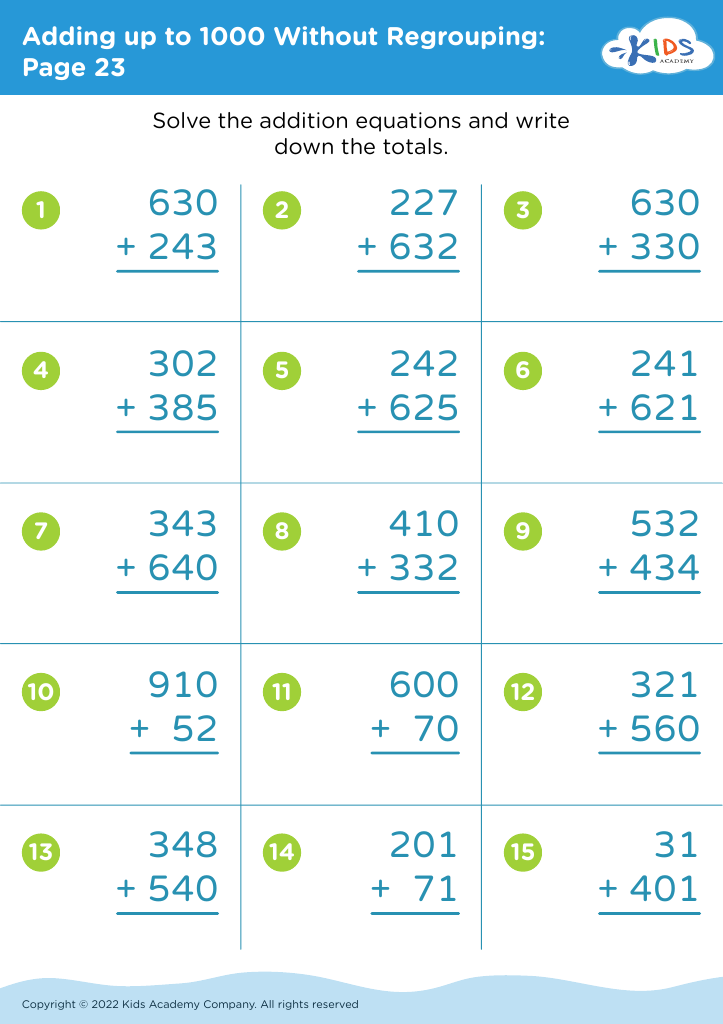
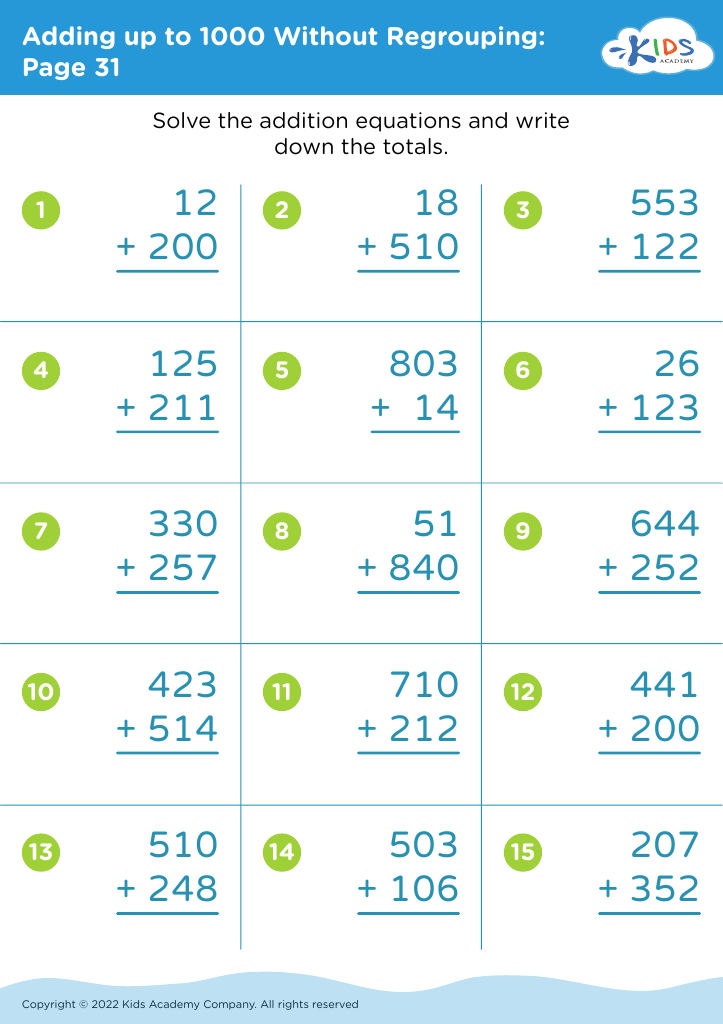
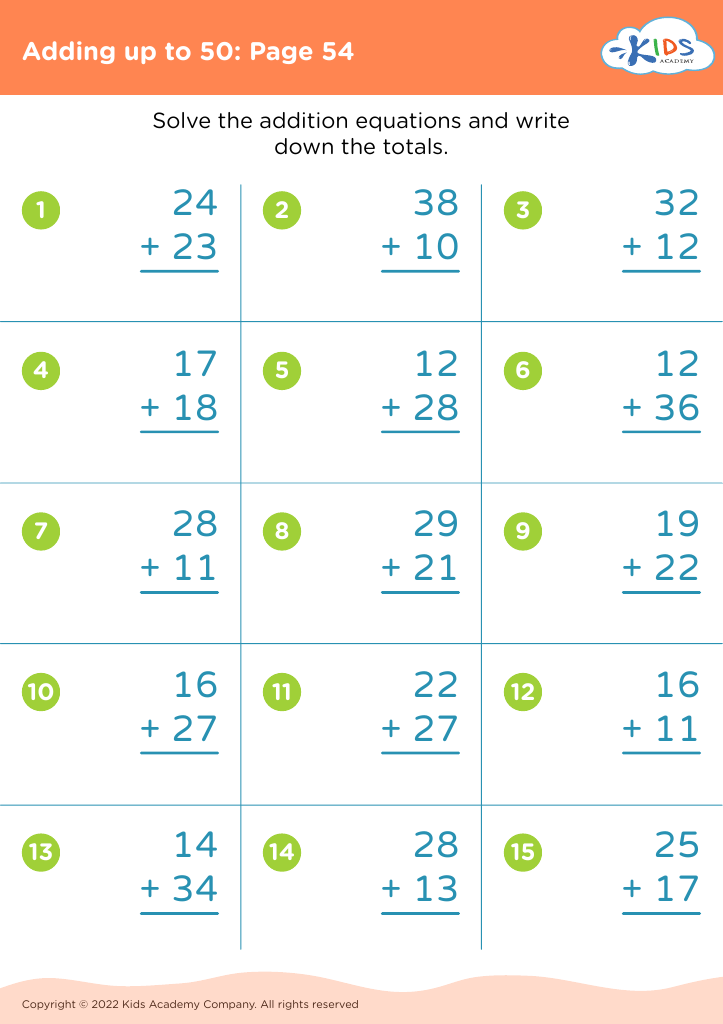
Enhance your child's math skills with our engaging Visual Interpretation Addition Worksheets, designed specifically for children aged 4-9. These interactive resources help young learners grasp fundamental addition concepts through visual aids such as images and diagrams, making math both fun and accessible. By using concrete examples, children can better understand the relationship between numbers, fostering a strong foundation in math. Our worksheets encourage hands-on learning, critical thinking, and problem-solving abilities, making them perfect for homeschooling or classroom activities. Explore our collection today and watch your child's confidence in addition grow as they enjoy learning through visual interpretation!
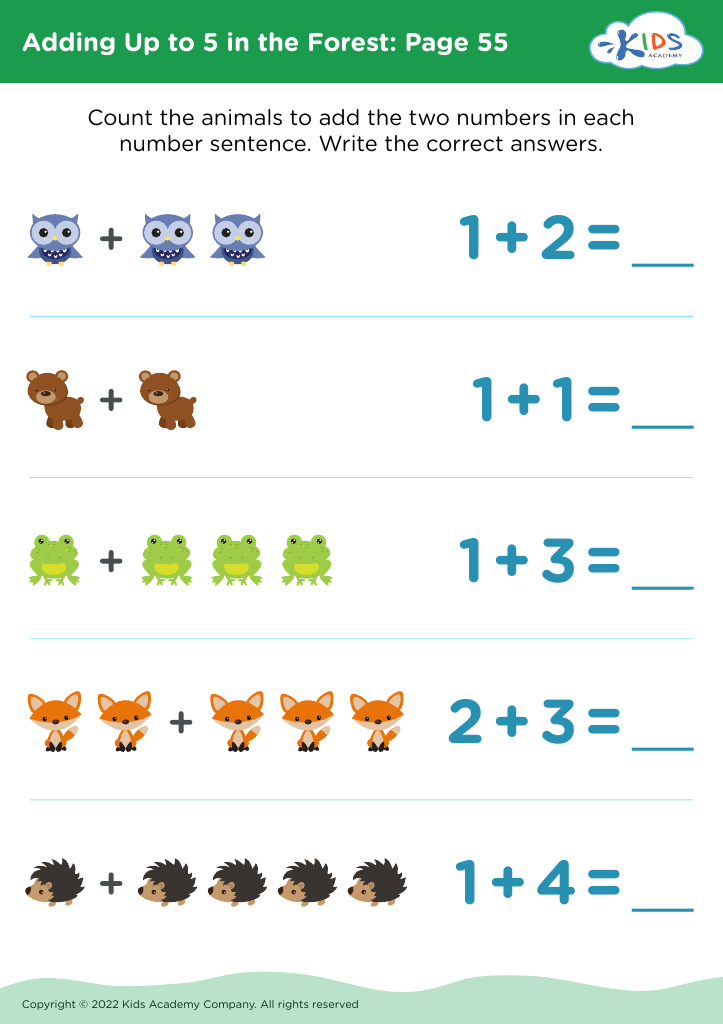
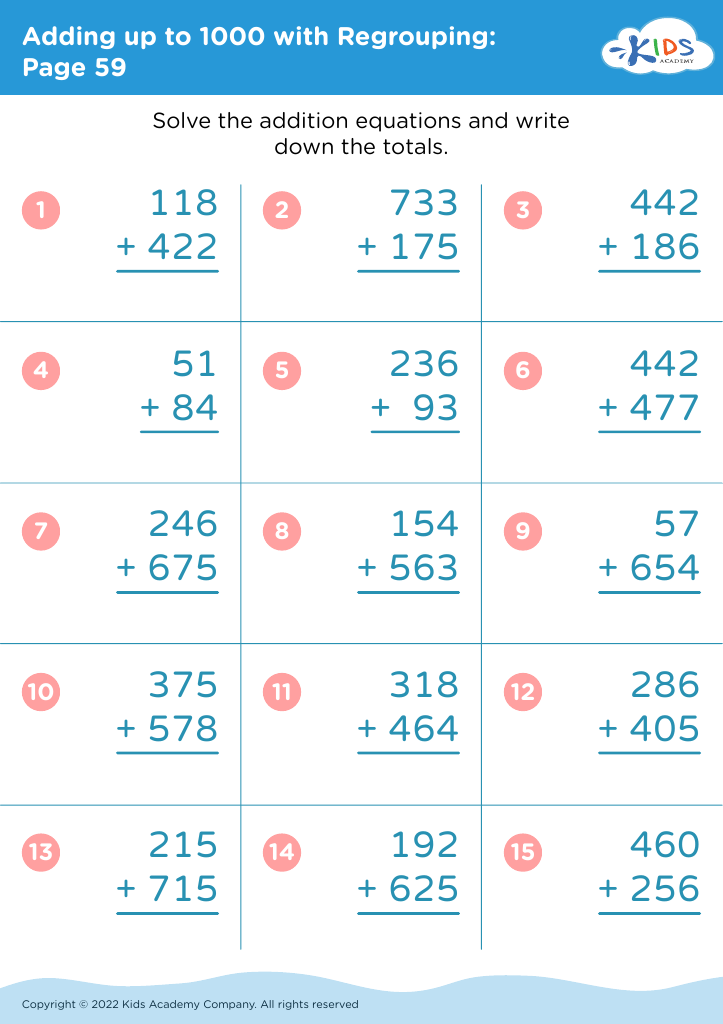








Visual interpretation addition is a crucial skill for children aged 4 to 9, as it lays the groundwork for mathematical understanding and intellectual development. By using visual aids such as counters, number lines, or drawings, children not only grasp the concept of addition but also learn to see numbers in a tangible way. This makes abstract mathematical ideas more concrete and relatable.
For parents and teachers, fostering visual interpretation addition is important for multiple reasons. First, it engages different learning styles; some children are more responsive to visual stimuli, so these techniques can enhance their learning experience. Additionally, visual approaches promote critical thinking and problem-solving skills, essential for success in academics and everyday life.
Moreover, integrating visual learning allows for gradual progression, helping children understand the link between separate units and larger numbers without feeling overwhelmed. By nurturing this skill at a young age, we can build confidence in their mathematical abilities. Furthermore, strong foundational skills in mathematics correlate with future success in STEM fields. Therefore, parents and teachers should prioritize visual interpretation addition to enrich children’s educational journeys and promote a positive attitude towards math as they grow.








