Visual learning enhancement Addition Worksheets for Ages 4-9
4 filtered results
-
From - To
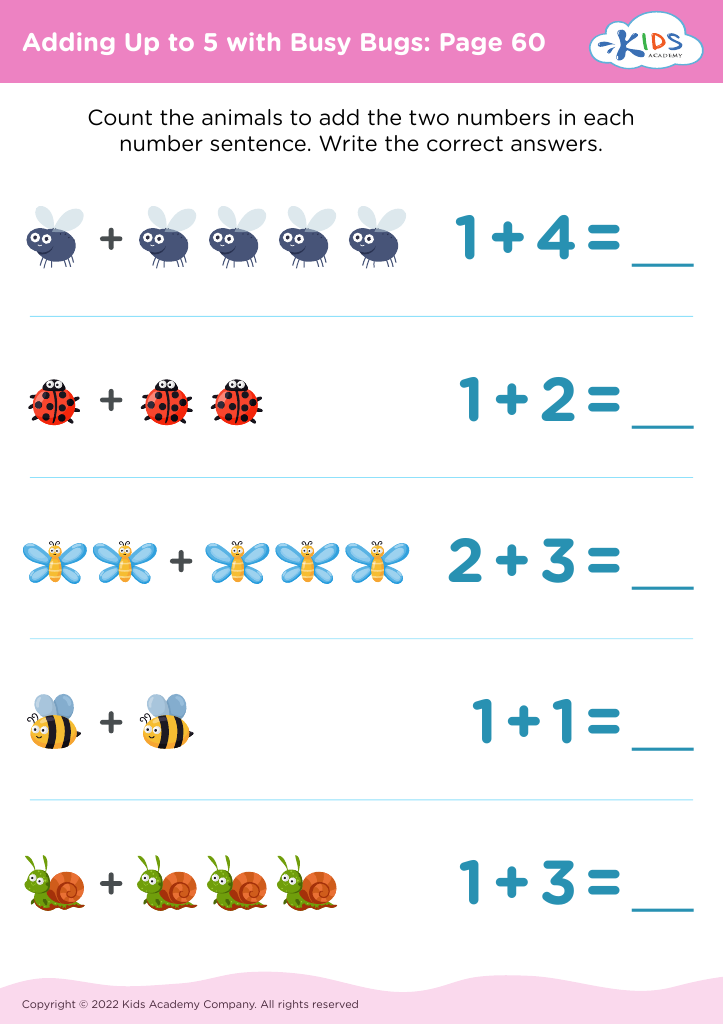
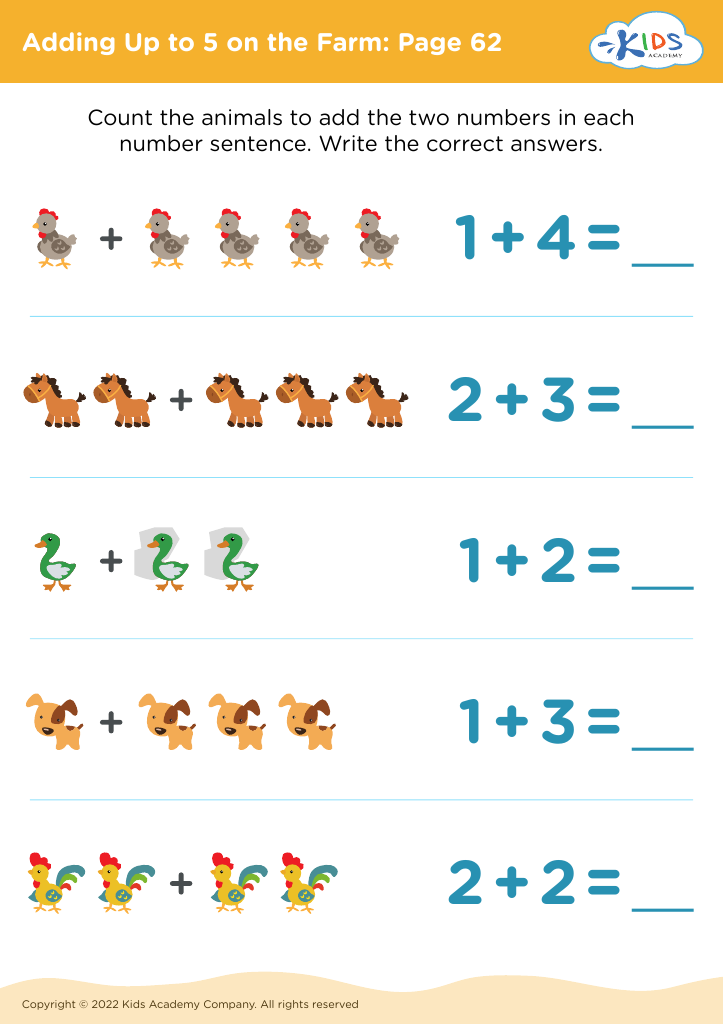
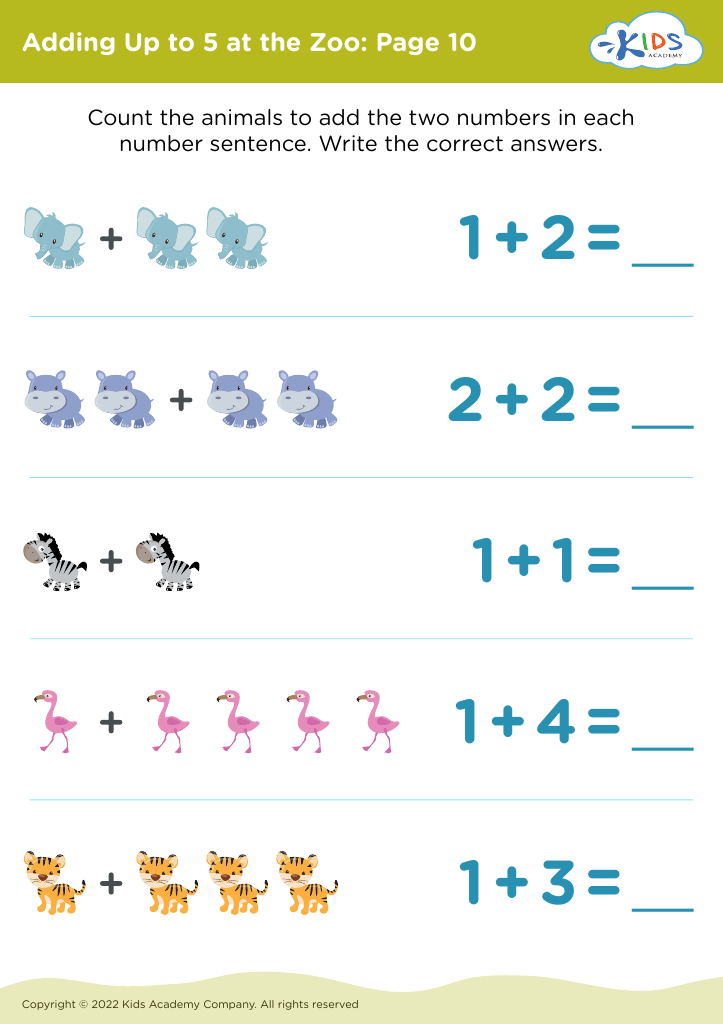
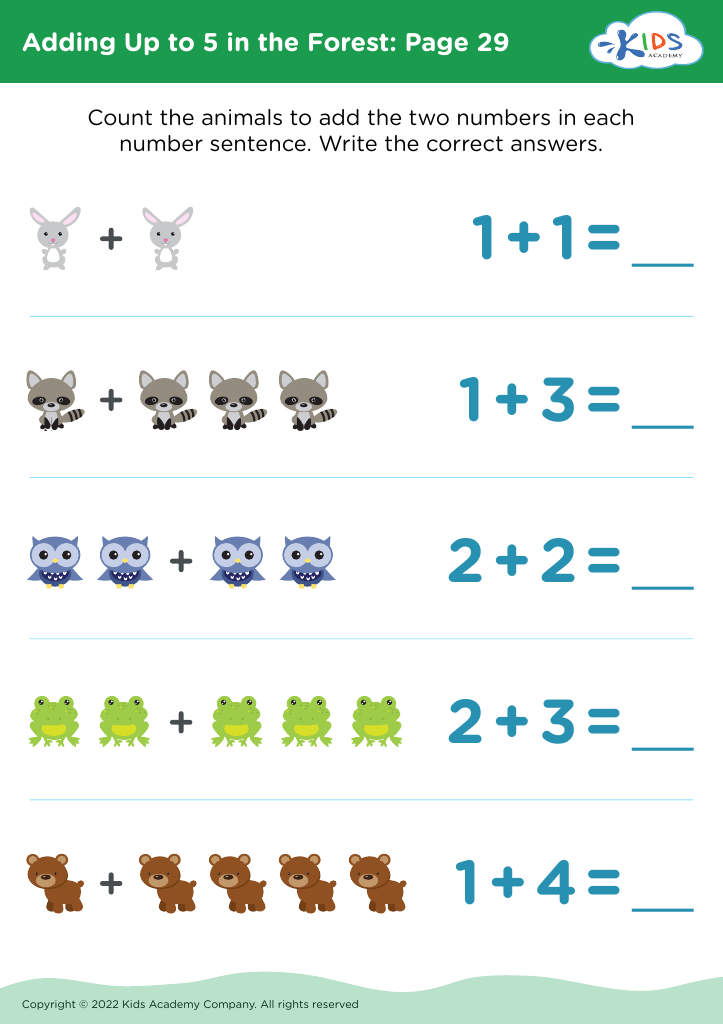
Discover our engaging Visual Learning Enhancement Addition Worksheets designed for children aged 4-9. These vibrant and interactive worksheets focus on making addition fun and accessible through visual aids, helping young learners grasp fundamental math concepts. By incorporating colorful images and step-by-step illustrations, we cater to various learning styles and promote a deeper understanding of addition. Perfect for parents and educators, these worksheets support skill development, encourage independent practice, and build confidence in young mathematicians. Explore our collection today and empower your child’s learning journey with tools that make math enjoyable and effective!




.jpg)



Parents and teachers should care about visual learning enhancement in addition for children aged 4-9 because early childhood is a critical period for cognitive development. At this stage, children are naturally curious and highly responsive to visual stimuli, making visuals a powerful tool for engaging their interest and enhancing understanding of mathematical concepts. Visual learning aids—such as diagrams, pictures, manipulatives, and games—can simplify abstract concepts, helping children grasp ideas like addition in a concrete way.
Moreover, incorporating visual elements supports diverse learning styles. Not all children learn the same way—some may excel in verbal learning while others thrive with visual cues. By integrating visual strategies, educators can reach a broader range of learners, fostering a more inclusive classroom environment.
Additionally, visual learning promotes greater retention and recall by creating mental images associated with concepts. As children visualize addition through objects or drawings, they build stronger neural connections, facilitating skill mastery. This foundation not only aids in immediate learning but also prepares children for future mathematical challenges, ultimately contributing to their long-term academic success. Involving parents in this process further strengthens home-school connections, allowing for a comprehensive approach to supporting children’s educational journeys.








