Visualization skills Addition Worksheets for Ages 4-9
3 filtered results
-
From - To
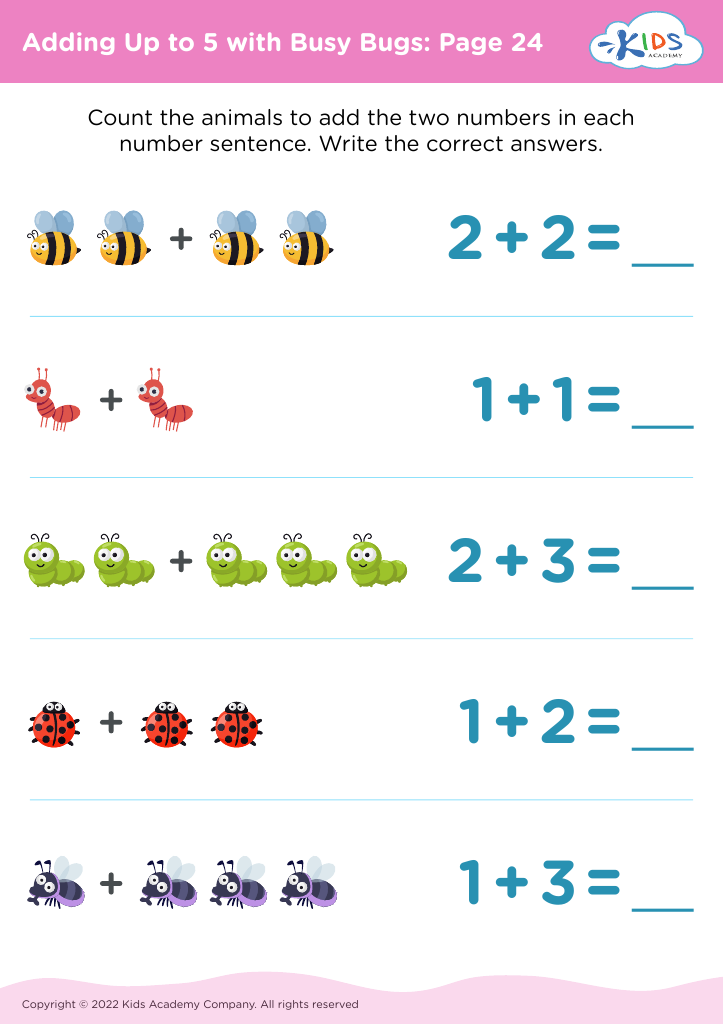
Enhance your child's math learning with our Visualization Skills Addition Worksheets for ages 4-9. These engaging worksheets are designed to help young learners develop crucial visualization skills needed for mastering addition. By incorporating colorful graphics and interactive elements, children will improve their ability to grasp numerical concepts and see relationships between numbers clearly. Our thoughtfully crafted activities encourage children to visualize addition problems, making math both fun and accessible. Perfect for home practice or classroom use, these worksheets promote critical thinking and boost confidence in early math skills. Start your child on a path to success in math with our engaging resources today!
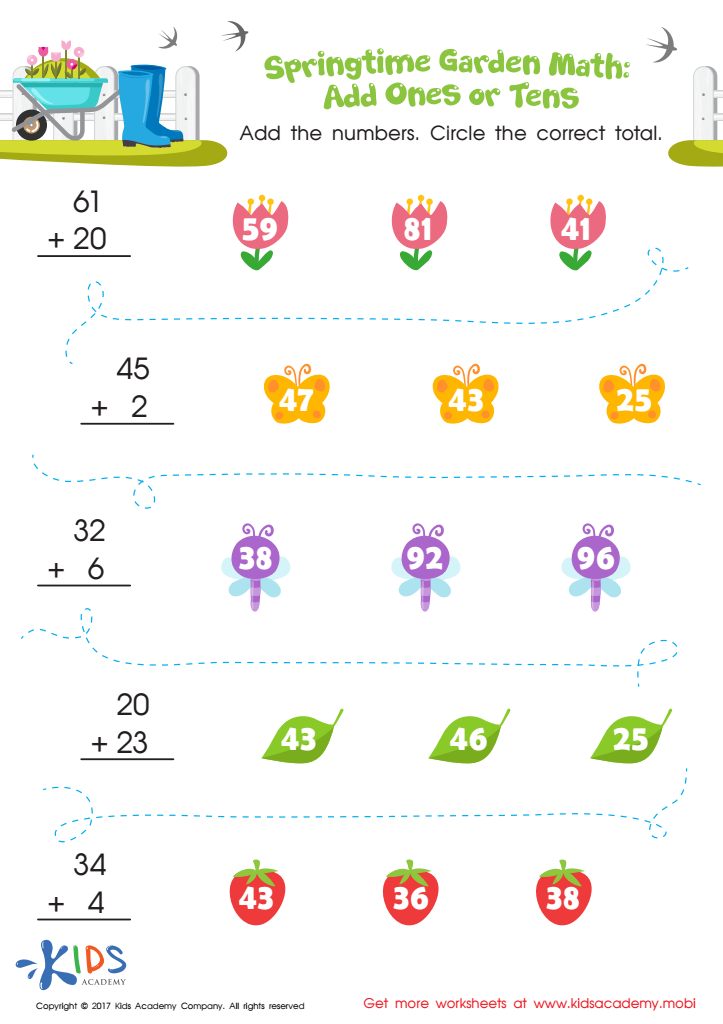
Springtime Garden Math Worksheet
 Assign to My Students
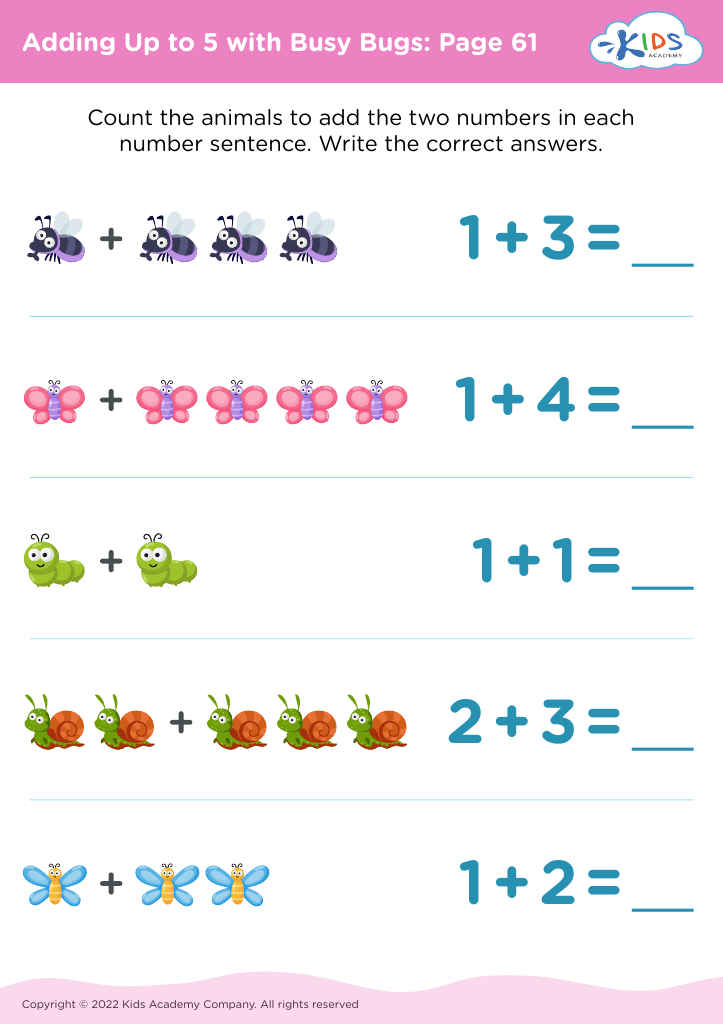








Visualization skills are essential for children aged 4-9 as they lay the foundation for various cognitive and academic abilities, particularly in mathematics. When children can visualize addition problems, they develop a stronger understanding of numbers and their relationships, enabling them to solve problems more efficiently. For instance, visualizing quantities helps children grasp concepts like “two more than three” by picturing objects or dots.
Teachers and parents should care about fostering these skills because effective visualization enhances critical thinking and problem-solving abilities. At this age, children are naturally curious and engaged; utilizing fun, visual strategies can make learning enjoyable, keeping their interest high. Games, drawings, and manipulatives empower children to explore numbers visually, leading to deeper comprehension.
Furthermore, strong visualization skills aid in developing overall math fluency, influencing future learning in more complex mathematical concepts. The ability to visualize also transfers to other subjects, such as reading and science, as children apply these skills to understand and recall information.
Investing time and resources into helping children improve their visualization skills not only supports their current learning but also establishes essential skills they'll use throughout their educational journey and beyond. In essence, nurturing these abilities contributes to more confident, capable learners.








