Vocabulary development Addition Worksheets for Ages 4-9
5 filtered results
-
From - To
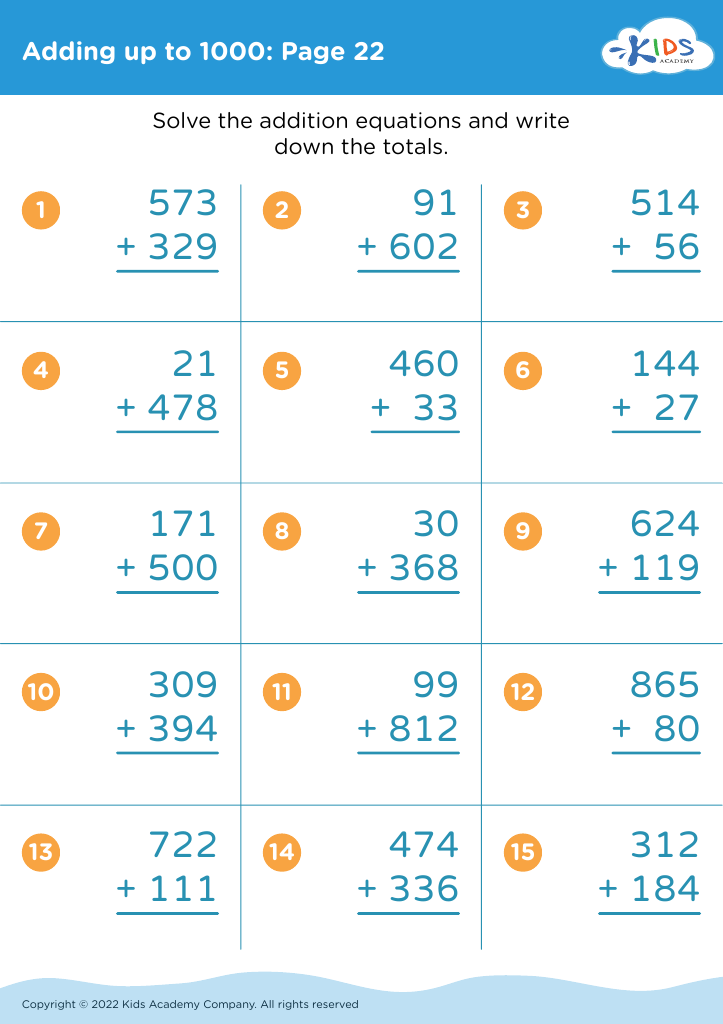
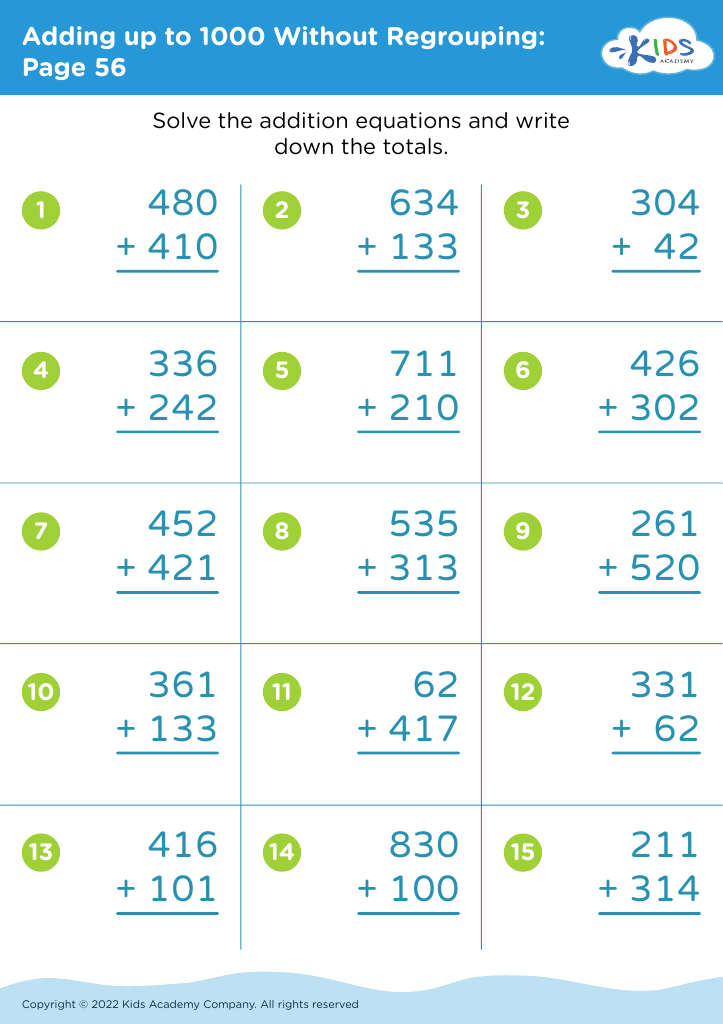
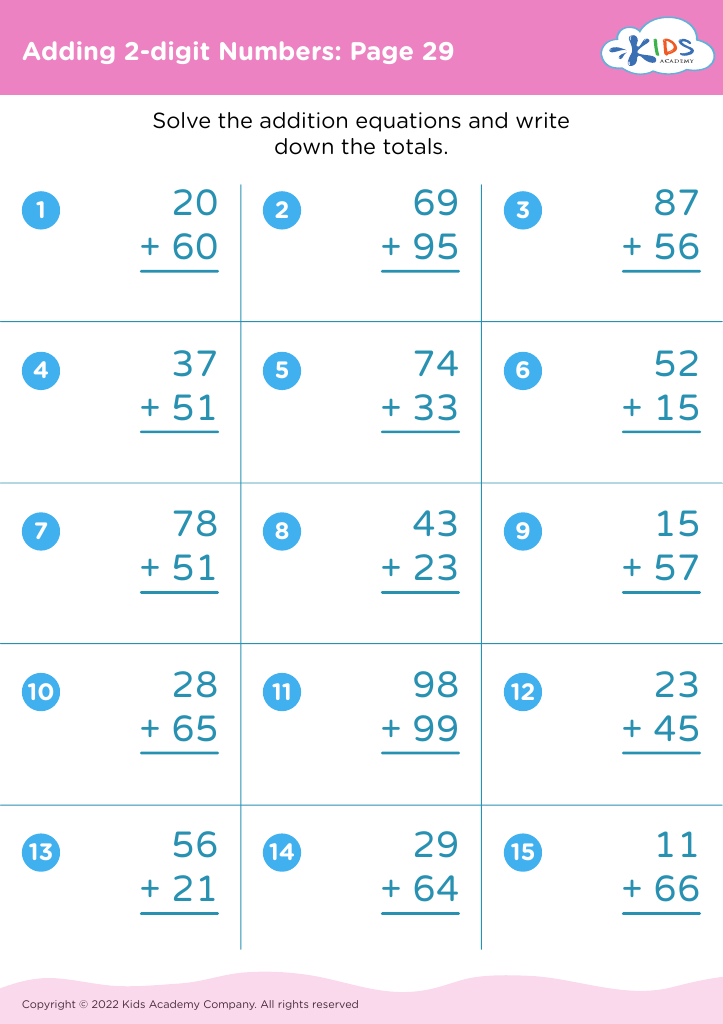
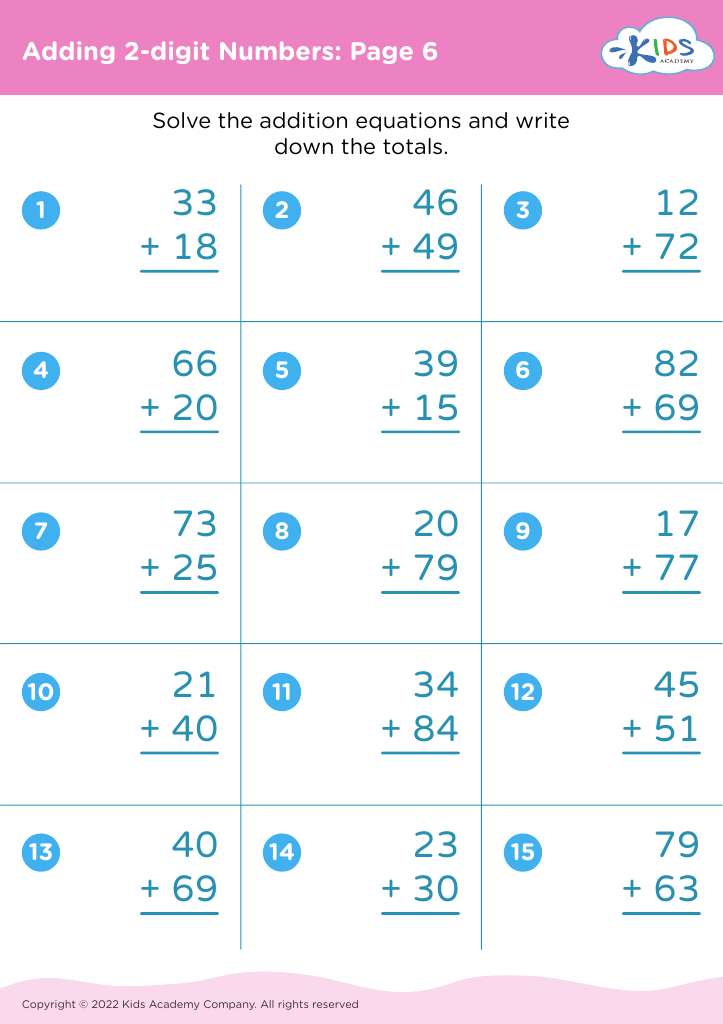
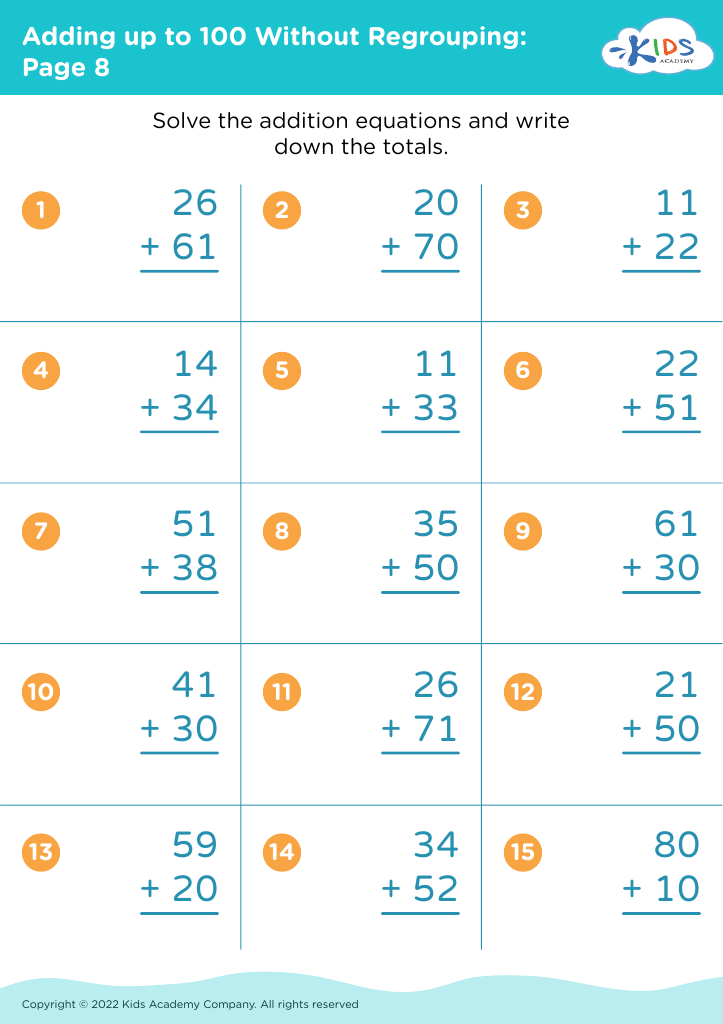
Explore our collection of addition worksheets tailored for children ages 4-9, designed to enhance both math and vocabulary skills. These interactive sheets combine fundamental arithmetic practice with vocabulary development, ensuring a balanced educational experience. Kids will strengthen their addition abilities while learning new words within engaging contexts. Each worksheet includes colorful images and fun themes to keep young minds inspired and motivated. With a variety of difficulty levels, our worksheets cater to different learning paces, making them perfect for classrooms or home use. Empower your child's mathematical journey and boost their language skills simultaneously with our expertly crafted resources.





.jpg)

.jpg)
Vocabulary development is crucial for children aged 4-9 as it lays the foundation for their academic and social success. During these formative years, a rich vocabulary supports the development of strong reading and writing skills. Children need to recognize and understand words in order to read fluently and comprehend their reading material. As they build a robust vocabulary, they become better equipped to express their thoughts, ask questions, and engage in discussions, enhancing their overall communication skills.
Moreover, a well-developed vocabulary positively impacts cognitive abilities such as memory, attention, and critical thinking. It helps children understand complex concepts and learn new information more efficiently. For subjects like math and science, knowing specific terms allows children to grasp instructions and explanations, fostering better academic performance across disciplines.
Socially, children with a rich vocabulary can better articulate their feelings and needs, promoting healthier relationships with peers and adults. This reduces frustration and fosters a greater sense of confidence and self-esteem in their interpersonal interactions.
Parents and teachers play a crucial role in nurturing this development through activities like reading, engaging conversations, and meaningful exposure to new words. By prioritizing vocabulary development, they equip children with essential tools that pave the way for lifelong learning and success.








