Mathematical reasoning Division Worksheets for Ages 4-9
4 filtered results
-
From - To
Unlock the mathematical potential in young learners with our "Mathematical Reasoning Division Worksheets for Ages 4-9." Specially designed to suit the developmental stages of children, these engaging worksheets expertly blend fun and education. Focused on building strong foundational skills, they help kids grasp division concepts through interactive and thought-provoking exercises. Ideal for use in classrooms or at home, our worksheets support your child’s journey in critical thinking and problem-solving. Enhance your child’s learning experience today with our high-quality, curriculum-aligned division worksheets from Kids Academy. Get ready to see confidence and competence grow with every completed page!
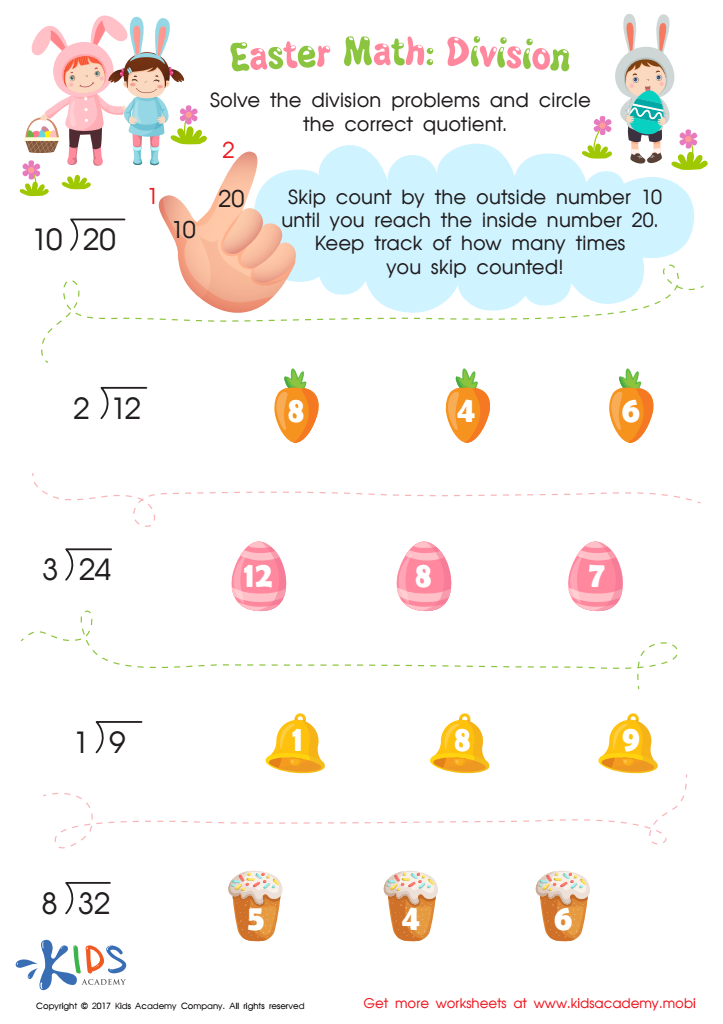
Division Worksheet
 Assign to My Students
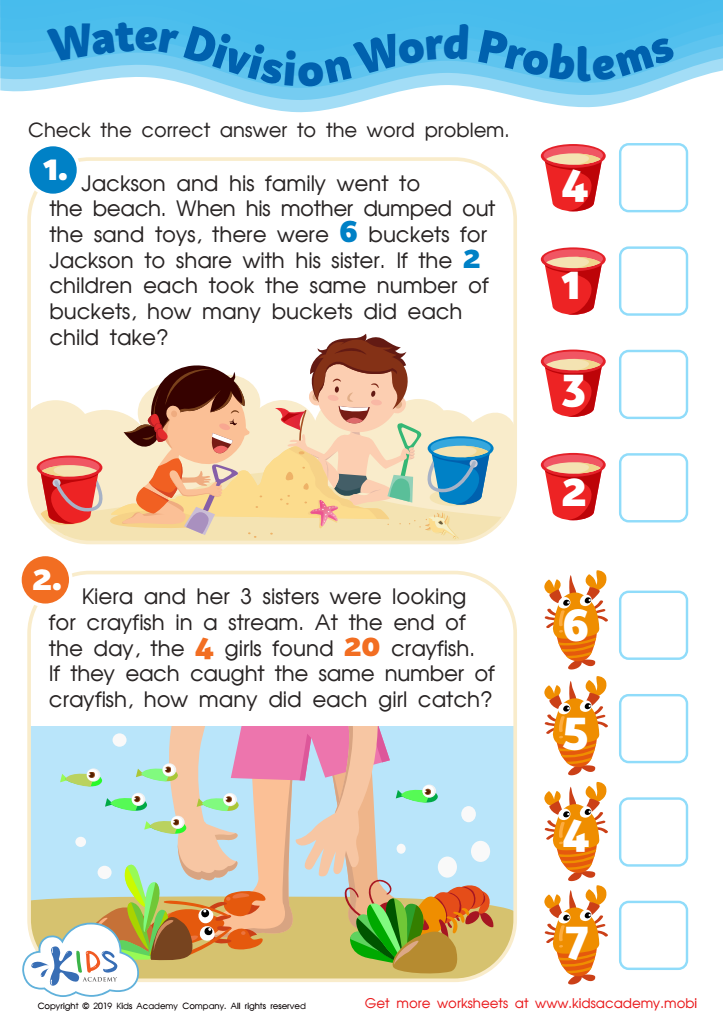
Water Division Word Problems Worksheet
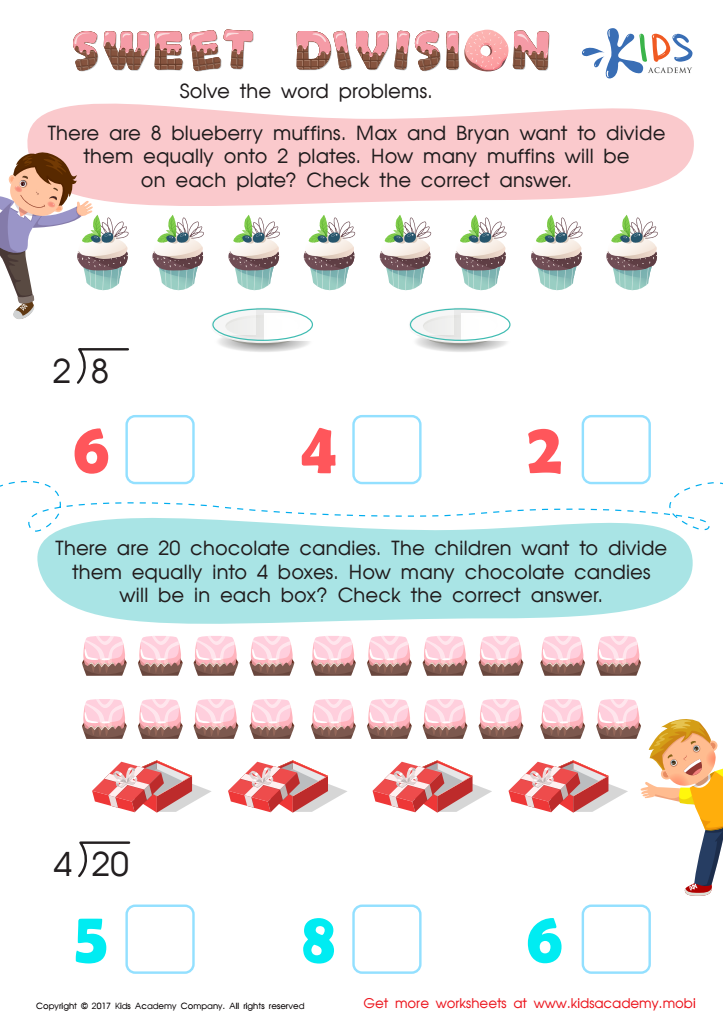
Division Word Problems Worksheet
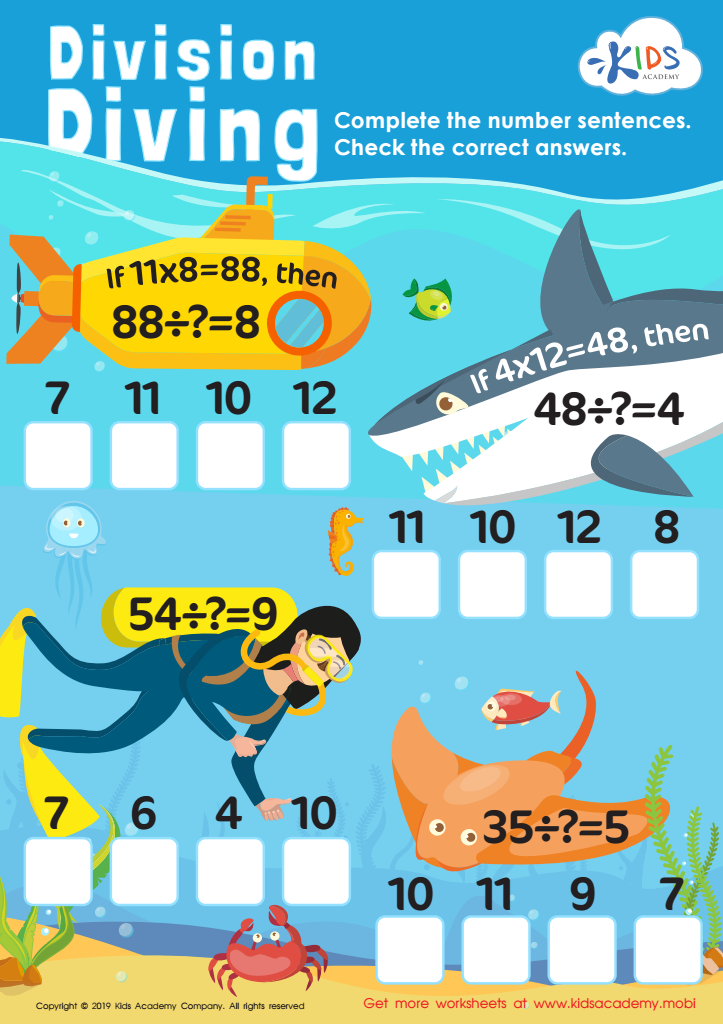
Division Diving Worksheet








Mathematical reasoning, especially division, is crucial for young children aged 4-9 as it lays a robust foundation for their future academic success and everyday problem-solving skills. At this developmental stage, children are at a prime age to absorb and internalize basic mathematical concepts. Understanding division fosters critical thinking, helping them see relationships between numbers and grasp the notion of equal distribution. This foundational knowledge transcends math; it builds logical reasoning skills that are vital in reading comprehension and scientific inquiry.
Additionally, mathematical reasoning in activities involving division introduces children to the concept of fairness and sharing. They learn to evenly distribute resources, a practical life skill, through engaging and collaborative play. These activities also enhance spatial awareness and enhance cognitive flexibility, aiding them in visualizing and comparing quantities and spaces.
Parents and teachers play pivotal roles in encouraging and nurturing these skills. By doing so, they can significantly boost a child's confidence and persistence in tackling complex problems, reducing math anxiety at an early stage. Effective guidance in mathematical reasoning equips young learners with the tools to approach their schoolwork with curiosity and confidence, ultimately fostering a lifelong appreciation and understanding of mathematics.








