Differentiating shapes Geometry Worksheets for Ages 4-9
3 filtered results
-
From - To
Explore our engaging "Differentiating Shapes Geometry Worksheets" designed specifically for children ages 4-9! These interactive worksheets help young learners identify, classify, and distinguish between various shapes, fostering essential geometric skills. With colorful illustrations and age-appropriate challenges, kids will have fun while reinforcing their understanding of shapes in a creative way. Perfect for homeschooling or classroom use, our resources cater to different learning styles, ensuring every child can participate and succeed. Spark curiosity and enhance critical thinking as your students embark on their geometry journey! Download our worksheets today and make learning about shapes an enjoyable adventure!
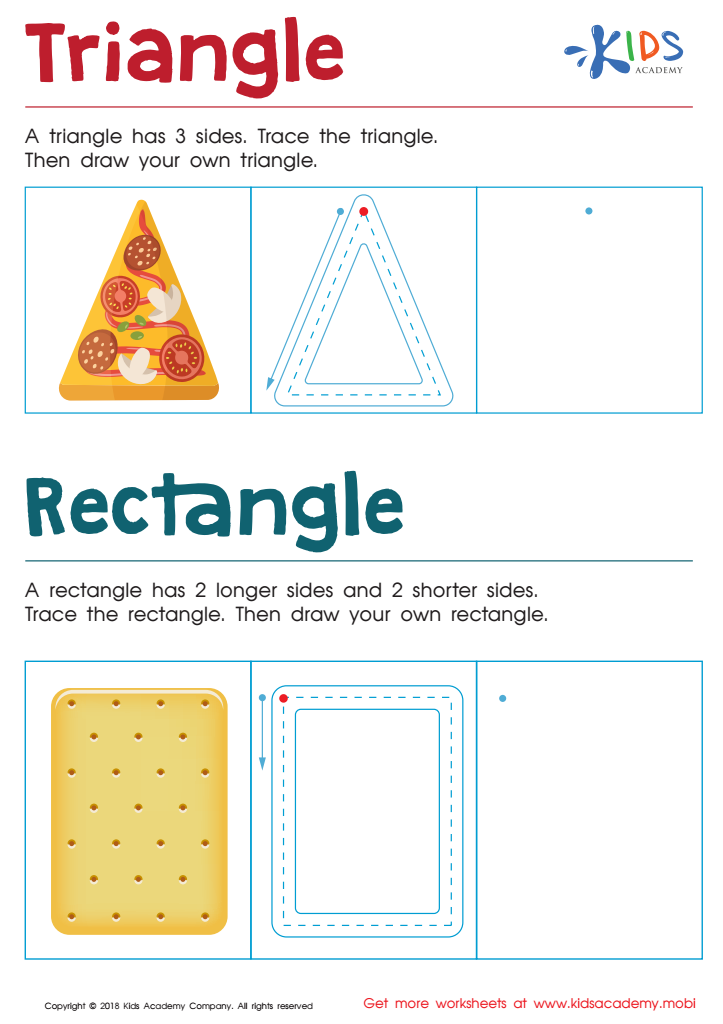
Triangle Rectangle Worksheet
 Assign to My Students











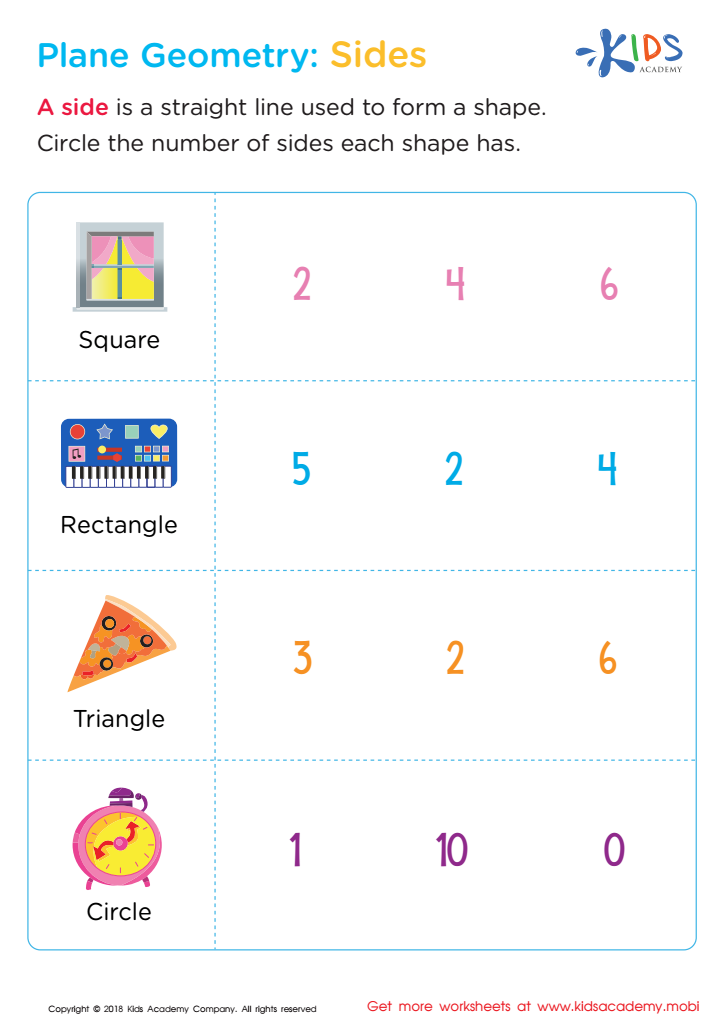
Plane Geometry: Sides Worksheet
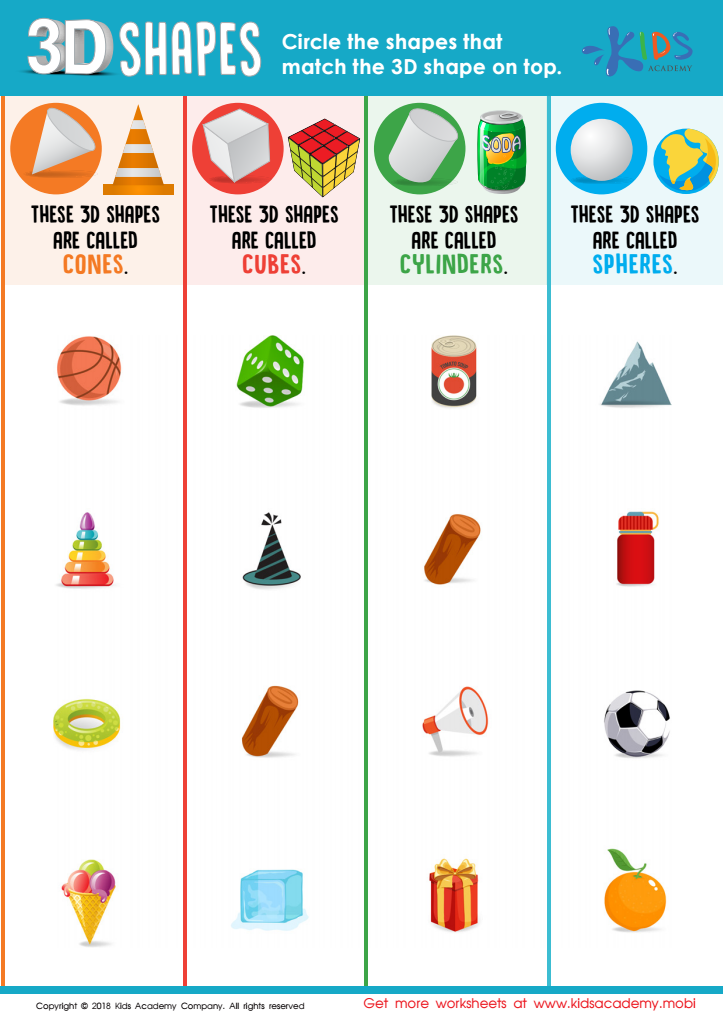
3D Shapes Worksheet








Differentiating shapes in geometry is essential for children aged 4 to 9, as it lays the foundation for their understanding of mathematics and spatial reasoning. During these formative years, children develop critical cognitive skills that are influenced by their early exposure to various concepts, including shapes and their properties. By differentiating shapes—identifying, comparing, and categorizing them—children learn to classify objects and recognize patterns, fostering their analytical skills.
Parents and teachers should care about this differentiation process because it promotes creativity and problem-solving abilities. Understanding shapes also helps children begin to appreciate geometric concepts, which can enhance their performance in higher-level math as they progress through school. Through engaging activities, such as shape scavenger hunts or arts and crafts, educators can create an accessible learning environment where children learn through play.
Additionally, recognizing and differentiating shapes supports language development, as children learn to articulate their thoughts and observations about the world around them. Ultimately, early mastery of geometric concepts contributes to a child's confidence and a positive attitude toward learning, inspiring long-term academic success. Fostering this understanding is crucial for parents and educators who aim to provide a solid educational foundation.








