Basic addition practice Math Worksheets for Ages 4-9 - Page 2
25 filtered results
-
From - To





.jpg)


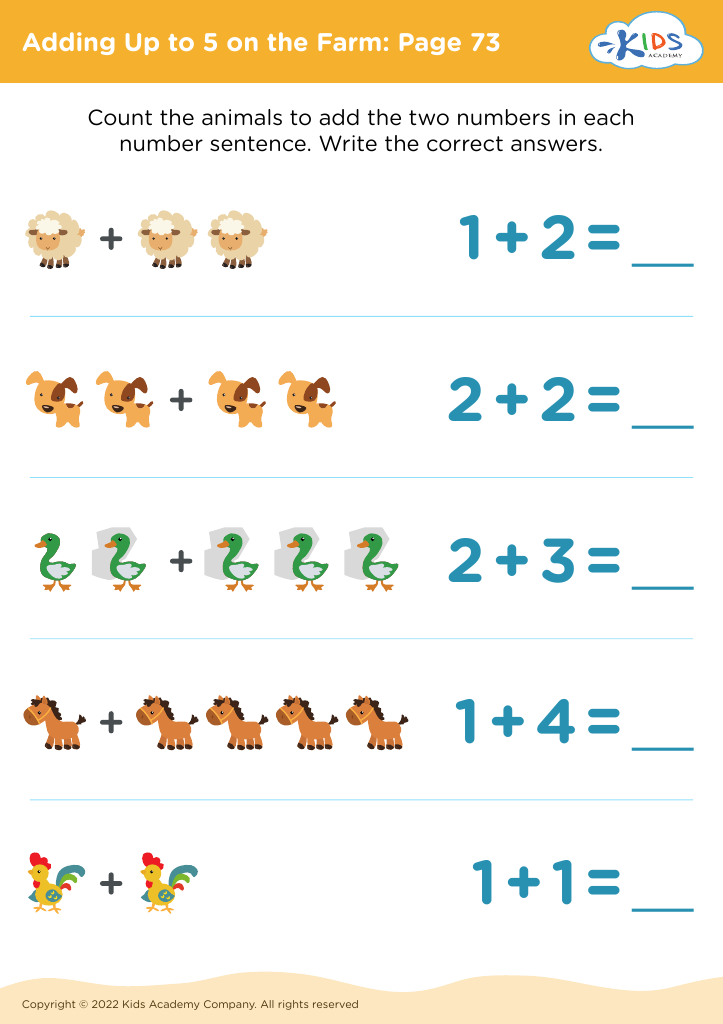
Basic addition practice is crucial for children ages 4-9 as it lays the foundation for their numerical understanding and overall academic success. During these formative years, children develop critical thinking and problem-solving skills that are vital in both mathematics and daily life. Mastering basic addition enhances their ability to engage with more complex mathematical concepts in the future, such as subtraction, multiplication, and division.
Additionally, regular practice promotes confidence and reduces math anxiety, which can foster a positive attitude towards the subject. Children who struggle with basic skills may find advanced topics overwhelming, leading to frustration and disinterest in learning. By investing time in basic addition, parents and teachers contribute to building a child's resilience and motivation.
Furthermore, addition practice is a gateway for children to connect math with real-life situations. Understanding how to add helps children manage simple financial decisions, such as counting change or planning a budget for small purchases. Importantly, incorporation of fun activities and games strengthens their engagement, making learning enjoyable. In conclusion, focusing on basic addition not only benefits a child's current educational journey but also equips them with essential skills needed for future learning and life.








