Basic geometry concepts Math Worksheets for Ages 4-9
3 filtered results
-
From - To
Introduce your child to the fundamental world of shapes and spatial understanding with our Basic Geometry Concepts Math Worksheets for Ages 4-9. Designed to captivate young learners, these worksheets blend entertainment with education, ensuring that children acquire essential geometry skills through engaging activities. From identifying shapes and exploring symmetry to grasping spatial relationships, each worksheet is crafted to build a solid groundwork in geometry. Perfect for both classroom and home use, our resources support and enhance developmental milestones, making learning geometrical concepts an enjoyable and rewarding experience for your child. Empower your young mathematician today!
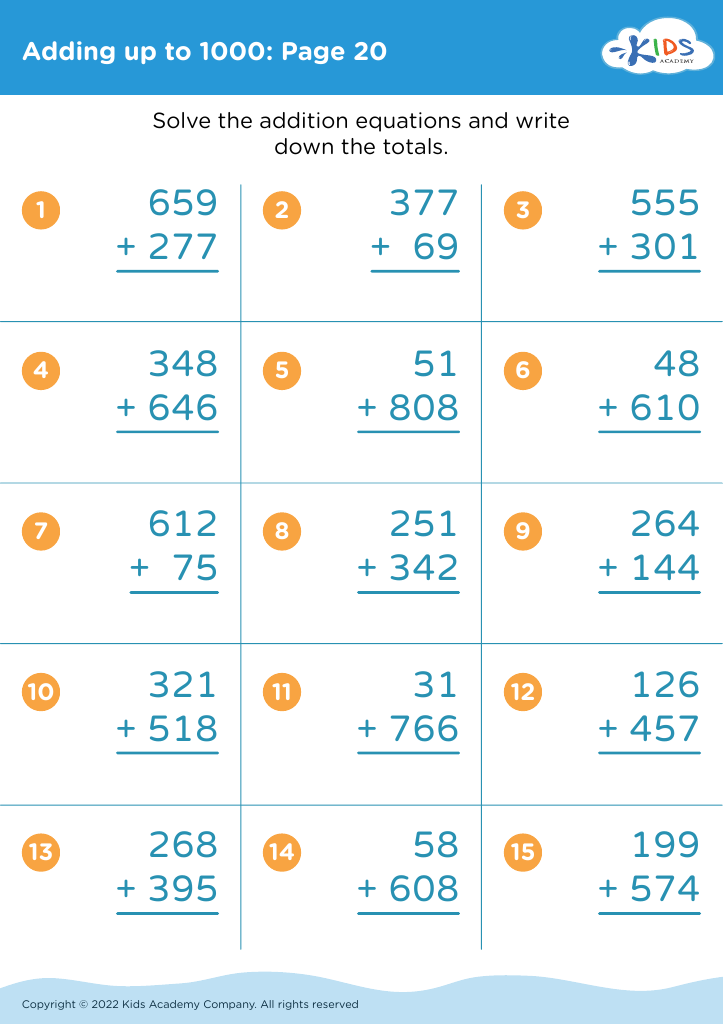
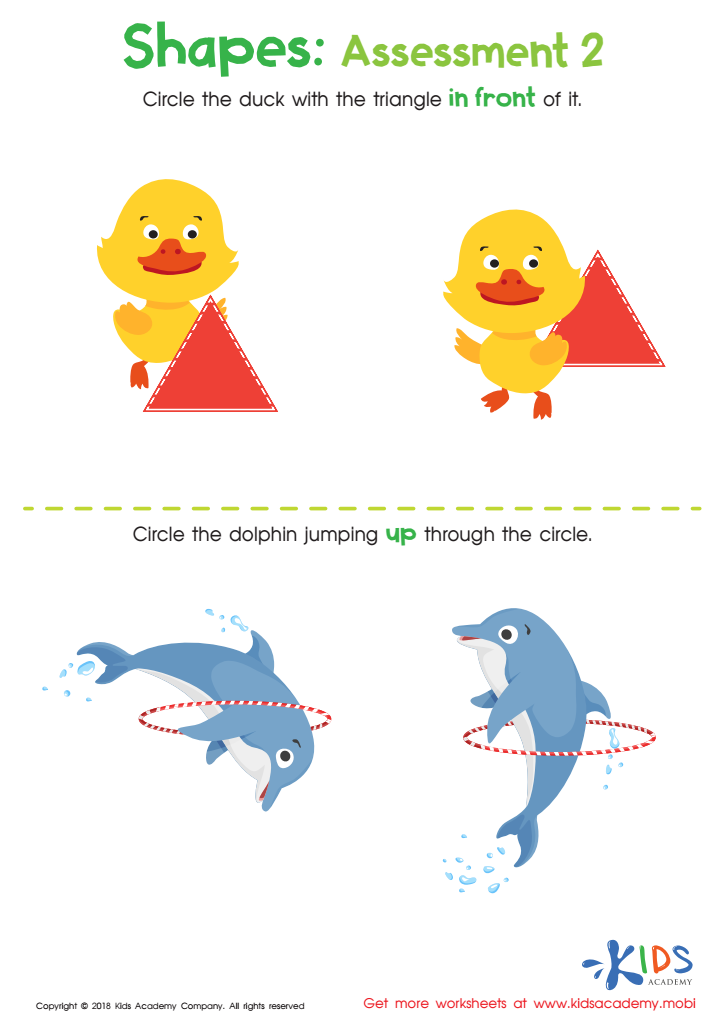
Geometry – Assessment 2 Worksheet
 Assign to My Students
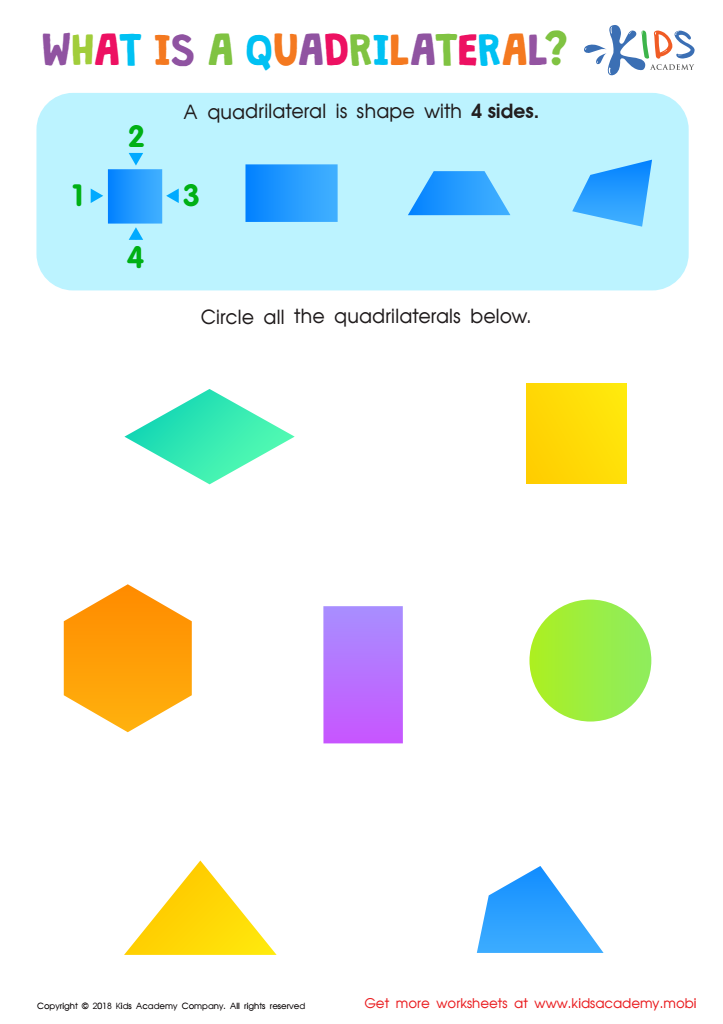
What Is a Quadrilateral? Worksheet







Basic geometry concepts for children aged 4-9 are essential building blocks for cognitive and spatial development. At this crucial developmental stage, young minds are primed to grasp foundational ideas that will inform more complex problem-solving and analytical skills in later life. When parents and teachers engage children in basic geometry, they help kids understand shapes, sizes, patterns, and spatial relationships. This knowledge is crucial not just for future academic success in mathematics but also for everyday tasks and games, like puzzles or navigating space.
Teaching geometry enhances a child's ability to think logically and critically. Concepts like symmetry, proportion, and spatial reasoning come into play when interpreting the world around them, from recognizing shapes in room objects to crosswalking roads. Particularly important is how these skills align with the integration of STEM (Science, Technology, Engineering, Math) education principles. Early mastery in geometry builds confidence, reduces math anxiety, and fosters a lifelong love for learning.
Moreover, practical activities involving shapes and spaces, such as drawing, block-building, and simple mosaic arts, cultivate motor skills and eye-hand coordination. A solid foundation in geometry thus aids in overall holistic development, turning abstract mathematical concepts into tangible, enjoyable experiences for young learners. Parents and educators investing in this area early on set a strong basis for ongoing education and real-world application.








