
Basic math skills development Math Worksheets for Ages 4-9
3 filtered results
Difficulty Level
Grade
Age
-
From - To
Subject
Activity
Standards
Unlock your child's potential with our Basic Math Skills Development Worksheets designed for kids aged 4-9! Kids Academy offers a range of engaging and educational activities tailored to young learners. These fun-filled worksheets cover essential math concepts such as addition, subtraction, counting, and number recognition. Perfect for both classroom and at-home learning, our resources are crafted to promote critical thinking and problem-solving skills in a playful manner. Help your kids build a strong math foundation they will carry through their education. Start exploring and see how learning math can be fun and effective!
Favorites
With answer key
Interactive
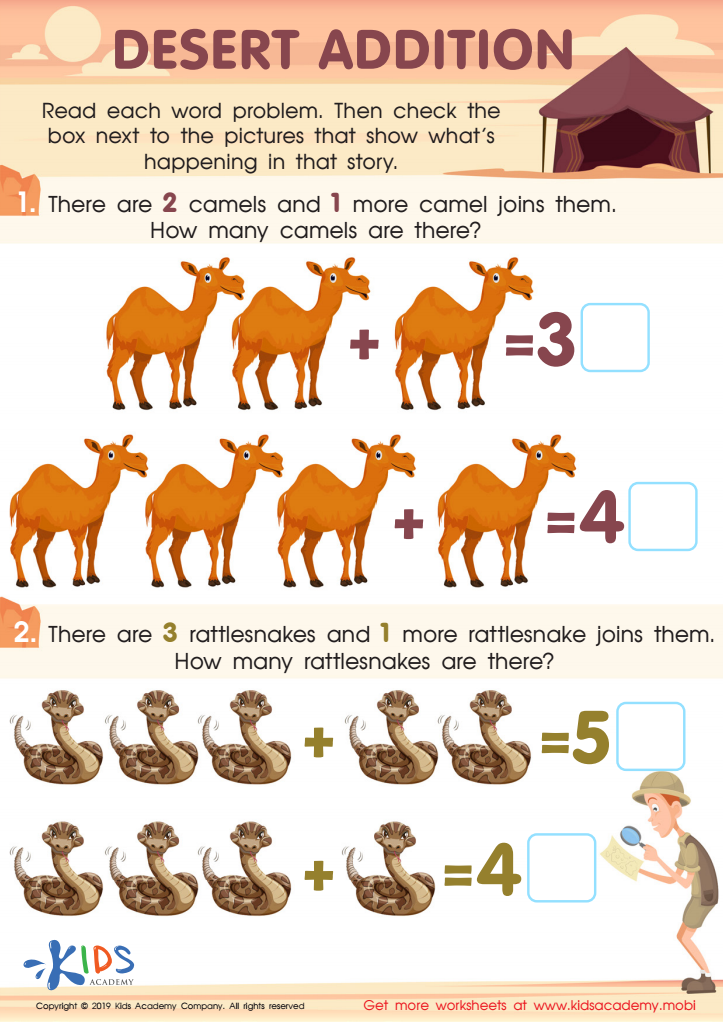
Desert Addition Worksheet
In the desert, scorching heat and little water mean animals must adapt to survive. Show kids pictures of these animals and teach their names. Then, read the word problems in the worksheet, and have them check the box next to the pictures that portray each story. 80 words
 Assign to My Students
Desert Addition Worksheet
Worksheet
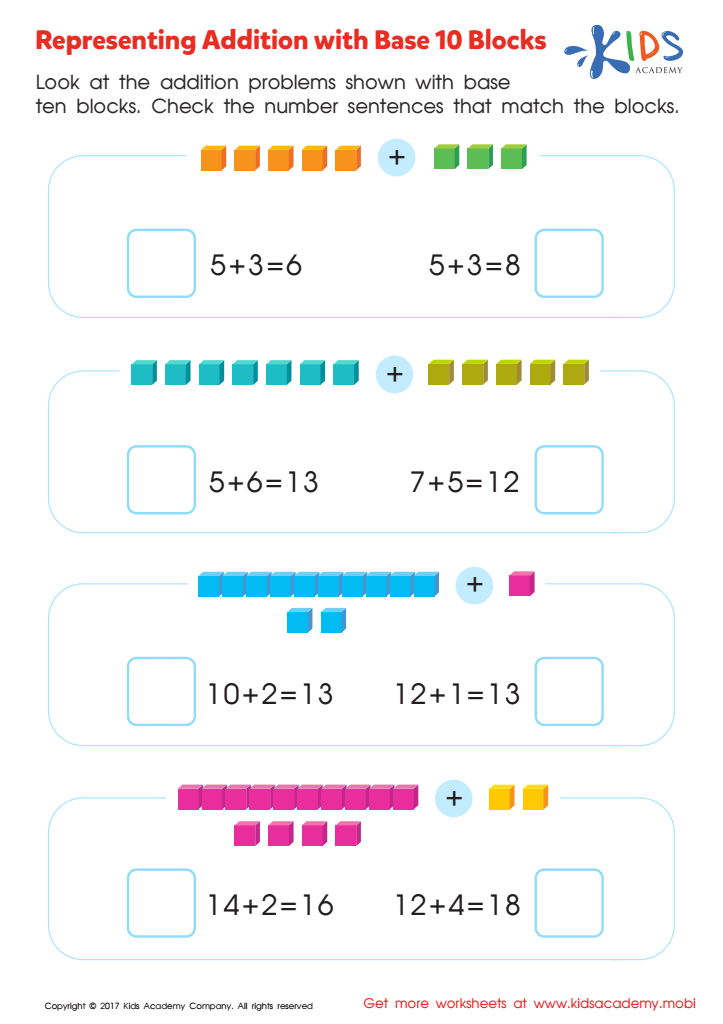
Representing Addition with Base 10 Blocks Worksheet
Solve addition problems with your little one: help them count the blocks, then select the correct equation from the choices. Circle the answer. Word play and math make a winning combo!
Representing Addition with Base 10 Blocks Worksheet
Worksheet
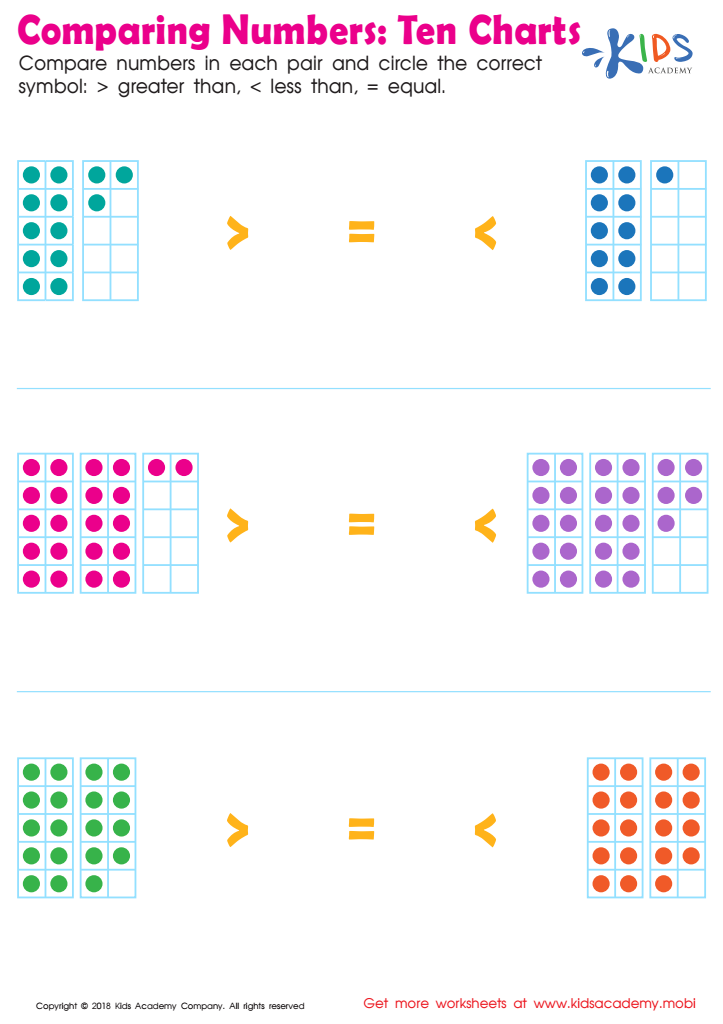
Ten Charts Worksheet
Help your child learn numbers in a creative way using this printable worksheet. They'll learn the difference between numbers, how to add them, and the symbols of "greater than", "less than" and "equals to". They can compare two sides, and identify which is greater, less or equal. Let their maths knowledge bloom!
Ten Charts Worksheet
Worksheet
Join Kids Academy for Free
Who is primarily going to use this learning content?







Basic math skills development for children aged 4 to 9 is crucial as it lays the foundation for more advanced concepts they will encounter later in their educational journey. Parents and teachers should prioritize these early math experiences because they enhance not only mathematical abilities but also critical thinking and problem-solving skills. Mastery of basic math provides young students with the confidence to tackle increasingly complex problems, fostering a positive attitude toward learning. Additionally, mathematical competence gained during these formative years has been linked to future academic success in a variety of subjects, understanding the world around them, and everyday tasks like telling time, counting money, and measuring ingredients.
Furthermore, early math skills have social-emotional benefits. When children experience success in math, they gain a sense of accomplishment, boosting their self-esteem and motivation. Encouraging group activities that involve math also teaches cooperation and communication, essential life skills.
For parents, engaging in math-related activities at home such as counting games, puzzles, and measuring exercises can make learning fun and intuitive, reinforcing classroom lessons. Early math education thus serves as an investment in a child’s future, impacting not just academic trajectories, but lifelong skills and emotional development. Providing this foundational support can ultimately lead to well-rounded, self-assured, and capable individuals.








