
Classification skills Math Worksheets for Ages 4-9
4 filtered results
Difficulty Level
Grade
Age
-
From - To
Subject
Activity
Standards
Enhance your child's learning journey with our engaging Classification Skills Math Worksheets, designed specifically for ages 4-9. These interactive worksheets foster critical thinking and help young learners recognize patterns and categorize objects, promoting essential cognitive skills. Featuring colorful images and fun activities, our materials make math enjoyable and stimulating. Perfect for homeschool settings or supplementary classroom resources, these worksheets cater to various learning styles and abilities. Encourage early math proficiency as your child explores grouping, sorting, and classifying through hands-on practice. Empower their educational experience with our thoughtfully crafted resources that build a strong foundation for future math success. Start exploring today!
Favorites
With answer key
Interactive
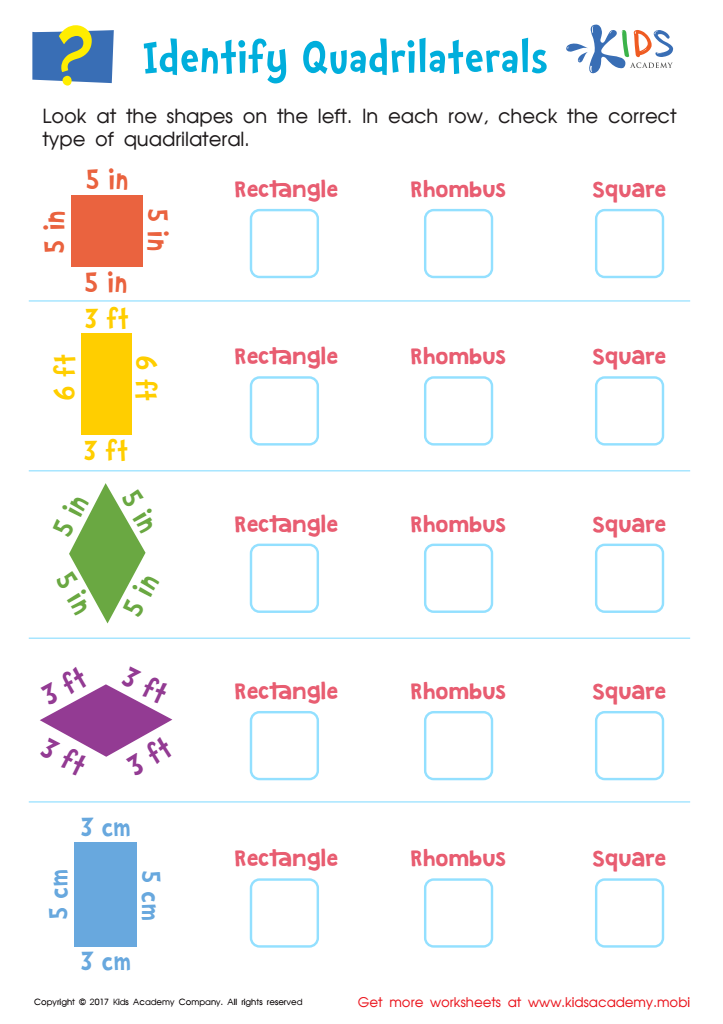
Identify Quadrilaterals Worksheet
This PDF worksheet helps kids identify different quadrilaterals using pictures and measurements. From rectangles to diamonds, children will use their knowledge of geometry to observe and classify shapes. A colorful and fun way to learn!
 Assign to My Students
Identify Quadrilaterals Worksheet
Worksheet
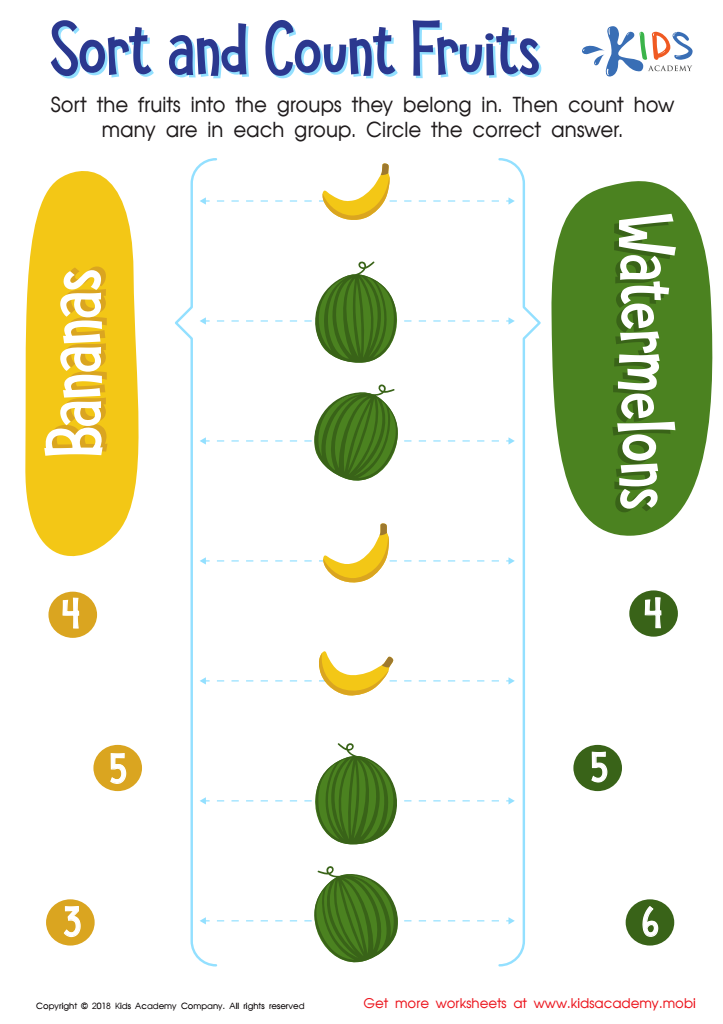
Sort and Count Fruits Worksheet
Allow your children to hone their critical thinking and number reasoning skills with this free worksheet. They'll sort, count, and trace fruits while learning basic number sense. A fun, delicious learning experience with familiar pictures they'll love.
Sort and Count Fruits Worksheet
Worksheet
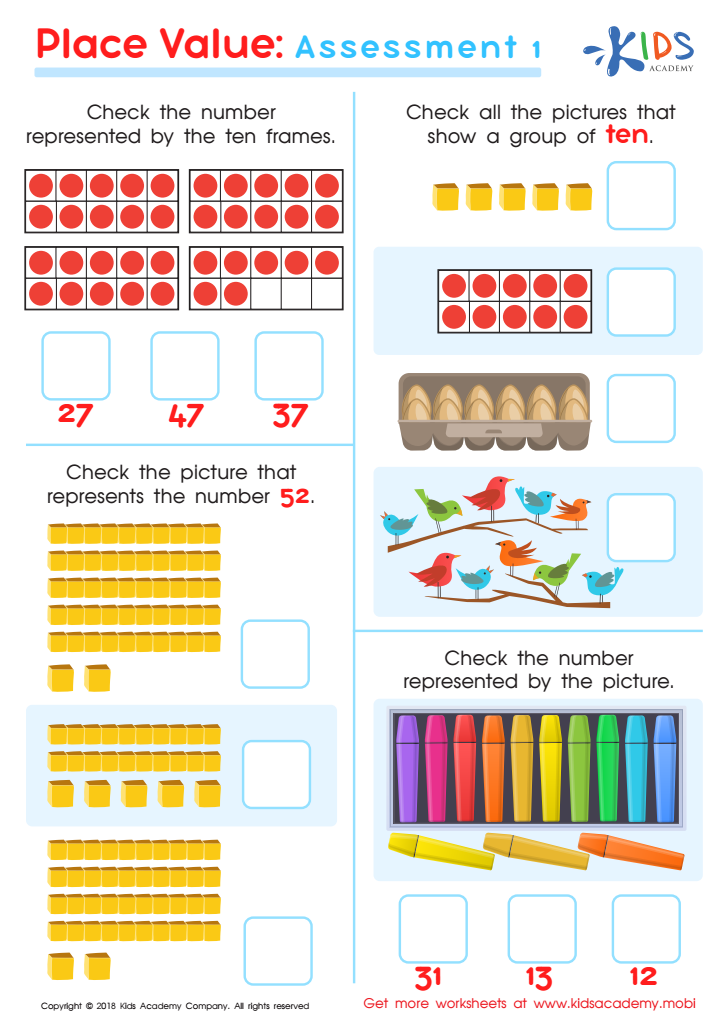
Place Value: Assessment 1 Worksheet
Assess your child's place value and number representation with this PDF worksheet. It lets them count and compare numbers and practice chiseling numbers into groups of ten. It's a great way to identify any concepts that need to be reinforced.
Place Value: Assessment 1 Worksheet
Worksheet
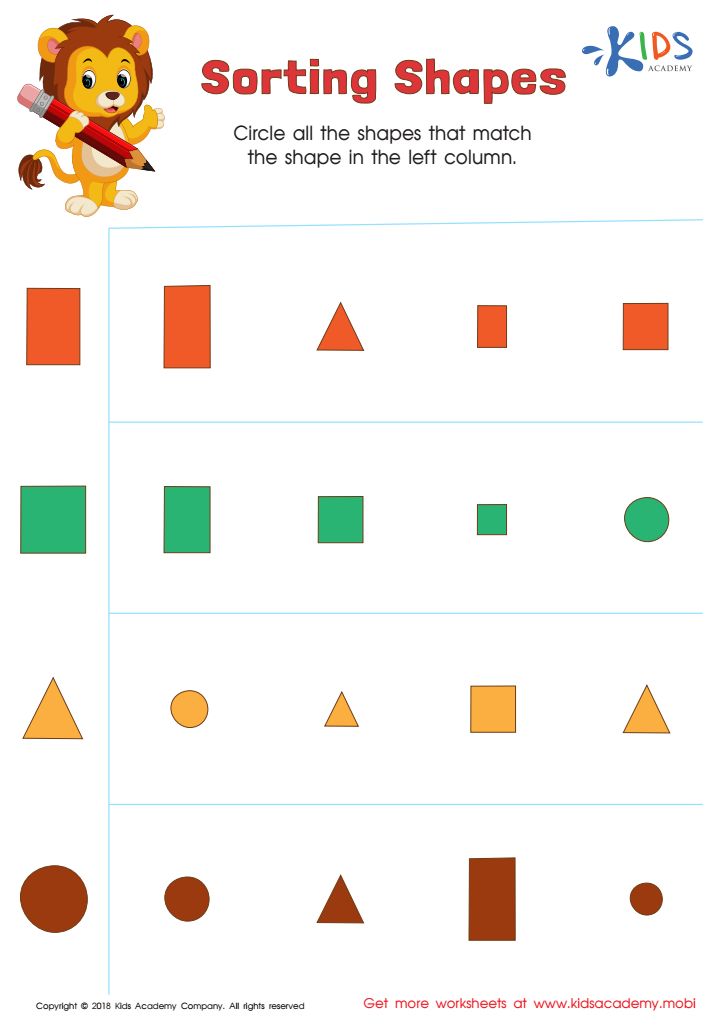
Sorting Shapes - Part 2 Worksheet
Tired of dull worksheets? Look no further than Kids Academy's colorful shape-sorting worksheet! It's perfect for challenging your toddler's problem-solving skills. Print the free PDF page and let your child practice the basics of geometry. Have them work down the left column, circling the shapes on the right that match. It's a great way to form a strong foundation in early learning.
Sorting Shapes - Part 2 Worksheet
Worksheet
Join Kids Academy for Free
Who is primarily going to use this learning content?






Classification skills in math are essential for children aged 4-9, as they lay the foundational framework for critical thinking and problem-solving. This developmental stage is crucial, as children are learning to recognize patterns, group items, and understand relationships between objects. Classification helps students develop organizational skills, which not only enhance their mathematical learning but also impact their ability to navigate their environment effectively.
By categorizing objects based on shared characteristics, such as color, size, or shape, children sharpen their analytical abilities. These skills promote cognitive development, enhancing memory and attention spans. Furthermore, classification fosters collaboration and communication, as children often work together to categorize items, learning to share ideas and listen to others.
For parents and teachers, nurturing classification skills means providing students with tools they need for later mathematical concepts such as sorting, counting, and data interpretation. These foundational skills feed into more complex mathematical reasoning and foster a love for learning. Investing time in activities that develop these skills transforms a child's playful exploration into meaningful learning, setting the stage for academic success and a lifelong appreciation for mathematics. Ultimately, supporting classification skills is vital for holistic development in young learners.








