
Comparing numbers Math Worksheets for Ages 4-9
8 filtered results
Difficulty Level
Grade
Age
-
From - To
Subject
Activity
Standards
Introducing our engaging "Comparing Numbers Math Worksheets" designed for children ages 4-9! Our entertaining, printable worksheets boost vital math skills by helping young learners compare and understand numbers faster. Each activity enhances number sense through practice with greater than, less than, and equal to concepts. Crafted to align with early learning standards, these worksheets make math fun and challenging. Perfect for the classroom or home, they encourage mastery through colorful exercises and diverse question formats. Instill a love for math in your little ones with our comparing numbers worksheets and watch their confidence and abilities grow!
Favorites
With answer key
Interactive
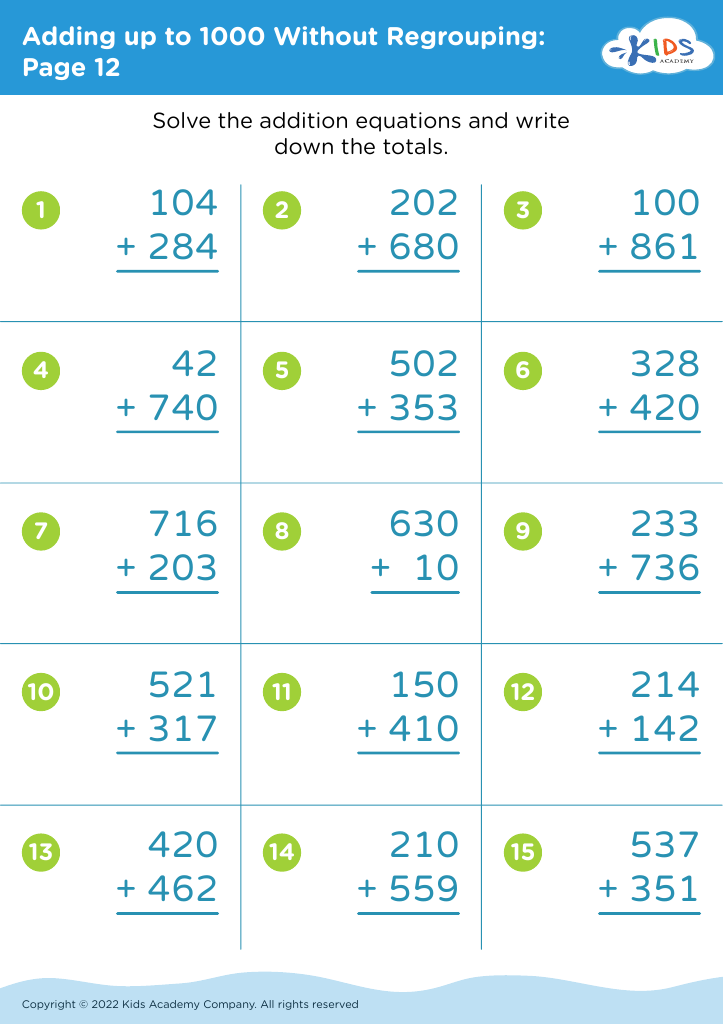
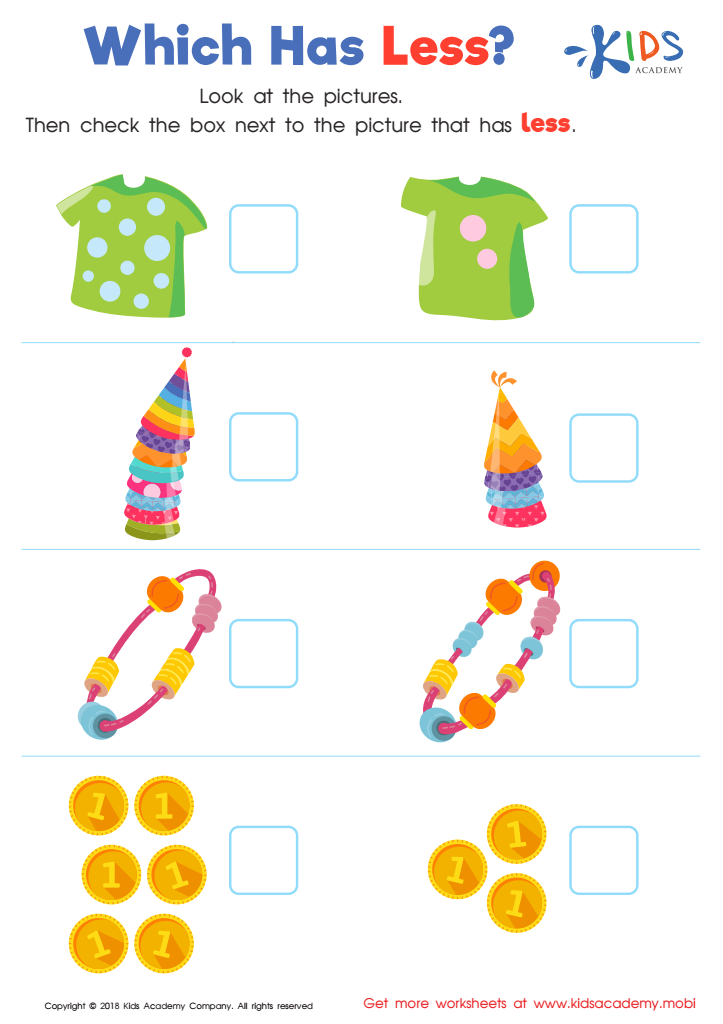
Which Has Less? Worksheet
Kids can develop their number sense by comparing and contrasting objects to identify which has less. This worksheet helps them practice: it's bright and colorful, featuring familiar objects and pictures to count, strengthening basic counting skills. It's the perfect warm-up for comparing and contrasting larger numbers.
 Assign to My Students
Which Has Less? Worksheet
Worksheet
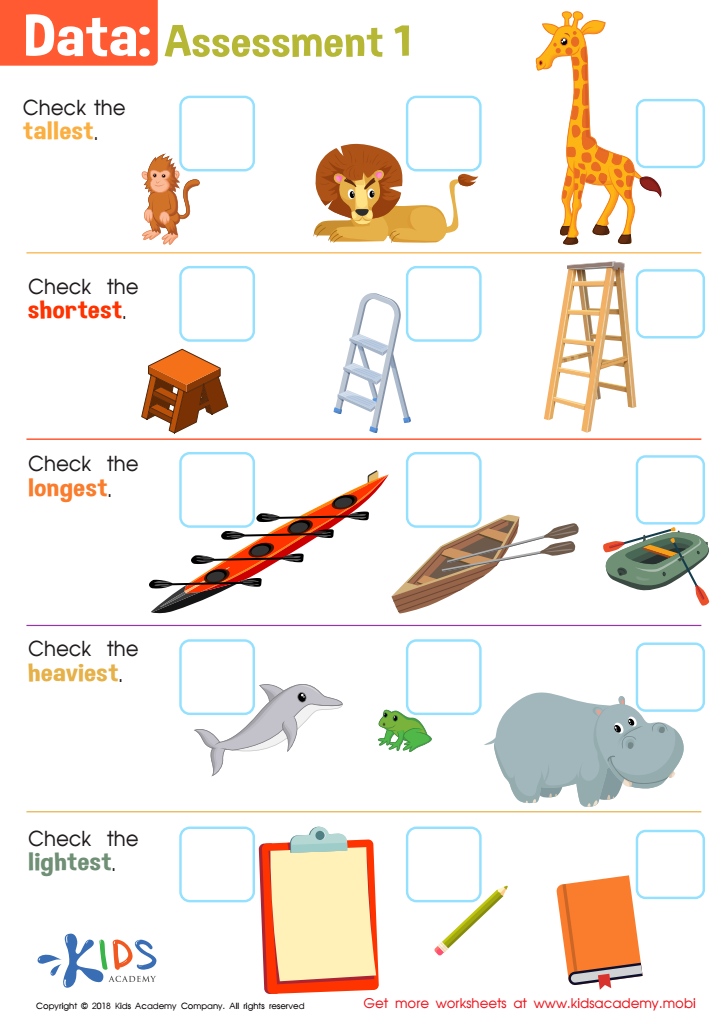
Data: Assessment 1 Worksheet
This free worksheet helps you assess where your young students are with measurement superlatives like tallest, shortest, heaviest, longest and lightest. It features cute, colorful pics of familiar objects so your kids have a reference, and helps you identify areas to work on.
Data: Assessment 1 Worksheet
Worksheet
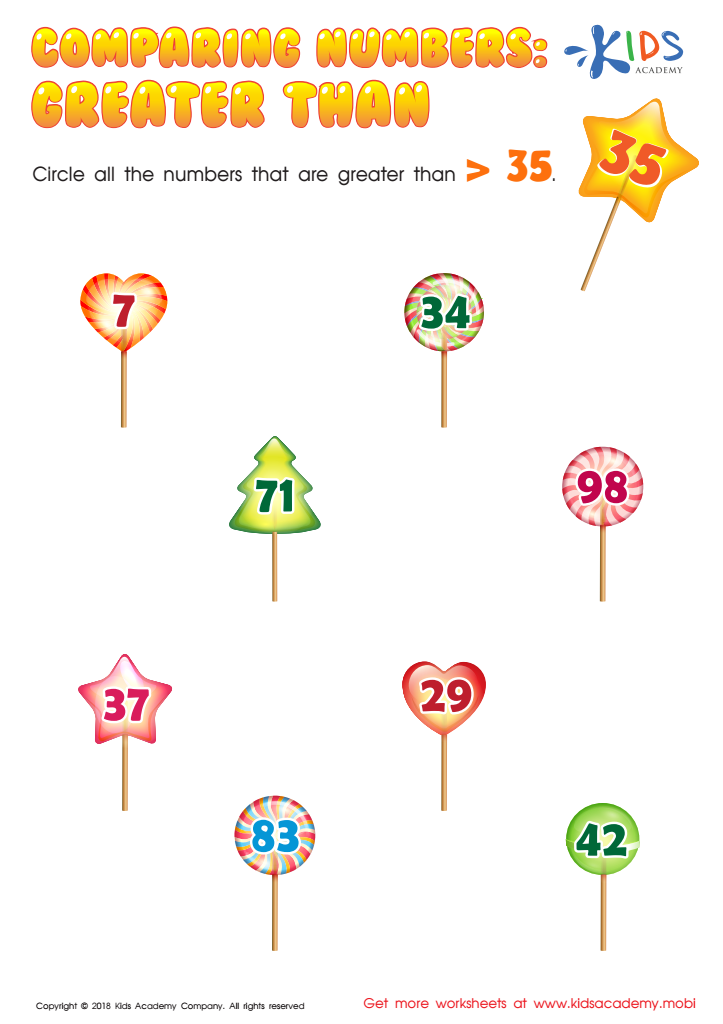
Greater Than Worksheet
Tired of generic maths problems? Try this fun pdf worksheet! With your child or student, carefully look through the numbers in the balloon and circle those greater than 35. Enjoyable and educational!
Greater Than Worksheet
Worksheet
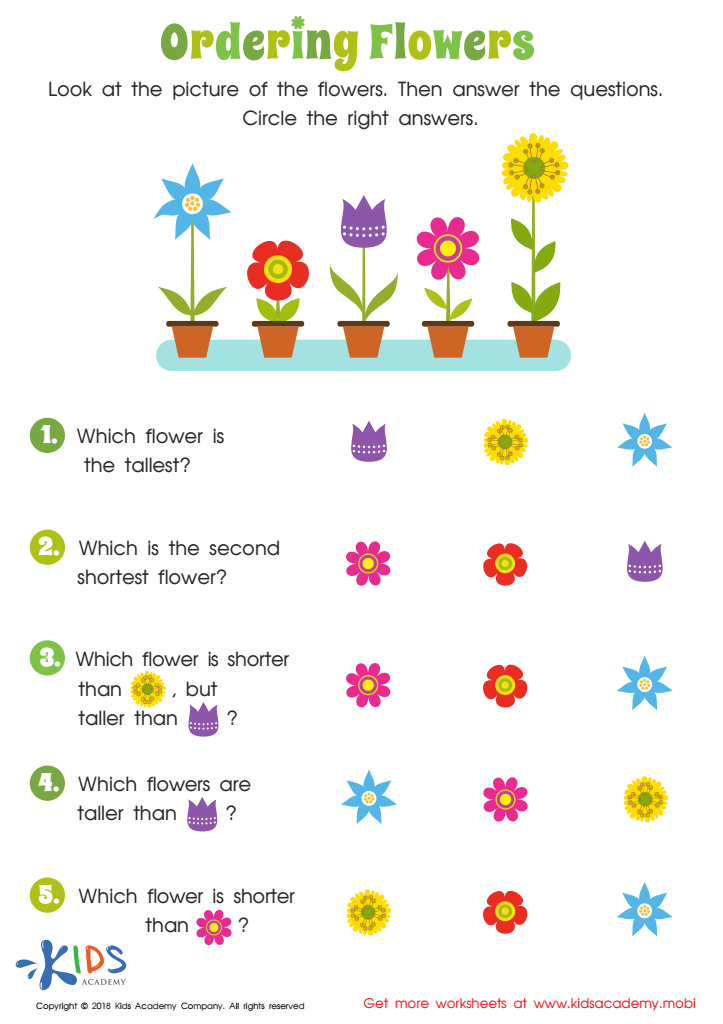
Ordering Flowers Worksheet
Preschoolers can start learning measurement with visuals! This worksheet uses colorful flowers of different heights. Ask your learner to observe the flowers, then help them compare/answer which is taller/shorter. It's an easy way for them to begin learning about measurement.
Ordering Flowers Worksheet
Worksheet
Join Kids Academy for Free
Who is primarily going to use this learning content?







Understanding how to compare numbers is a foundational skill in early mathematics that significantly impacts a child's overall numeracy and analytical abilities. For children aged 4 to 9, comparing numbers helps to develop a clear sense of numerical value, enabling them to determine which numbers are larger, smaller, or equal. This foundational knowledge is not only crucial for more advanced math concepts, such as addition, subtraction, and number patterns, but also for everyday decision-making and problem-solving skills.
For parents, being actively involved in these early math activities strengthens the parent-child bond and demonstrates a proactive attitude toward their child's education. This involvement also helps parents identify any learning difficulties early on, allowing for timely interventions and support.
Teachers, on the other hand, can use comparison activities to engage students in interactive and hands-on lessons that promote critical thinking. Comparing numbers often spurs discussions about quantity, sequence, and measurement, which are key elements in understanding more complex mathematical concepts in future grades. Additionally, frequent practice with comparing numbers can enhance a child's confidence and enthusiasm toward mathematics, fostering a positive attitude that can last a lifetime.
By focusing on the concept of comparing numbers, parents, and teachers help children lay a solid foundation for math proficiency, paving the way for academic success and logic-based reasoning skills that are essential in all areas of life.








