
Develop problem-solving skills Math Worksheets for Ages 4-9
10 filtered results
Difficulty Level
Grade
Age
-
From - To
Subject
Activity
Standards
Enhance your child's critical thinking with our "Develop Problem-Solving Skills" math worksheets designed for ages 4-9. These engaging and interactive activities encourage young learners to tackle challenges confidently while building essential math skills. Our worksheets feature a variety of fun, themed problems that promote logical reasoning, pattern recognition, and analytical thinking. By working through these problems, children will develop the ability to think creatively and creatively navigate complex situations. Perfect for both classroom settings and at-home learning, our resources foster a love for math while helping young minds discover the joy of finding solutions. Start problem-solving adventures today!
Favorites
With answer key
Interactive
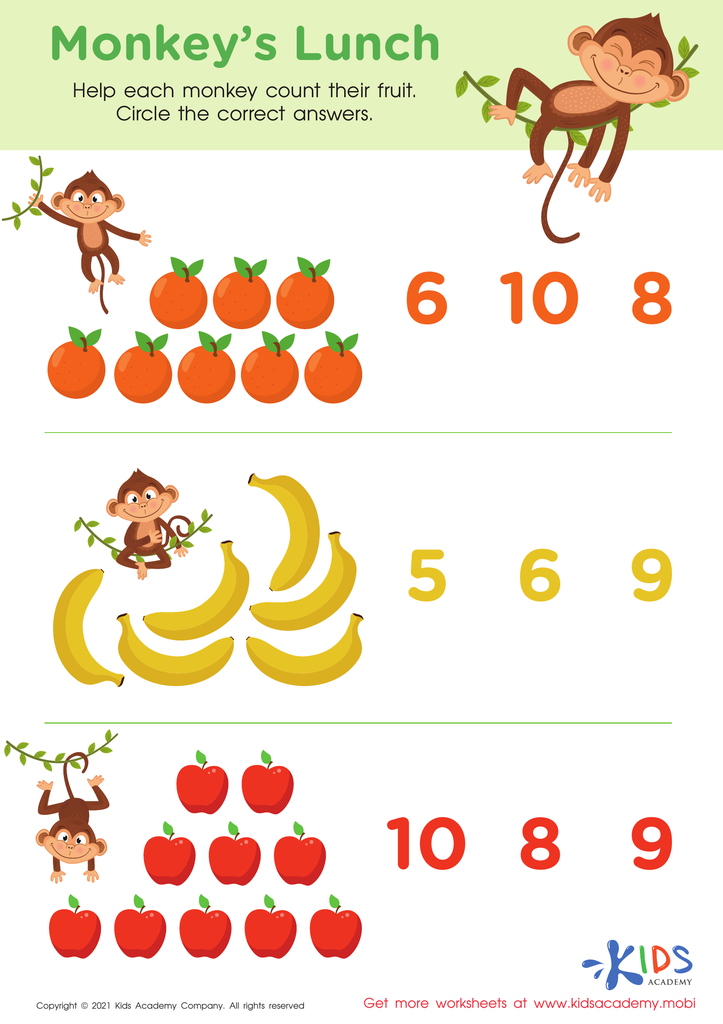
Monkey’s Lunch Worksheet
Download this free worksheet to help your kindergartner perfect their counting skills! Have your child circle the correct answers and count the fruits for the monkeys. It'll seem like fun, but your child is really learning how to count, group objects, and identify numbers.
Monkey’s Lunch Worksheet
Worksheet
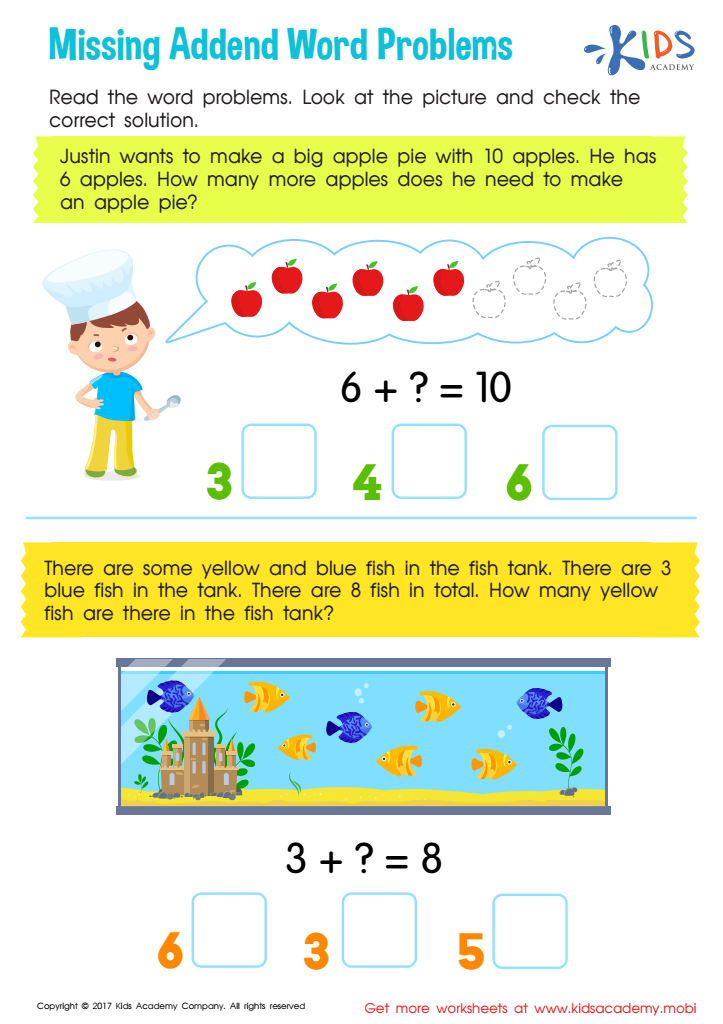
Missing Addend Word Problems Worksheet
Doing many addition and subtraction problems is key for fluency and mastery. Word problems can help kids understand how math works in everyday life. Our math worksheet uses fun scenarios and pictures to teach how to find the missing addend. It's the perfect tool to help kids understand math better!
 Assign to My Students
Missing Addend Word Problems Worksheet
Worksheet
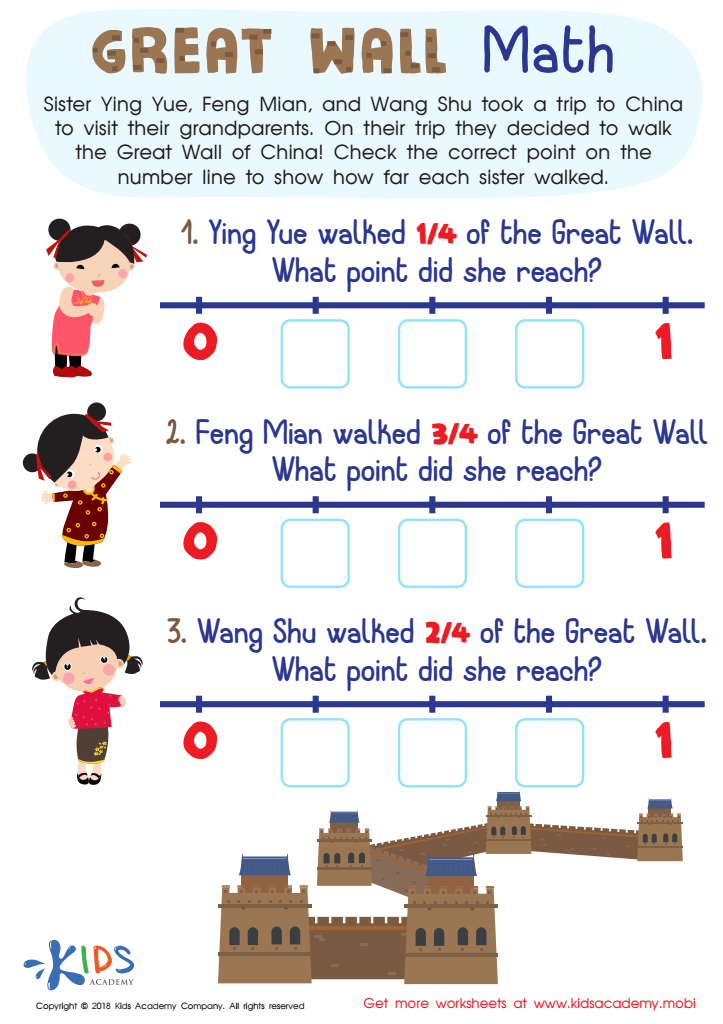
Great Wall Math Worksheet
Let your kids learn about fraction and history with this printout about the Great Wall of China. Three sisters take a trip to China to visit their grandparents and decide to walk the Great Wall. Ask them to study the pictures and pick the correct point on the number line to show how far each sister went. How about you: has your child ever been to China?
Great Wall Math Worksheet
Worksheet
Join Kids Academy for Free
Who is primarily going to use this learning content?








Developing problem-solving skills in mathematics from ages 4 to 9 is critical for several reasons. Firstly, this foundational stage is when children develop cognitive abilities, and engaging in mathematical problem-solving nurtures their critical thinking and reasoning skills. These skills are not only essential for mathematics but also enhance ability to tackle challenges in everyday life.
Secondly, problem-solving in math encourages perseverance and resilience. Children learn that not all problems have immediate answers, and facing difficulties helps them cultivate a growth mindset. This resilience translates to other domains, helping children become more adaptable and confident when confronted with challenges.
Additionally, fostering math problem-solving skills aids in improving logical thinking and enhances creativity. Children learn to approach challenges from various angles and explore multiple strategies. This flexibility paves the way for advanced learning in subjects such as science and engineering later on.
Lastly, effective problem-solving skills in math contribute to a strong foundation for future academic success. Parents and teachers should care about this developmental area because those initial experiences shape children’s attitudes toward learning and their long-term achievements in both education and life. Investing in these skills now builds a critical competency that will serve them throughout their academic careers and beyond.








