Identifying objects Math Worksheets for Ages 4-9
3 filtered results
-
From - To
Discover engaging and educational "Identifying Objects Math Worksheets" designed for ages 4-9. Our expertly crafted activities help young learners enhance their critical thinking and observation skills. Featuring vibrant images and interactive exercises, these worksheets make learning fun. Children will practice categorizing objects by shape, size, and color, fostering foundational math abilities. Perfect for classroom support or home enrichment, these printable resources adapt to various learning styles. Boost your child's confidence and math proficiency with our user-friendly, enjoyable worksheets. Visit us today to download and explore endless learning possibilities!
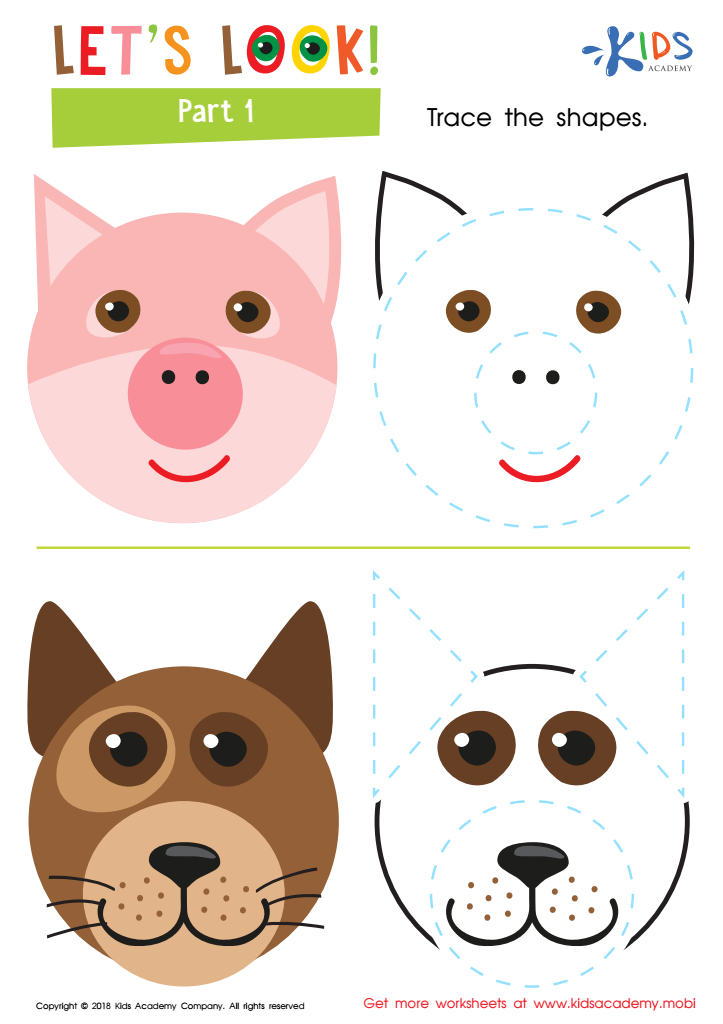
Let's Look! Part 1 Worksheet
 Assign to My Students
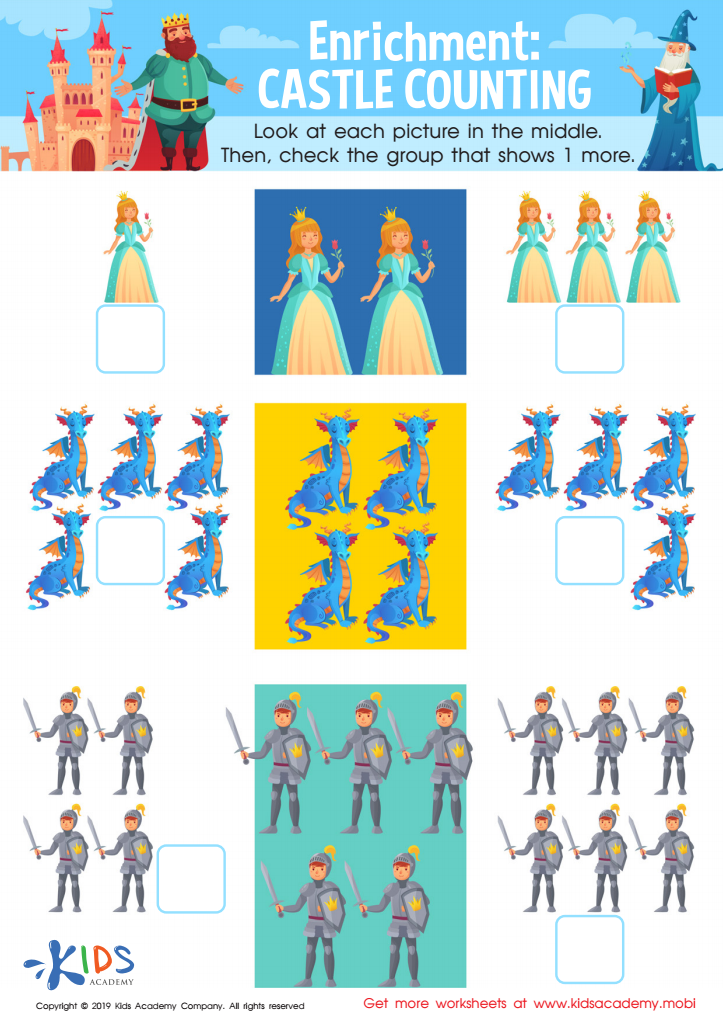
Enrichment: Castle Counting Worksheet
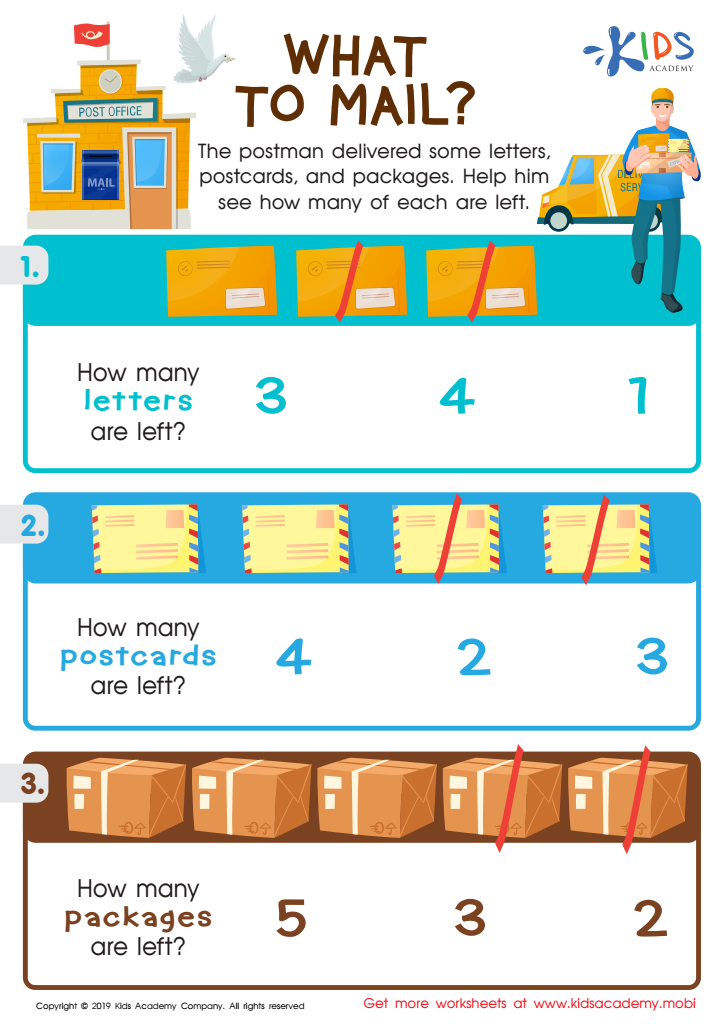
What to Mail? Worksheet







Identifying objects in math for children aged 4-9 is crucial for their cognitive development and forms the basis for future advanced mathematical concepts. Parents and teachers need to prioritize this because it builds early numerical understanding and spatial awareness. Learning to categorize and recognize objects helps children understand basic math concepts like counting, sorting, and classifying. For instance, identifying and counting objects laid the groundwork for operations like addition and subtraction.
These skills also enhance a child's ability to solve problems and engage in explorative play, key components of effective learning at an early age. When a child understands differences and similarities among objects, they start thinking critically and logically about the world around them. Moreover, this foundational knowledge contributes to their language development since they learn terms related to size, shape, weight, and other properties.
Investing time in identifying objects promotes engagement and a motivation to learn, fostering a positive attitude towards math that persists as they grow older. Beyond academic skills, these activities refine their motor coordination and attention to detail, further aiding comprehensive development. Therefore, parents and teachers must actively participate in teaching and reinforcing these concepts to support balanced growth and a solid foundation for future mathematical education.








