Improving drawing skills Math Worksheets for Ages 4-9
3 filtered results
-
From - To
Welcome to our "Improving Drawing Skills Math Worksheets" for children aged 4-9! These engaging worksheets combine arts and mathematics, helping young learners develop their drawing abilities while reinforcing foundational math concepts. With fun activities and exercises designed to spark creativity, children will enjoy improving their hand-eye coordination and fine motor skills as they draw shapes, patterns, and math-related images. Perfect for parents and educators alike, our worksheets will encourage independent learning and boost confidence in both drawing and arithmetic. Explore our wide range of printable resources tailored for early learners, and watch creativity and math skills flourish in your child!
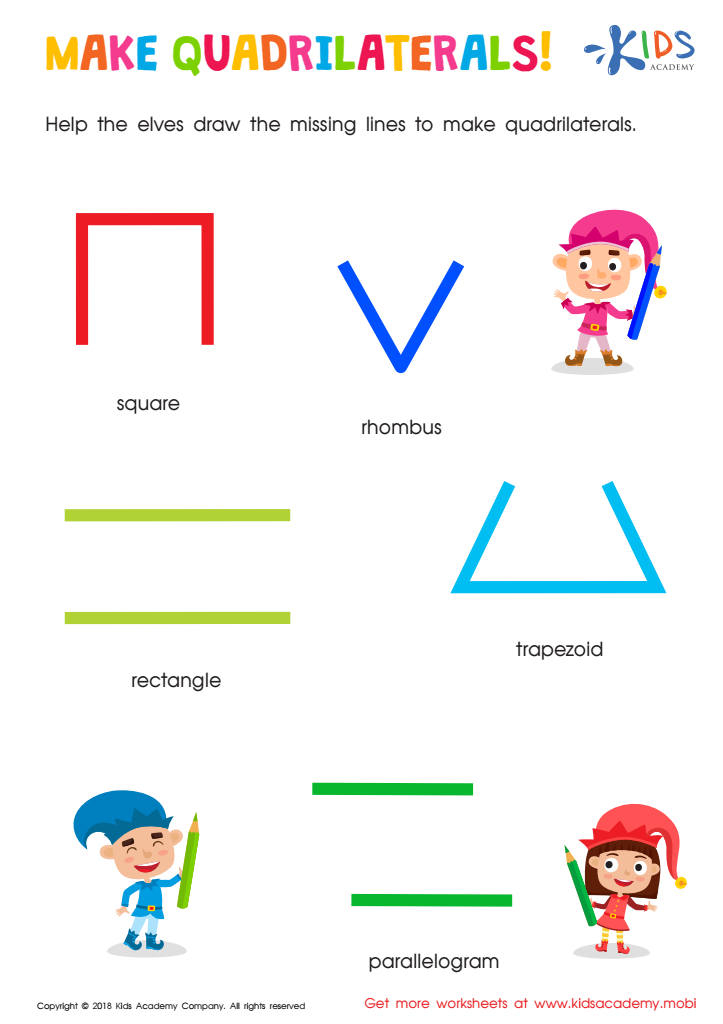
Make Quadrilaterals Worksheet
 Assign to My Students
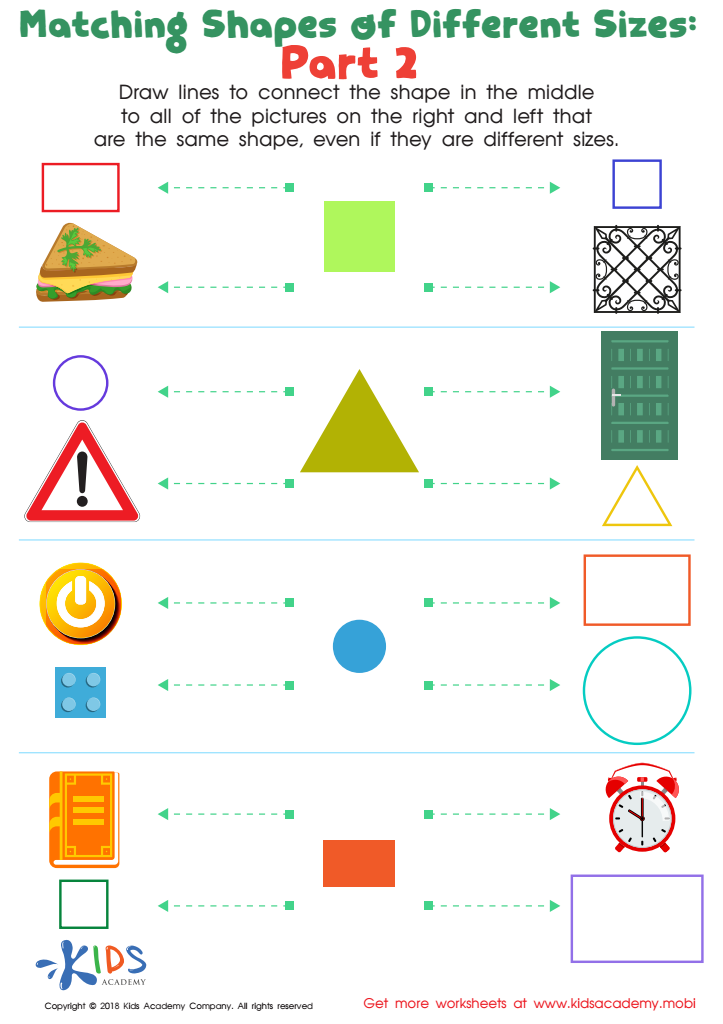
Geometry: Part 2 Worksheet
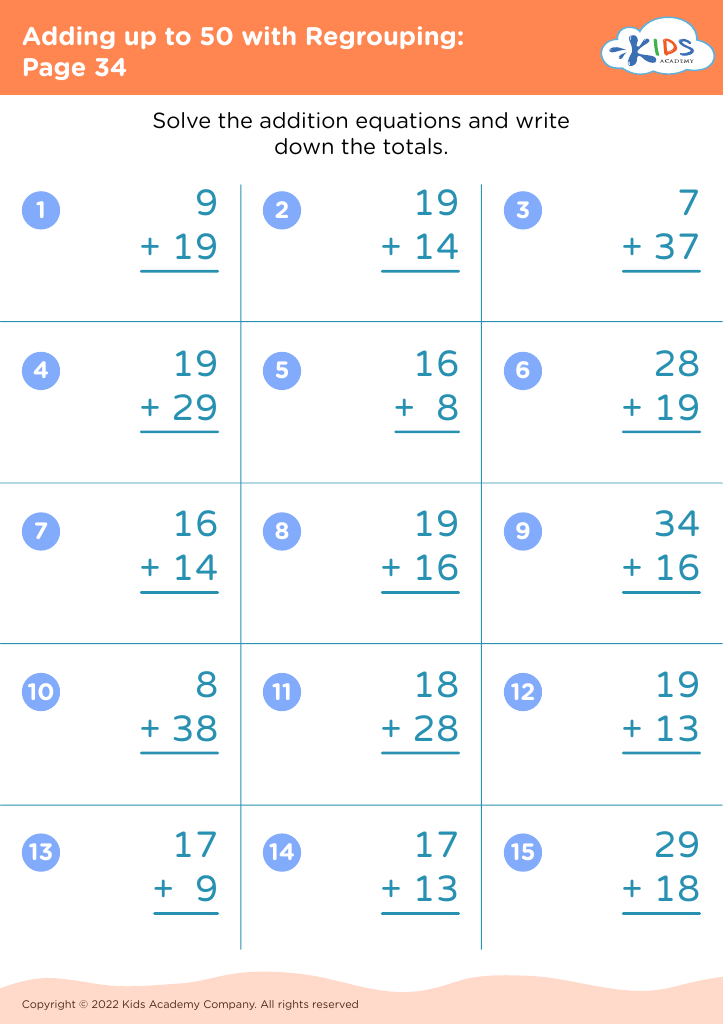








Improving drawing skills in young children, particularly those ages 4-9, is vital for their developmental and educational growth. Drawing serves as a foundational method for children to communicate their thoughts and emotions before they fully acquire literacy. By enhancing their drawing skills, children learn to articulate ideas visually, which fosters creativity and self-expression. This nestles closely with math, where spatial awareness and geometric understanding are essential.
As children draw shapes, patterns, and objects, they naturally engage in mathematical concepts. Developing fine motor skills through drawing activities also enhances hand-eye coordination and prepares students for writing and other academic tasks. Moreover, art and math together promote critical thinking; as children plan and execute their drawings, they practice problem-solving and decision-making.
Teachers and parents should also recognize the importance of taking a holistic approach to education. Combining drawing with math can make learning fun and relatable, motivating young learners. A strong foundation in drawing and math will not only aid academic success but also help foster a lifelong love for learning, creativity, and exploration. Ultimately, prioritizing drawing skills enriches children's early educational experiences, making it essential for both educators and parents to support this integral aspect of development.








