Understanding length Math Worksheets for Ages 4-9
3 filtered results
-
From - To
Discover the perfect resource for teaching young learners the concept of length with our carefully crafted "Understanding Length Math Worksheets" for ages 4-9. These engaging, printable activities are designed to build foundational skills in measurement through fun, hands-on exercises. Students will explore various length-related tasks, including comparing objects, using non-standard units of measurement, and estimating lengths. Each worksheet is tailored to different proficiency levels, ensuring all children effectively grasp the concept. Ideal for both classroom and home use, our worksheets make learning about length an enjoyable and educational experience. Unlock your child's potential with Kids Academy today!
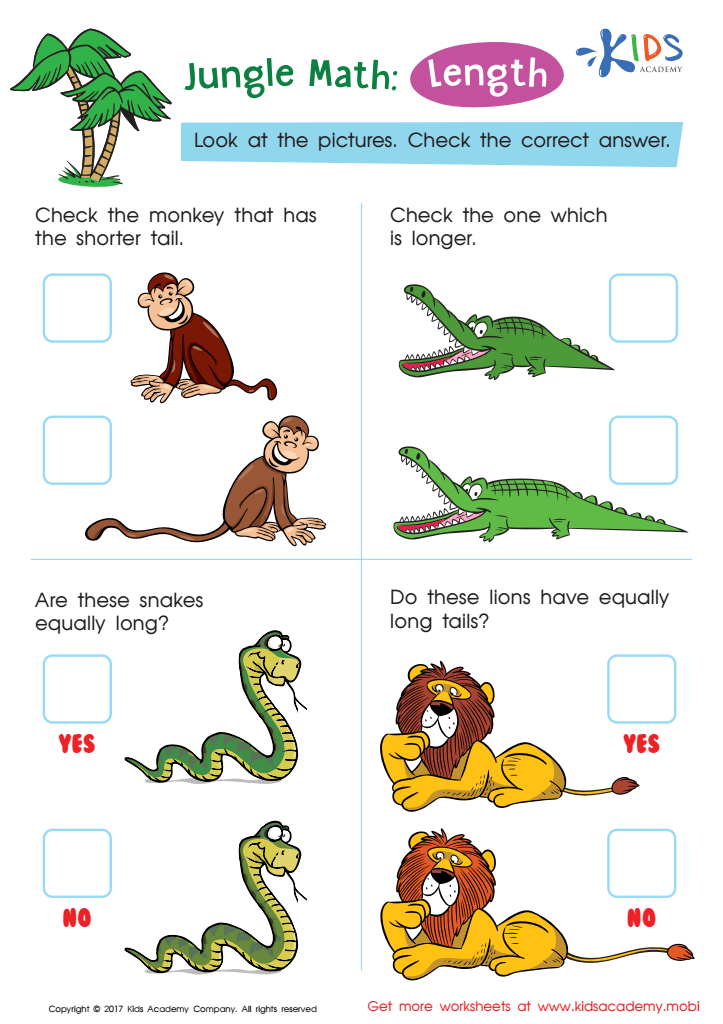
Which One Is Longer - Length Worksheet
 Assign to My Students
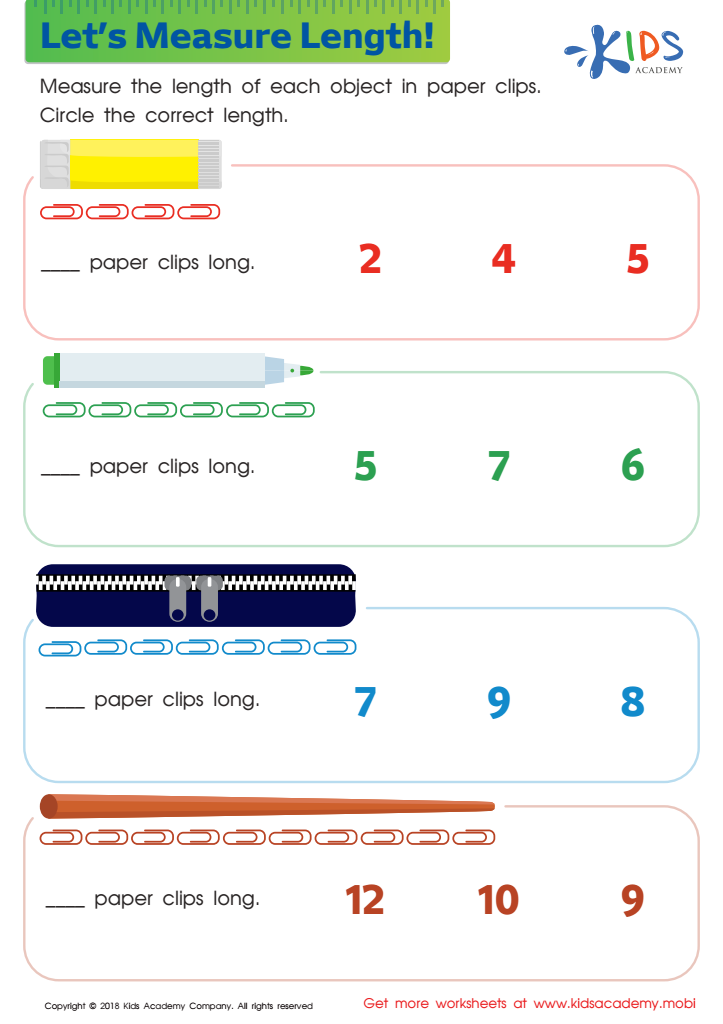
Lets Measure Length Worksheet
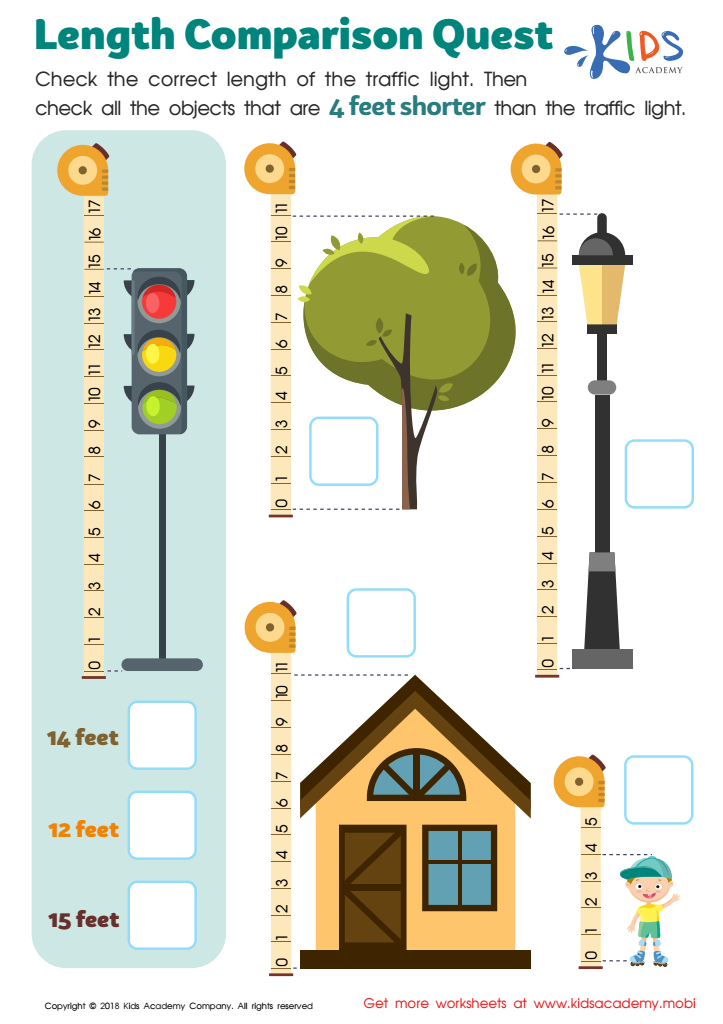
Length Comparison Quest Worksheet






Understanding length is a fundamental math concept that serves as a building block for more advanced mathematical and scientific thinking. For children ages 4-9, this skill is crucial as it fosters spatial awareness, fine motor skills, and problem-solving abilities.
Firstly, learning about length helps children describe and compare the physical world around them. They begin to grasp how objects relate to each other, describing one object as taller, shorter, longer, or shorter than another. This relational thinking supports everyday activities and lays the groundwork for geometry.
Secondly, measuring length enhances fine motor skills. Engaging in activities like using rulers, unifix cubes, or other measuring tools helps develop hand-eye coordination and precision.
Moreover, early exposure to length measurement can spark curiosity and engagement, setting a positive tone for future learning. Children learn the importance of accuracy, estimation, and units of measurement, essential skills in various contexts, from cooking to building projects.
Furthermore, initiatives in STEM (Science, Technology, Engineering, Math) education begin early. A solid foundation in understanding and measuring length lays the groundwork for future scientific inquiry and technical skills. By caring about these competencies, parents and teachers support not only academic success but also real-world problem-solving and innovation. Thus, prioritizing this skill in early education is beneficial for comprehensive cognitive and practical development.








