Understanding mass Math Worksheets for Ages 4-9
3 filtered results
-
From - To
Discover engaging and educational "Understanding Mass" math worksheets tailored for children ages 4 to 9. These expertly designed activities from Kids Academy provide a solid foundation in measurement concepts. Through vibrant visuals and interactive tasks, young learners explore comparing weights, using balance scales, and understanding terms like heavy, light, and equal. Our worksheets are crafted to build confidence, enhance critical thinking, and make learning about mass an enjoyable journey. Perfect for home or classroom use, join Kids Academy to give your child a head start in math with fun, age-appropriate exercises that foster a love for learning.
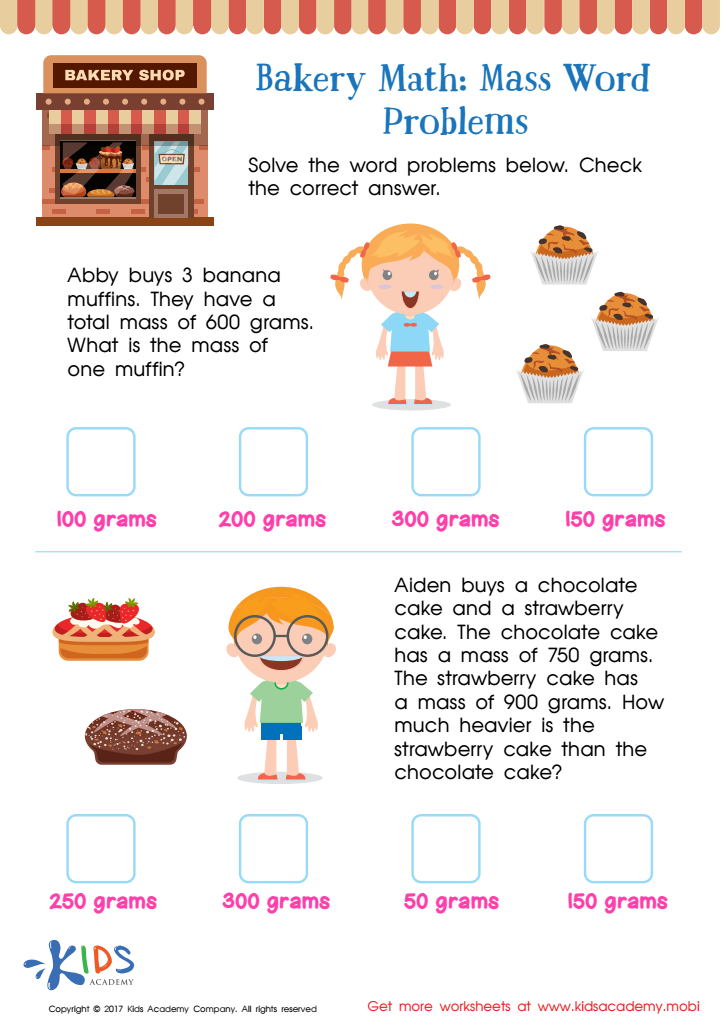
Mass Word Problems Worksheet
 Assign to My Students
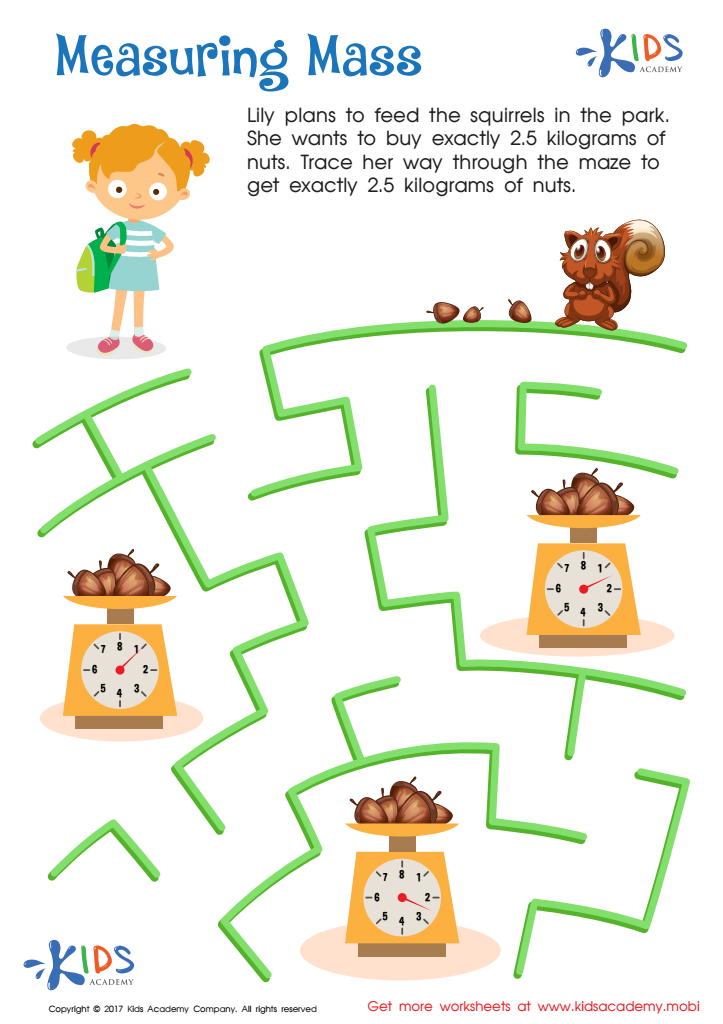
Measuring Mass Worksheet
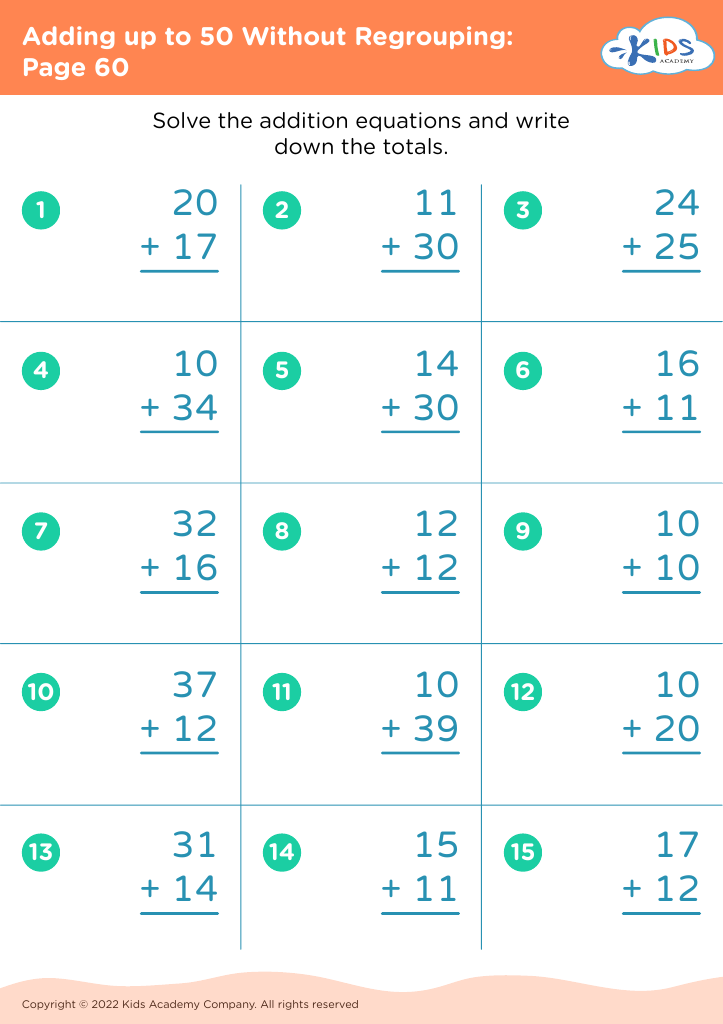







Understanding basic math concepts is crucial for children ages 4-9 because it forms the foundation for all future learning and everyday life skills. In these formative years, children's brains are exceptionally receptive and capable of developing numeracy skills, which includes recognizing numbers, counting, basic addition and subtraction, and grasping shapes and patterns. Parents and teachers who prioritize early math education help children build critical thinking and problem-solving skills that are essential across subjects.
Early math proficiency is also a strong indicator of academic success. Studies have shown that children who excel in early math are better prepared for advanced concepts in upper grades, which boosts their confidence and enthusiasm for learning. This critical period sets the stage for complex problem-solving situations they will encounter in science, technology, engineering, and mathematics (STEM) fields.
Moreover, early math skills translate to better practical skills such as time management, budgeting, and logical reasoning. This doesn’t just prepare them academically but equips them to handle everyday tasks more effectively. When parents and teachers engage young children in math through fun activities, conversations, and hands-on learning, they encourage a positive attitude towards the subject. This supportive approach fosters a lifelong curiosity and competence in mathematics, benefiting their overall educational journey and personal growth.








