Understanding number sequence Math Worksheets for Ages 4-9
7 filtered results
-
From - To
Discover our specially-designed "Understanding Number Sequence Math Worksheets for Ages 4-9" at Kids Academy. These engaging worksheets help children grasp number sequences essential for early math skills. Tailored activities ensure fun learning, enhancing number recognition, counting abilities, and logical thinking. Ideal for both classroom and home use, our worksheets provide a hands-on approach that encourages practice and mastery. With colorful visuals and diverse exercises, kids build foundational skills for future math success. Perfect for young learners to develop confidence and joy in math. Start building your child's number sequence skills today!
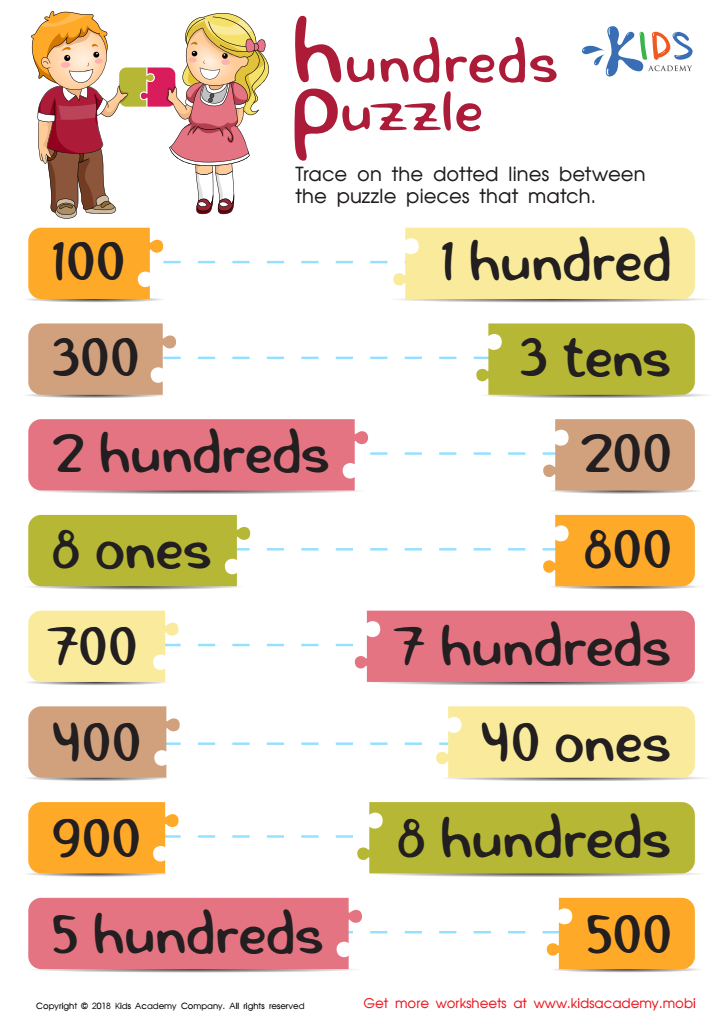
Hundreds Puzzle Worksheet
 Assign to My Students
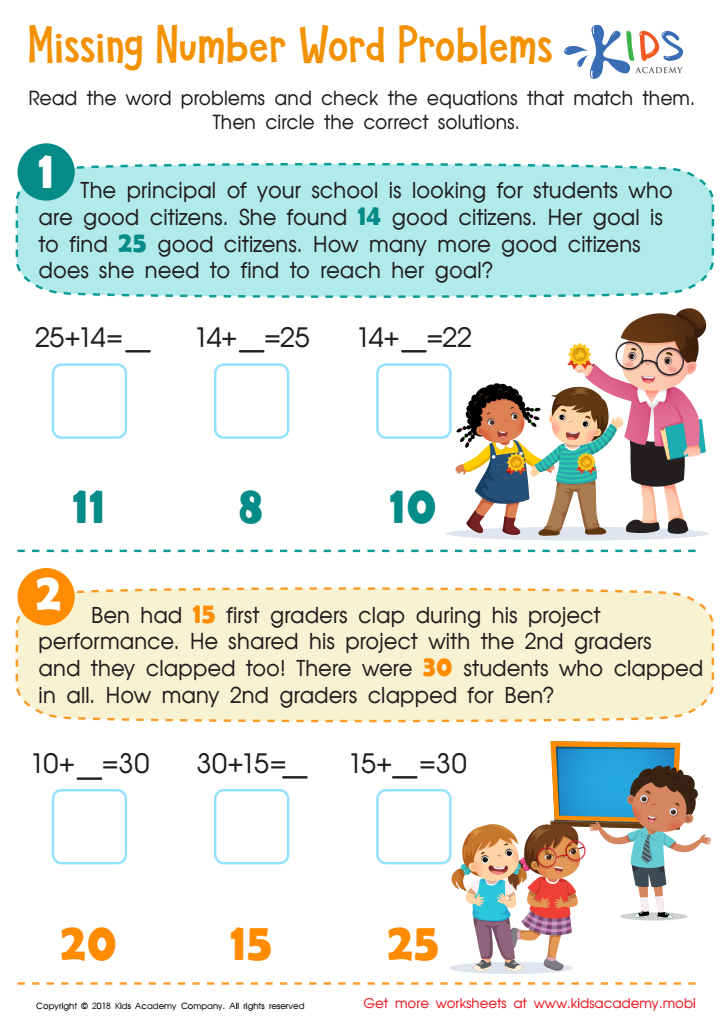
Missing Number Word Problems Worksheet
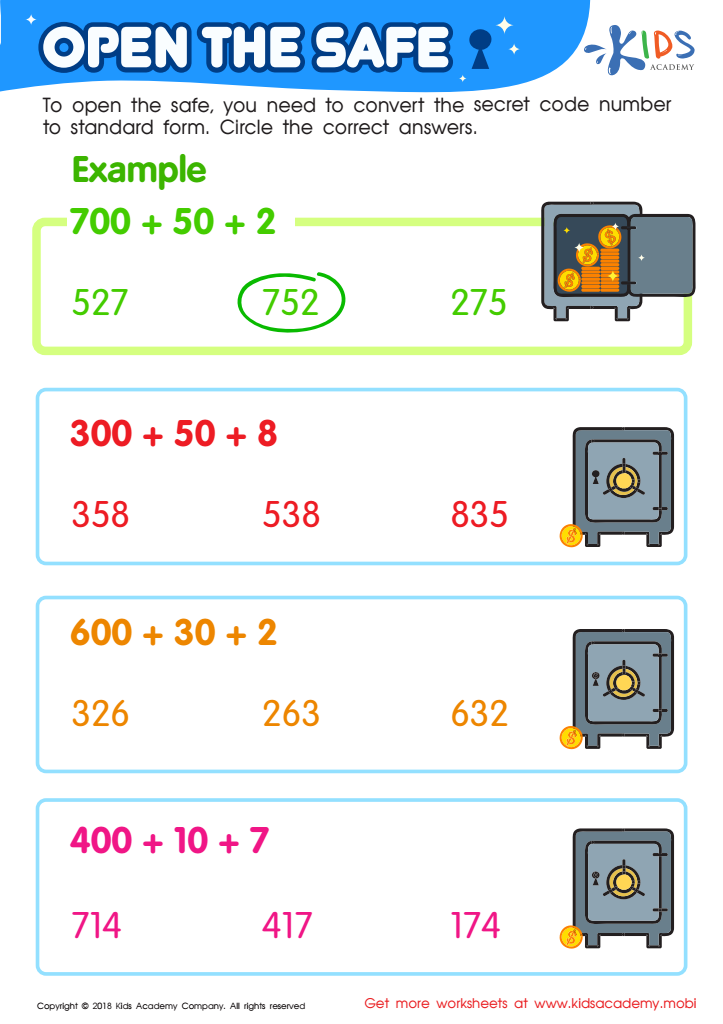
Open the Safe Worksheet
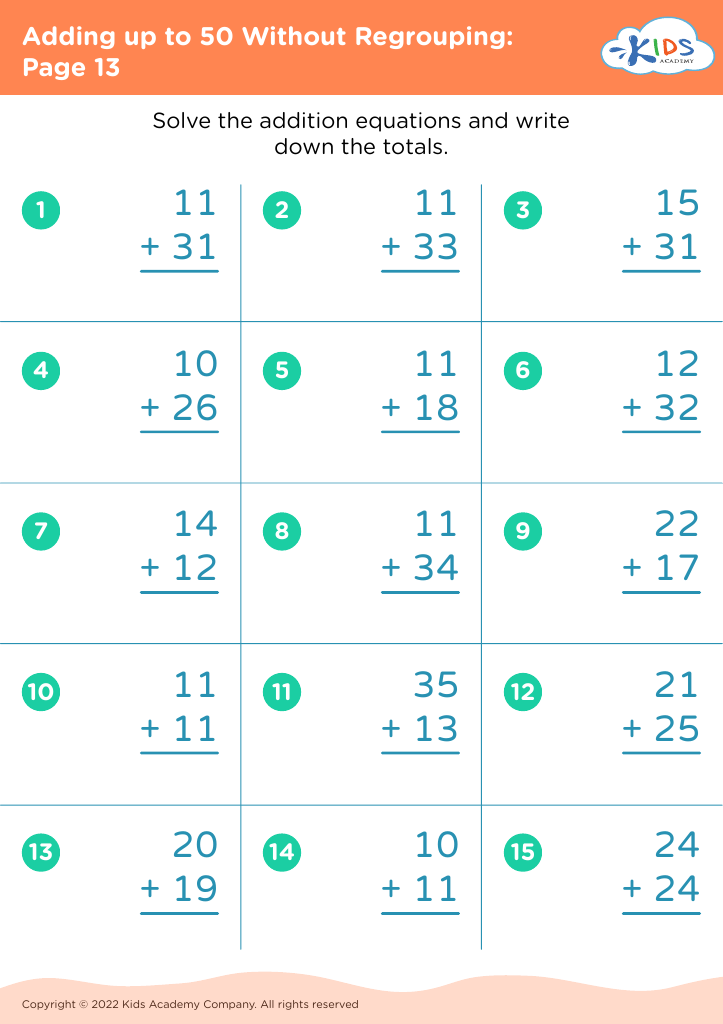
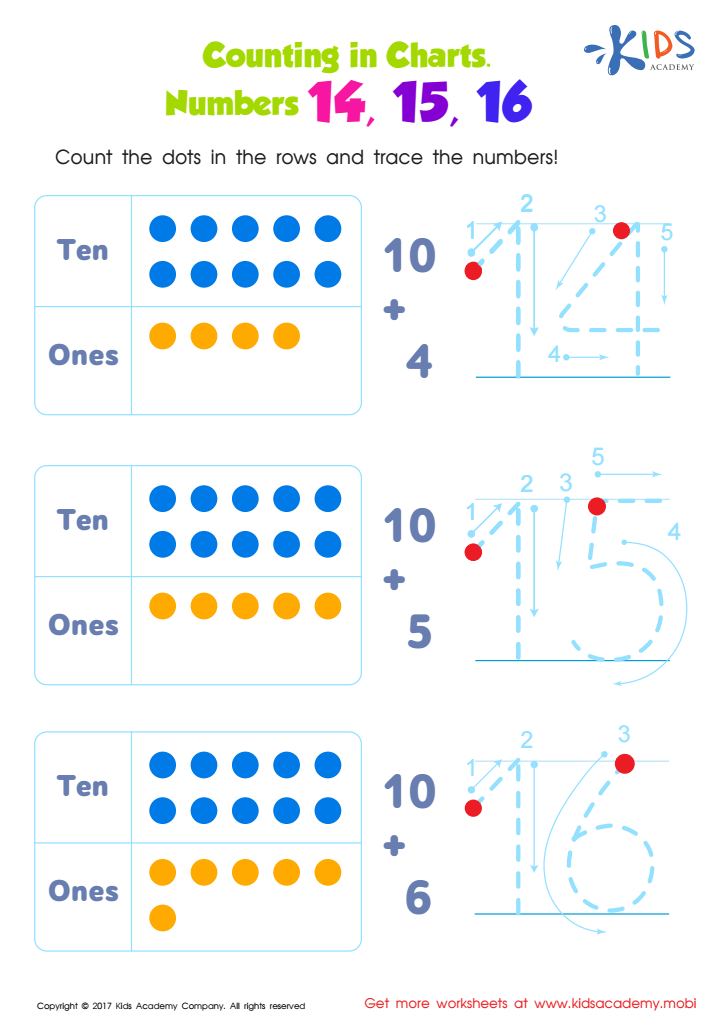
Number Tracing Worksheet






.jpg)

Understanding number sequences is a crucial foundation in the early stages of mathematical development for children aged 4-9. Parents and teachers should care deeply about this aspect of learning because it underpins many other mathematical concepts. Number sequences help children grasp the basics of counting, addition, and subtraction, which are essential skills for more advanced math activities later on.
When children understand number sequences, they begin to develop a sense of order and predictability. This skill allows them to recognize patterns, further enhancing their problem-solving abilities. For example, knowing that 4 comes after 3 and before 5 helps a child understand simple arithmetic. Additionally, engaging with number sequences promotes logical thinking, which is beneficial across all areas of learning and everyday life.
Moreover, early proficiency in number sequences fosters confidence and a positive attitude towards math. Struggling with basic concepts can cause frustration and diminish a child’s interest in math, so establishing a solid foundation is crucial. Teachers and parents who actively support understanding number sequences provide children with the tools they need for academic success, not only in mathematics but also in disciplines that require analytical thinking.
In short, a focus on number sequences during the formative years can set children on a path to numerical literacy, critical thinking, and a lifelong appreciation for learning.








