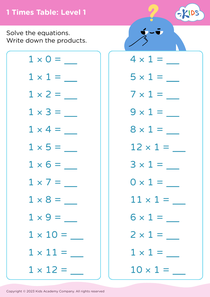
Mental math skills Mixed Times Tables Worksheets for Ages 4-9
3 filtered results
-
From - To
Boost your child's mental math skills with our engaging and interactive Mixed Times Tables Worksheets designed for ages 4-9! These worksheets provide a fun and effective way for young learners to practice their multiplication tables, enhancing their ability to solve problems quickly in their heads. Each activity is crafted to build confidence and proficiency in math, making it perfect for homeschooling, classroom use, or supplemental learning at home. With colorful designs and varying levels of difficulty, your child will enjoy mastering their times tables in no time. Give them the tools they need for math success with our printable resources!
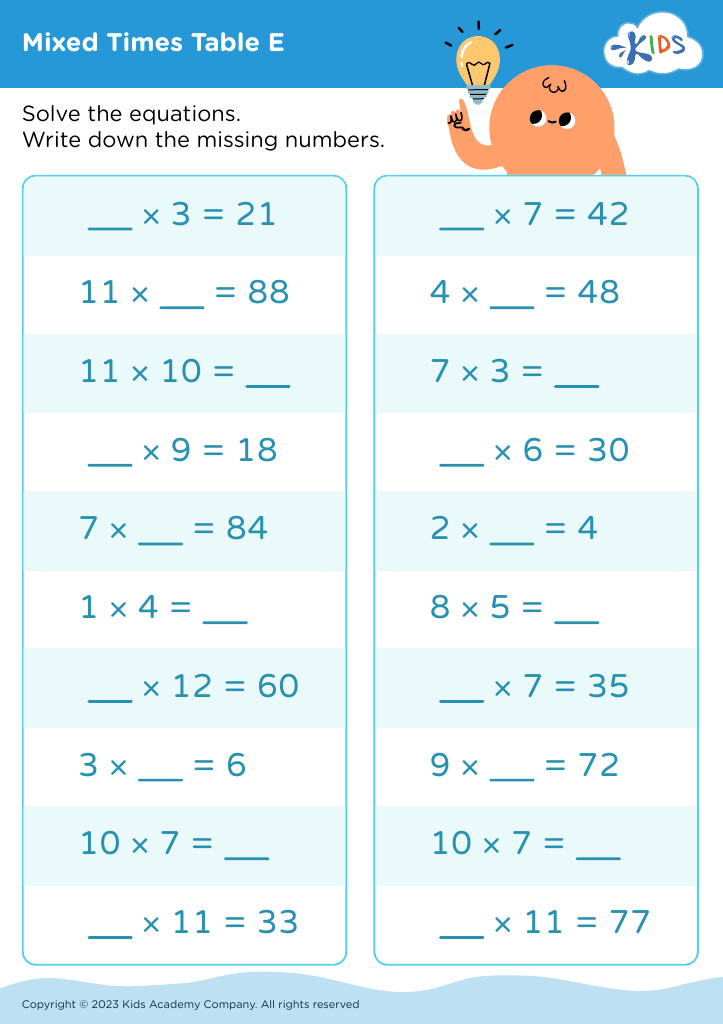
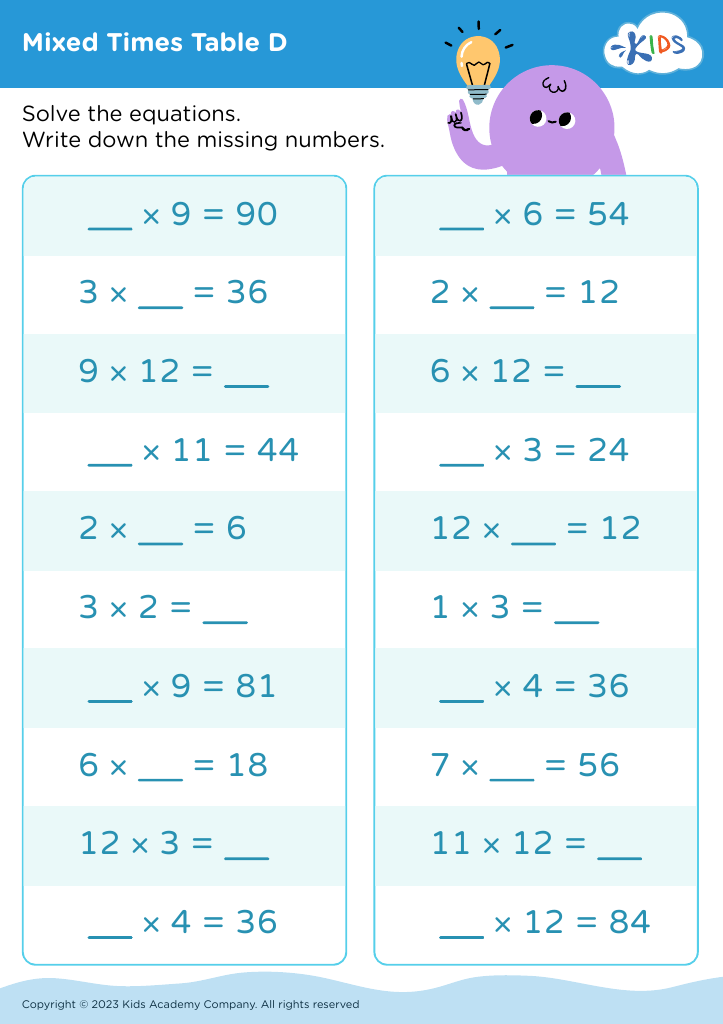
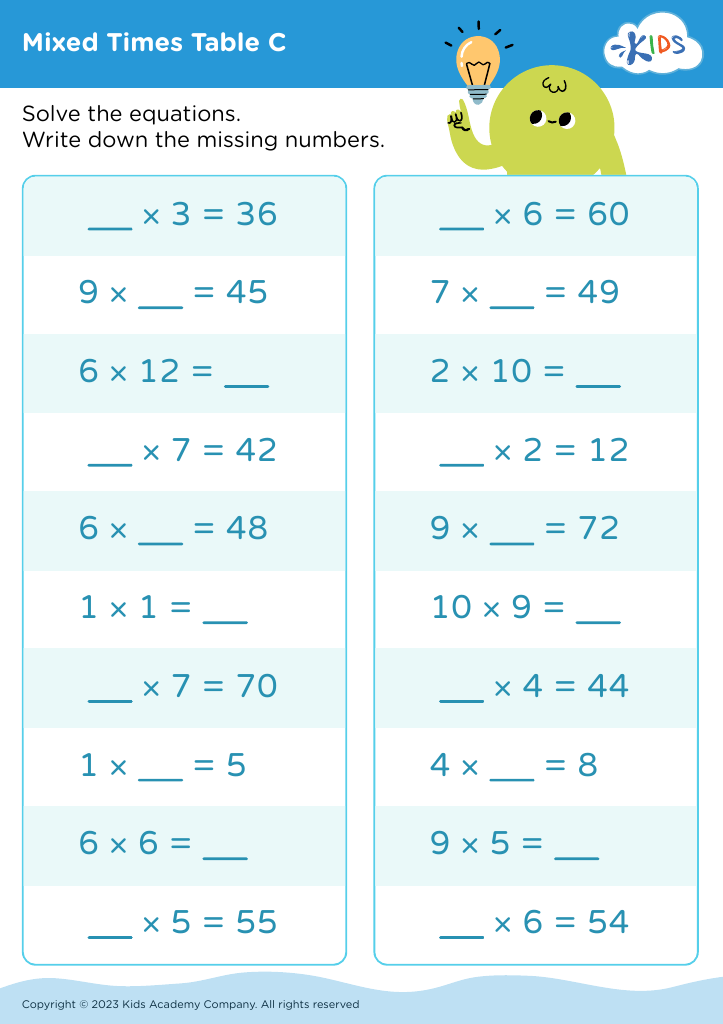


Mental math skills, particularly in mastering mixed times tables, are crucial for children aged 4-9 for several reasons. Firstly, acquiring these skills can build a strong mathematical foundation. As children become familiar with multiplication tables, they develop not only number sense but also problem-solving abilities that are essential for higher-level math. Early fluency in mental math encourages confidence, allowing students to tackle more complex mathematical concepts with ease.
Secondly, mental math skills encourage critical thinking. By manipulating numbers in their minds, children learn to approach problems in various ways, fostering flexibility in their thinking process. This adaptability is important not only in math but also across all subjects, as it enhances overall academic performance.
Moreover, mastering mixed times tables leads to greater efficiency in completing tasks. Speed in basic operations allows young learners to focus on understanding concepts rather than struggling with calculations.
Parents and teachers should recognize the role of mental math as a stepping stone that promotes not just mathematical proficiency but also a lifelong love for learning. Through engaging activities and supportive environments, they can help children appreciate the value of these essential skills, setting the stage for future success both academically and in everyday life.