Understanding times tables Multiplication Worksheets for Ages 4-9
6 filtered results
-
From - To
Welcome to our "Understanding Times Tables Multiplication Worksheets" section, specially designed for children ages 4-9. These engaging worksheets help young learners grasp the fundamentals of multiplication in a fun and interactive way. By practicing times tables, children enhance their math fluency, boost confidence, and develop problem-solving skills. Our resources include colorful visuals and age-appropriate exercises, catering to various learning styles. Parents and educators can easily access printable worksheets, making learning mathematics accessible at home or in the classroom. Foster a love for math early on with materials that make mastering times tables an enjoyable experience for your child!
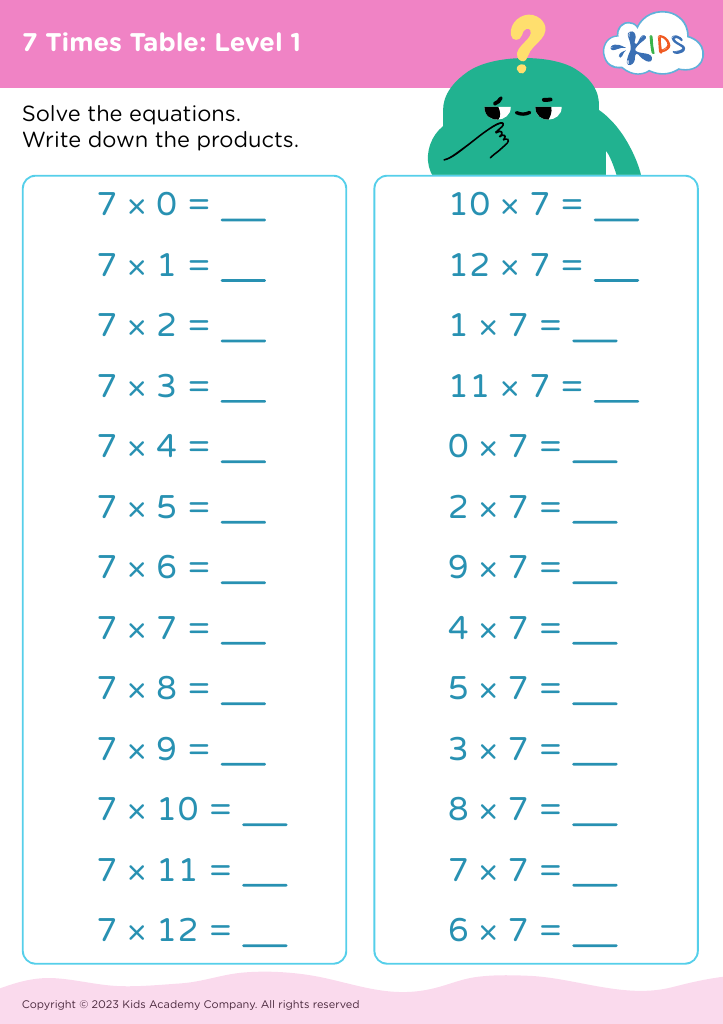
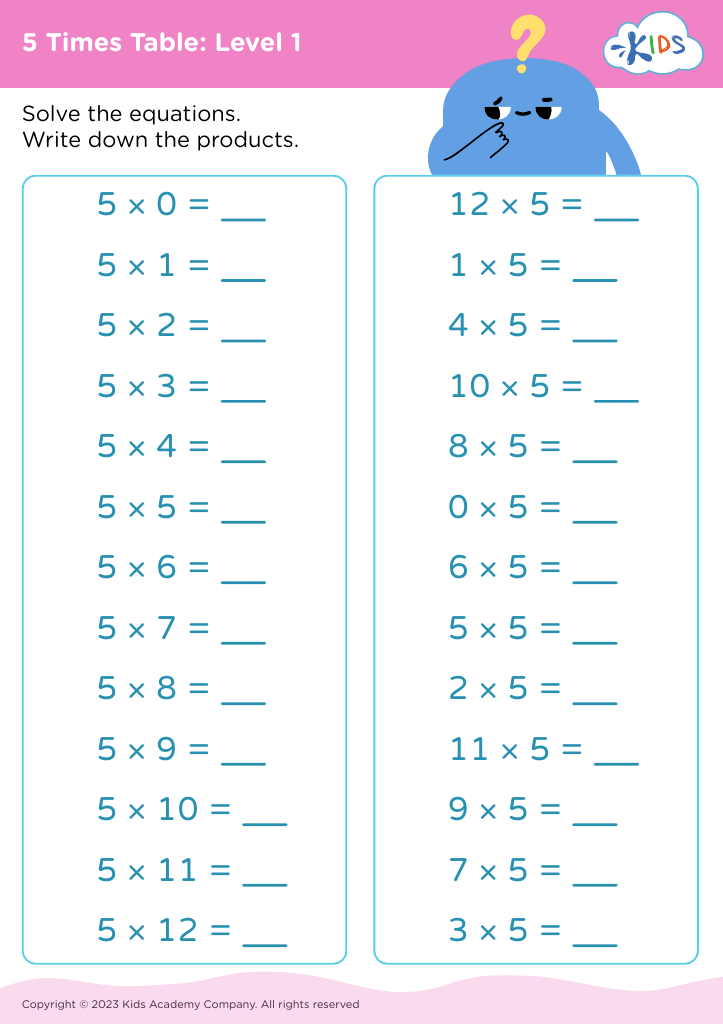
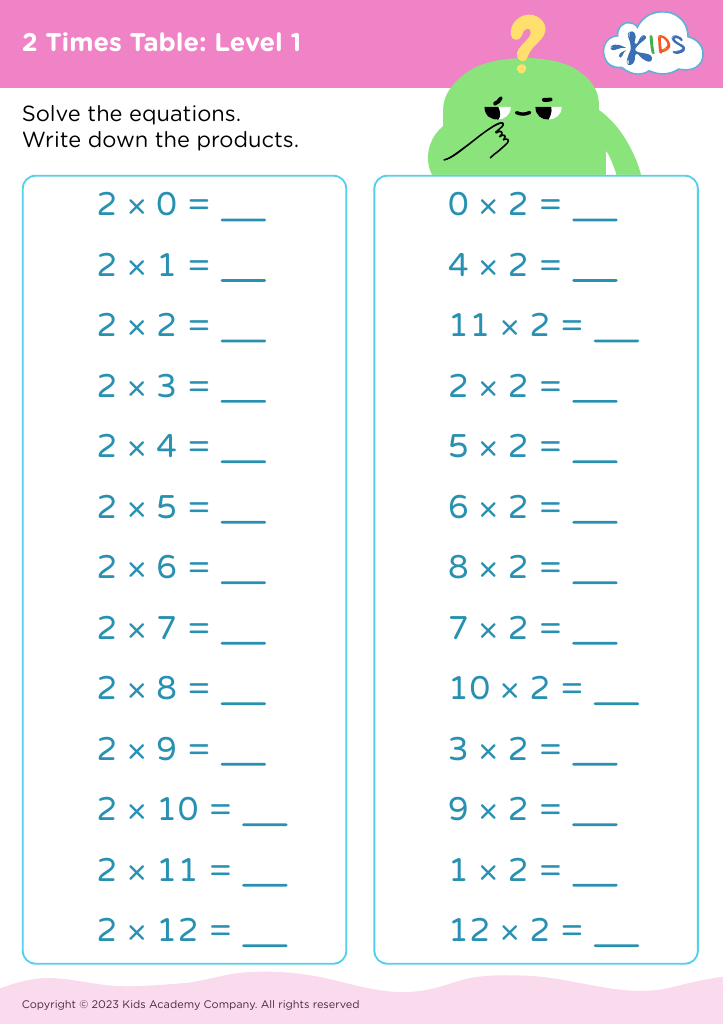
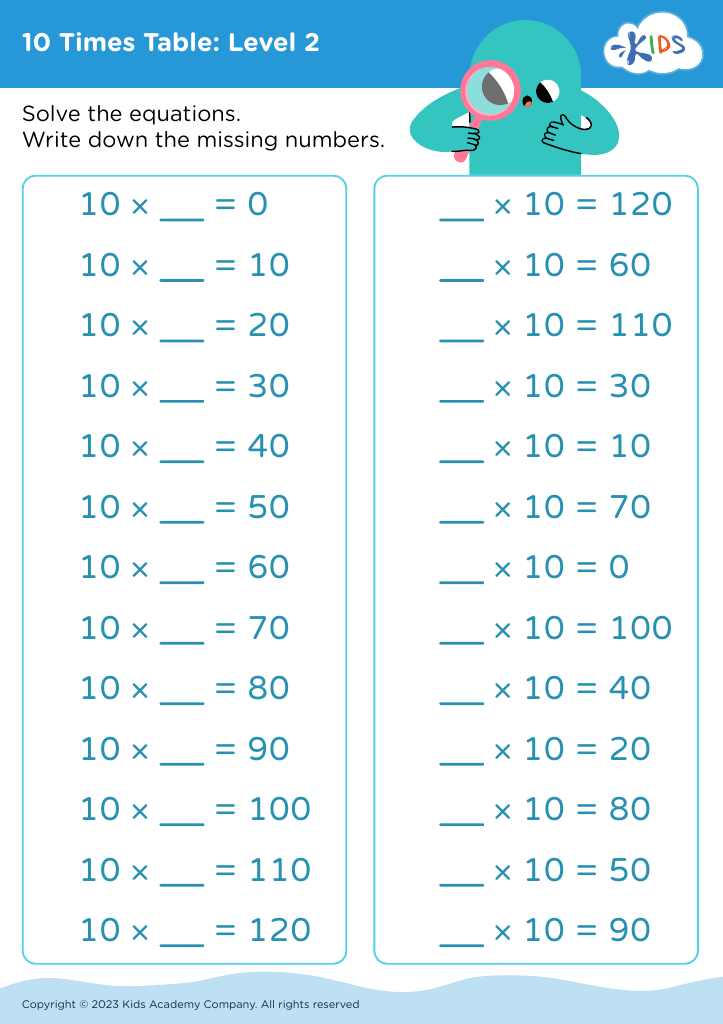
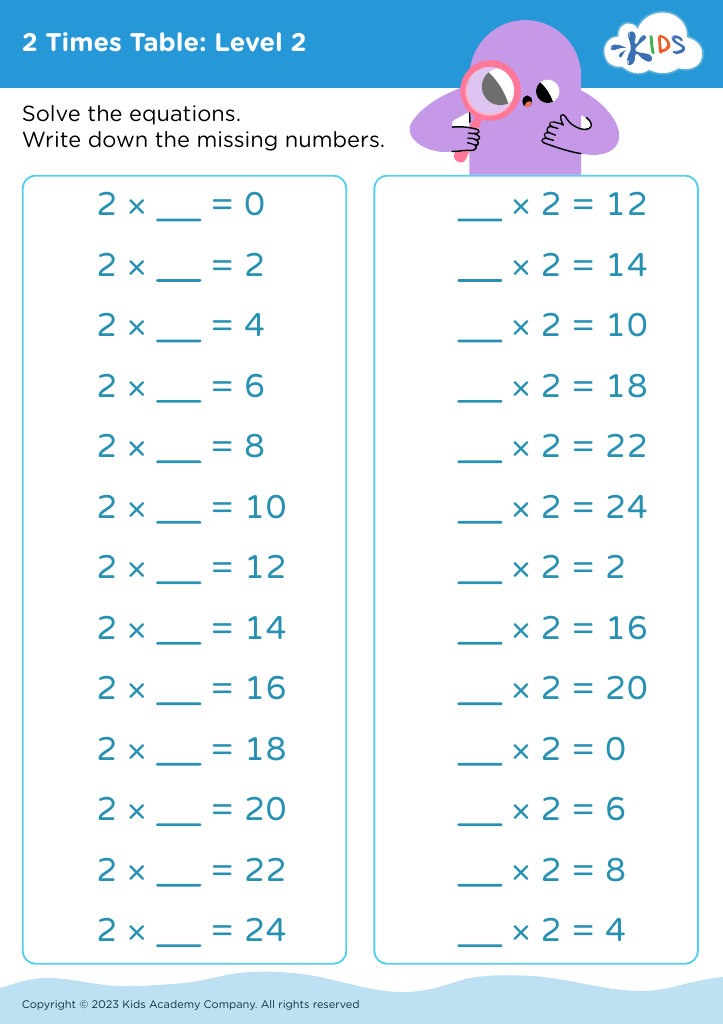
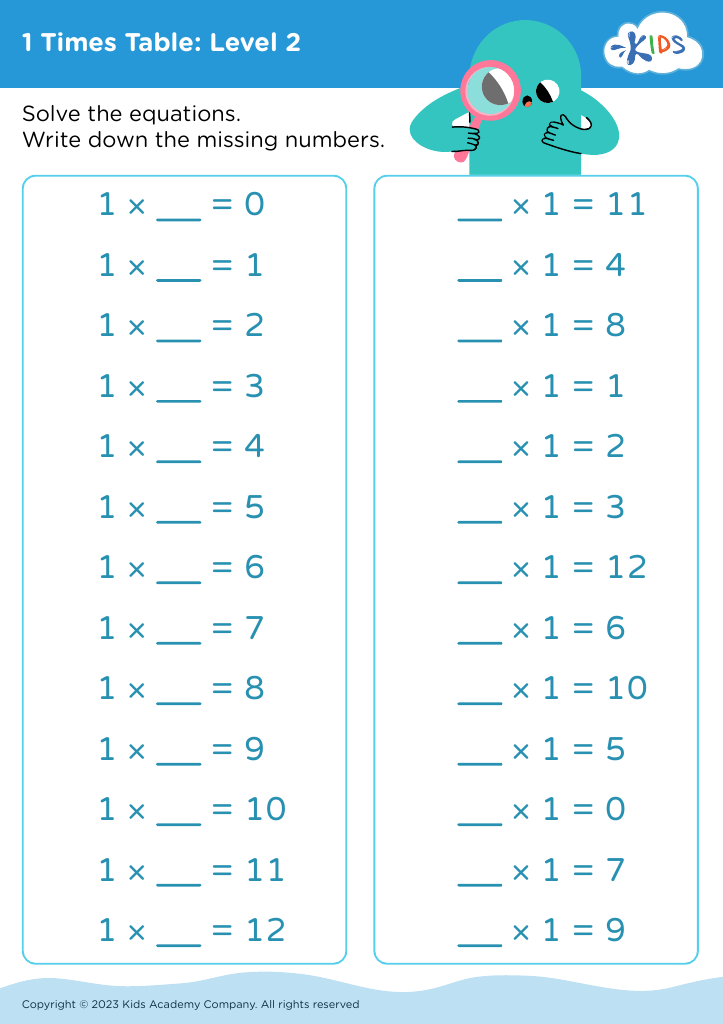








Understanding times tables and multiplication is crucial for children aged 4-9 as it forms the foundation for their future academic success in mathematics. During these formative years, children are particularly receptive and capable of grasping fundamental concepts. Multiplication is not just about memorizing numbers; it enhances cognitive development and problem-solving skills.
Learning times tables helps children recognize patterns, which strengthens their understanding of numbers and their relationships. This early mastery enables them to tackle more complex arithmetic concepts, such as division and fractions, which they will encounter later in their education. Additionally, a solid grasp of multiplication builds confidence. When students are confident in their math skills, they are more likely to engage in class and take on challenging tasks.
For parents, supporting their children in this learning journey fosters a positive learning environment at home. Simple practices, such as using games and everyday activities to reinforce multiplication skills, can enhance a child's enthusiasm and understanding of math. Teachers can integrate interactive methods, making lessons fun and relatable.
Ultimately, nurturing a child’s ability in multiplication equips them not only for academic challenges but also for real-life situations involving budgeting, time management, and logical thinking, which are critical skills beyond school.








