Mathematical reasoning Rounding Worksheets for Ages 4-9
3 filtered results
-
From - To
Explore our engaging Mathematical Reasoning Rounding Worksheets designed specifically for children ages 4 to 9! These printable resources make learning the concept of rounding fun and interactive, helping young learners develop essential math skills. Each worksheet offers clear instructions and colorful illustrations that capture children’s interest, reinforcing their understanding of numbers through relatable contexts. From rounding to the nearest ten to practicing with playful exercises, these sheets provide a solid foundation in mathematical reasoning. Perfect for at-home learning or supplemental classroom activities, our worksheets are an excellent way to build confidence and proficiency in early mathematics. Download today and watch your child excel!
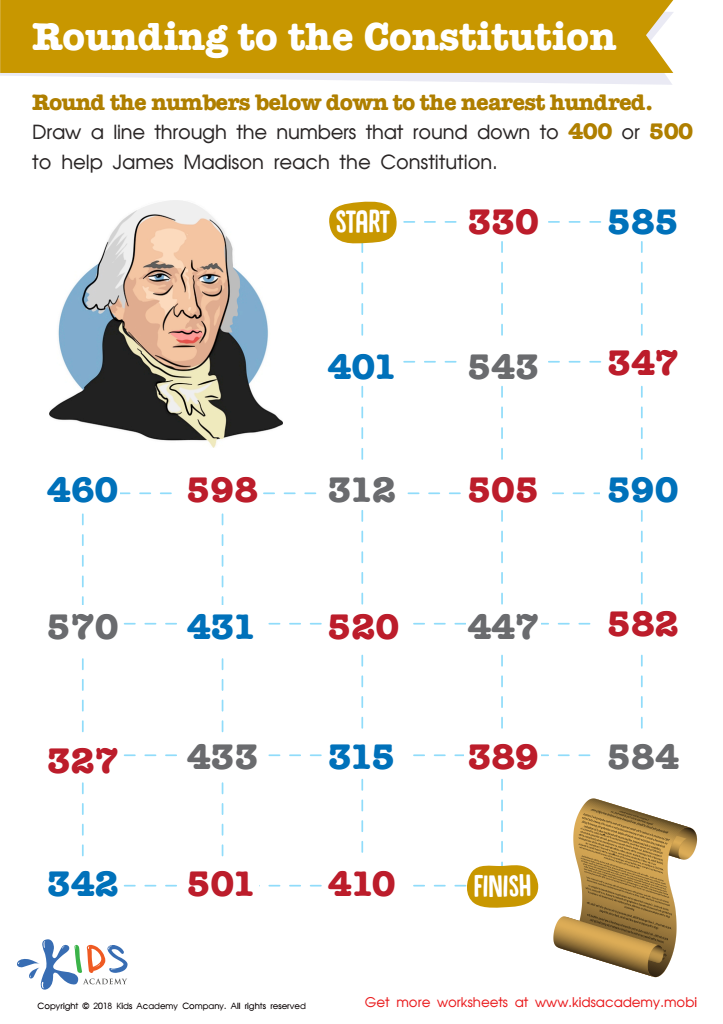
Rounding to the Constitution Worksheet
 Assign to My Students
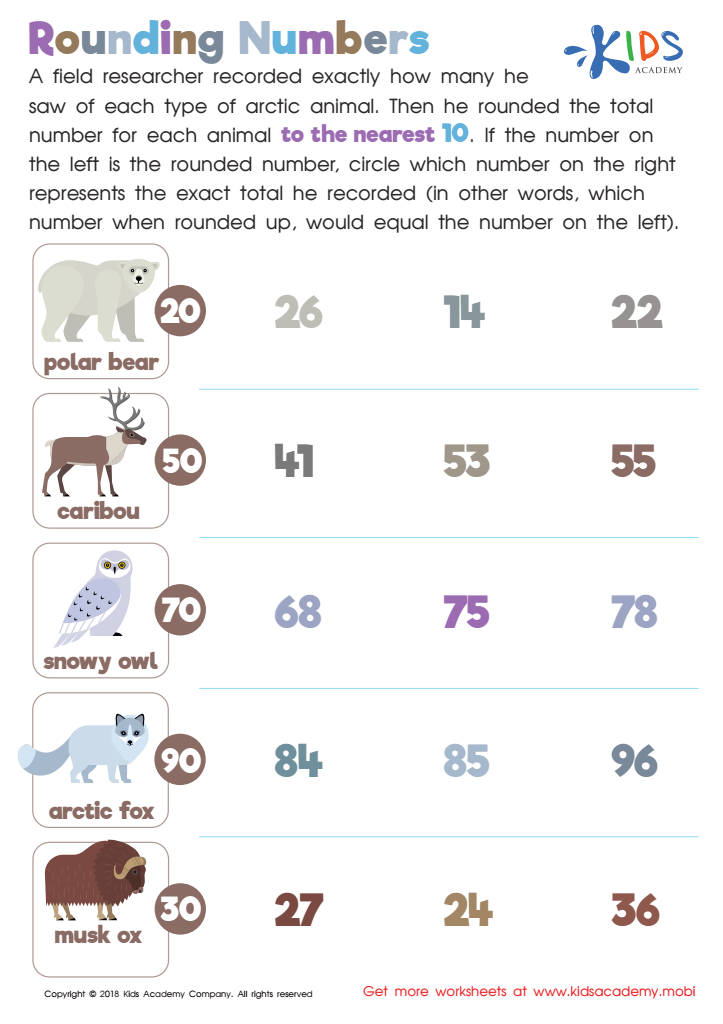
Rounding Numbers Worksheet
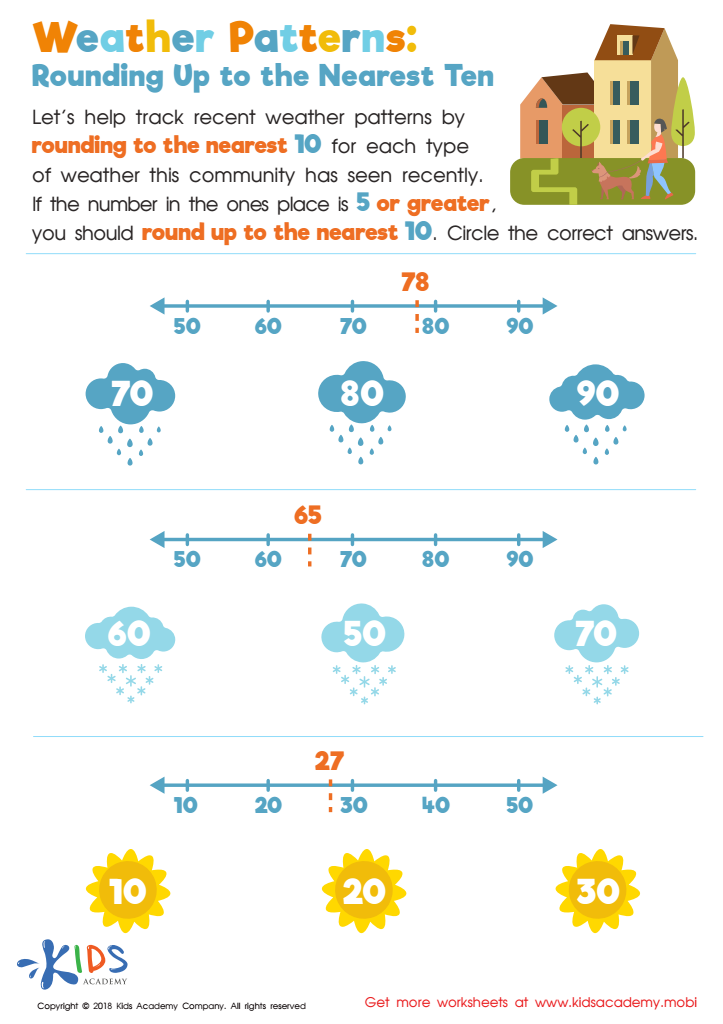
Weather Patterns Worksheet






Mathematical reasoning, particularly rounding, is a fundamental skill for children aged 4-9 that lays the groundwork for a strong mathematical foundation. Understanding rounding helps young learners develop number sense, which is essential for estimating quantities and making quick calculations. For parents and teachers, fostering this skill is critical, as it influences a child’s confidence in mathematics and problem-solving abilities.
Rounding concepts enable children to simplify complex numbers, facilitating easier arithmetic and mental math in everyday scenarios, such as discussing time, money, and measurement. Early introduction to rounding also enhances comprehension of larger numeric concepts, prepares students for more advanced math topics, and equips them with analytical thinking skills.
Moreover, rounding is often incorporated into various learning standards and educational curricula, making it an integral part of a child’s education. Engaging children in playful rounding activities not only makes learning fun but also emphasizes the practical applications of math in real life. By prioritizing mathematical reasoning, particularly rounding, parents and teachers can foster a positive attitude towards math, decrease math anxiety, and instill a lifelong appreciation of mathematical thinking in their students. Thus, it’s crucial to invest time in nurturing these skills during formative years.








