
Understanding times tables Times Tables Worksheets for Ages 4-9
6 filtered results
Difficulty Level
Grade
Age
-
From - To
Subject
Activity
Standards
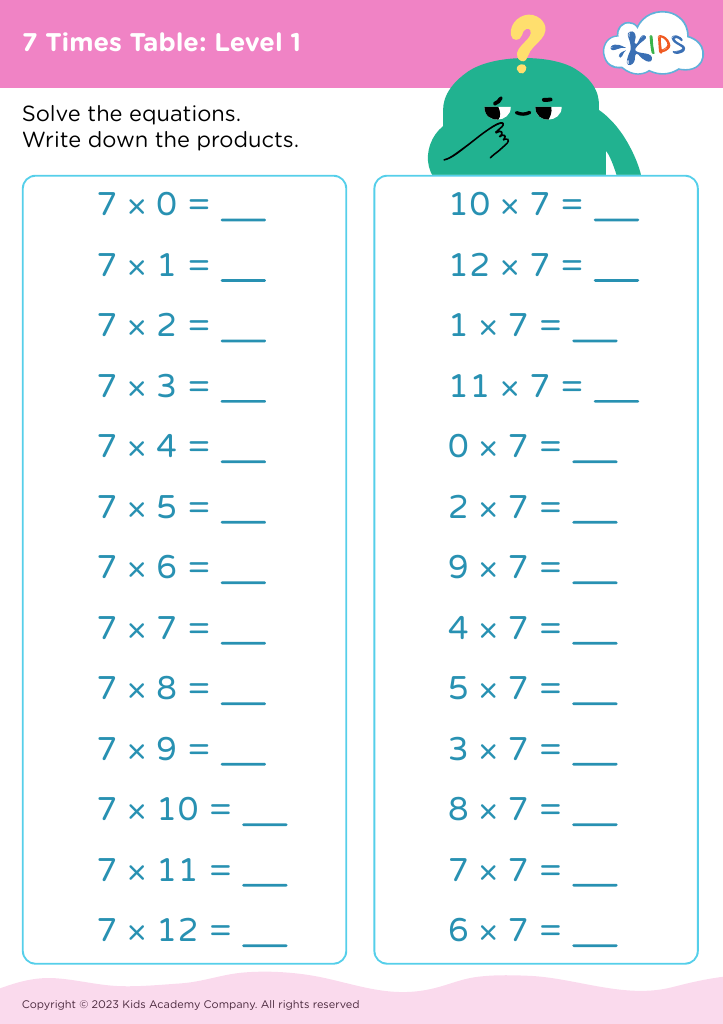
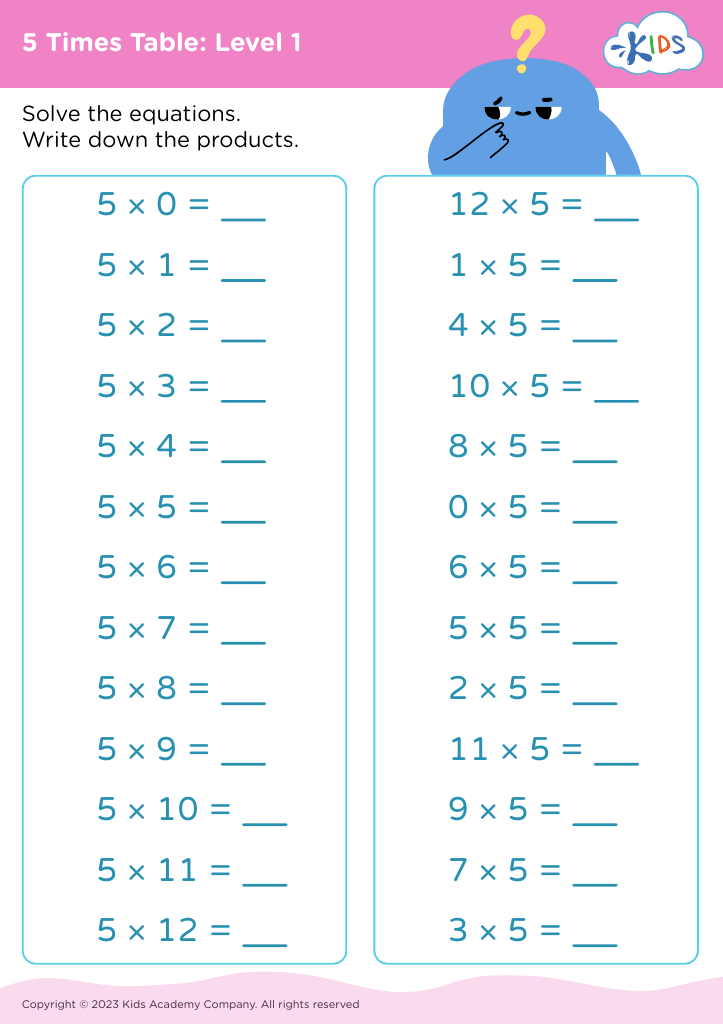
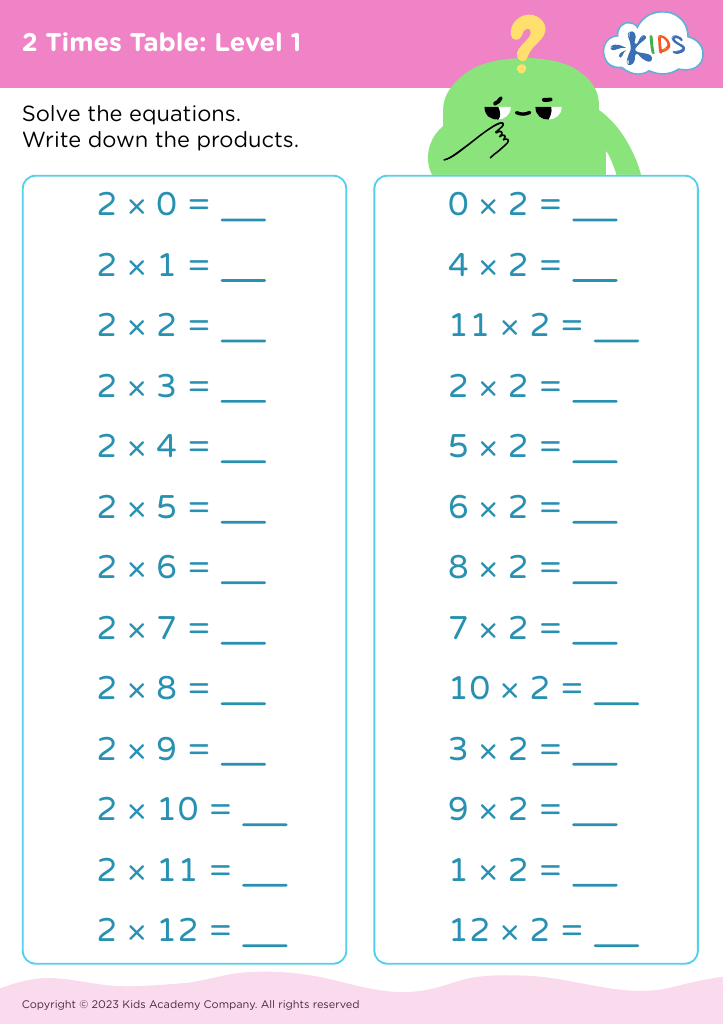
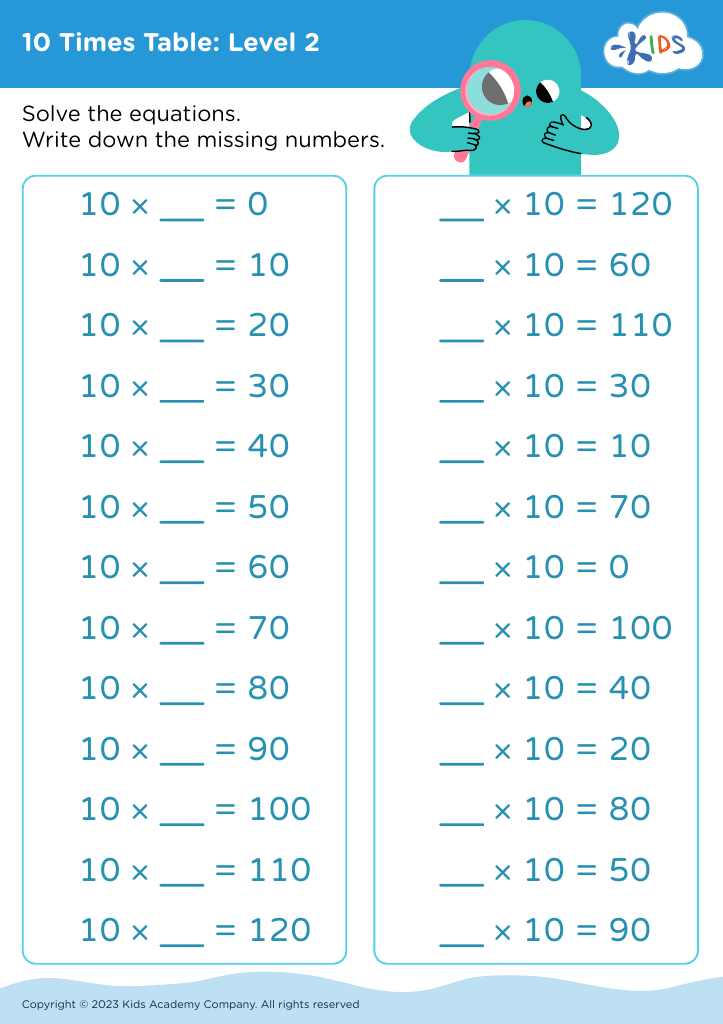
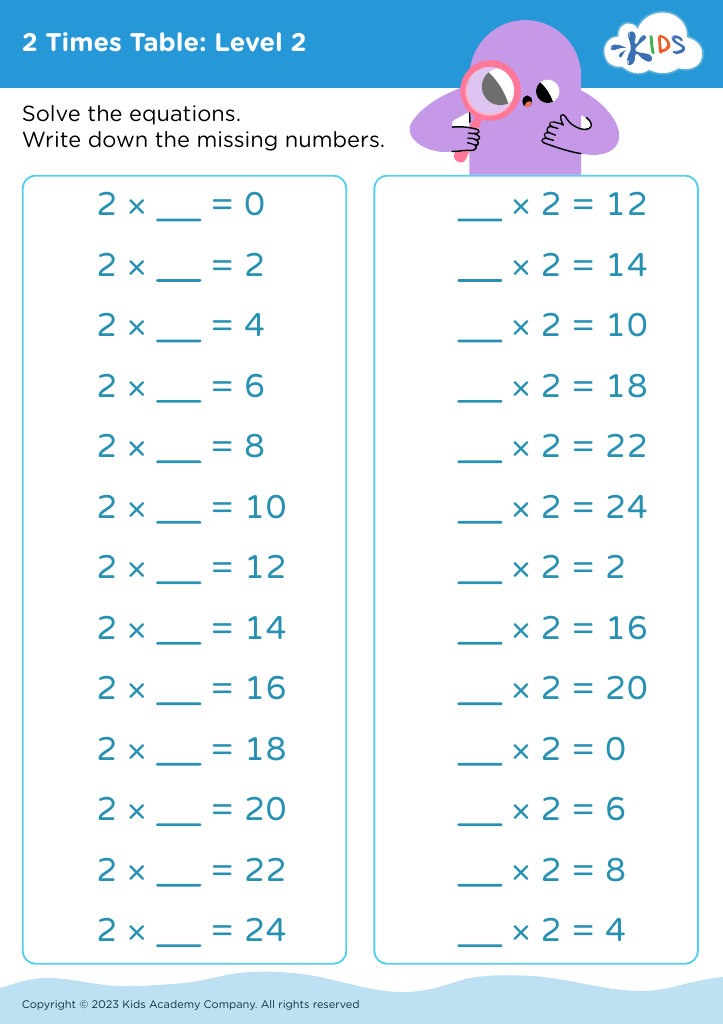
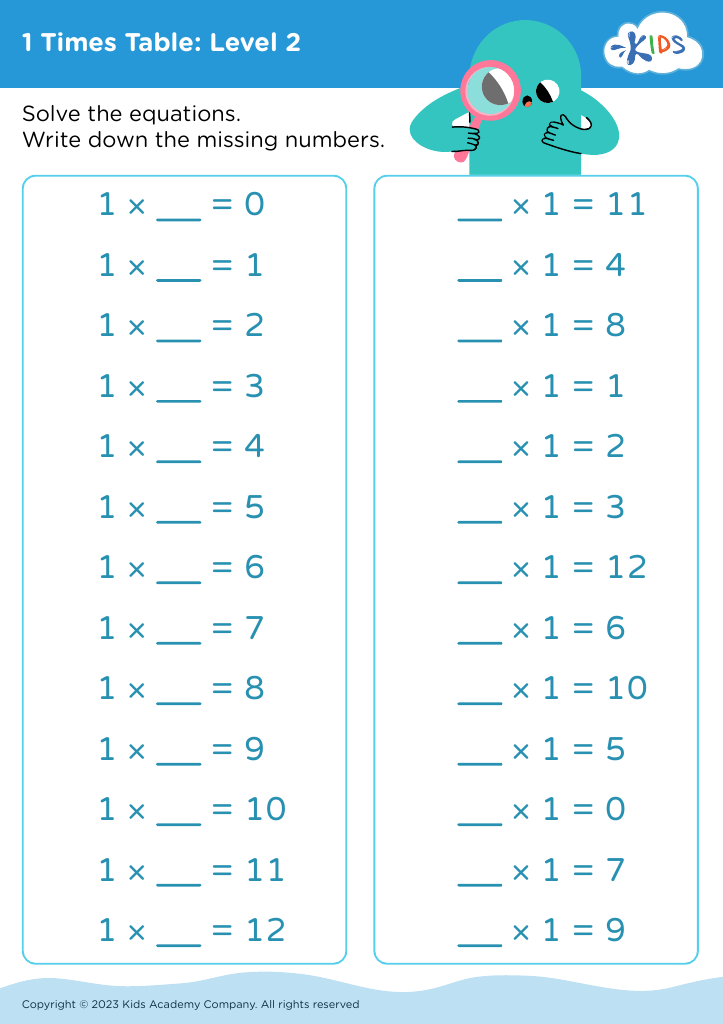
Welcome to our engaging "Understanding Times Tables" section, designed for children aged 4-9! Our interactive times tables worksheets make learning multiplication fun and effective, building a strong mathematical foundation. Each worksheet is tailored to enhance comprehension, with colorful visuals and introduces essential concepts progressively. Kids will enjoy practicing at their own pace, reinforcing their skills while developing confidence. From simple patterns to more complex problems, our resources cater to all learning styles. Perfect for homework help or classroom use, these worksheets make mastering times tables an enjoyable adventure. Help your child excel in math with our fun and educational materials today!
Favorites
With answer key
Interactive
Join Kids Academy for Free
Who is primarily going to use this learning content?





Understanding times tables at an early age is crucial for children aged 4-9, as it lays the foundation for future mathematical concepts and problem-solving skills. Mastering these multiplication facts boosts confidence, making math less intimidating as they advance in their education. When children grasp times tables, they gain a powerful tool for mental math, improving their ability to tackle real-world problems efficiently, be it calculating prices while shopping or determining travel times.
Additionally, times tables enhance cognitive development. Regular practice engages memory and critical thinking, allowing young learners to make connections between numbers and patterns. Familiarity with times tables also facilitates learning more complex mathematical operations, such as division and fractions, fostering a deeper understanding of numeracy.
Moreover, supporting children in mastering times tables encourages perseverance and resilience. As they overcome challenges in memorization and recall, they cultivate a growth mindset that is essential for lifelong learning.
By focusing on times tables, parents and teachers not only equip children with essential skills for academic success but also promote confidence, problem-solving abilities, and an enduring appreciation for mathematics. Investing time in understanding these foundational concepts is key to nurturing well-rounded, capable thinkers.








