Logical thinking development Word Problems Worksheets for Ages 4-9
3 filtered results
-
From - To
Discover engaging Logical Thinking Development Word Problems Worksheets designed specifically for children ages 4-9. These worksheets encourage critical thinking skills through fun and relatable scenarios, promoting reasoning and problem-solving abilities. Each challenge is thoughtfully crafted to stimulate young minds, helping them to decipher puzzles and develop logical reasoning in a playful manner. Ideal for both classroom settings and home learning, these worksheets cater to various skill levels, ensuring every child can thrive. Empower your child’s mathematical foundation and enhance their analytical skills while they enjoy the learning process. Explore our resources to support your child's journey to becoming a confident thinker!
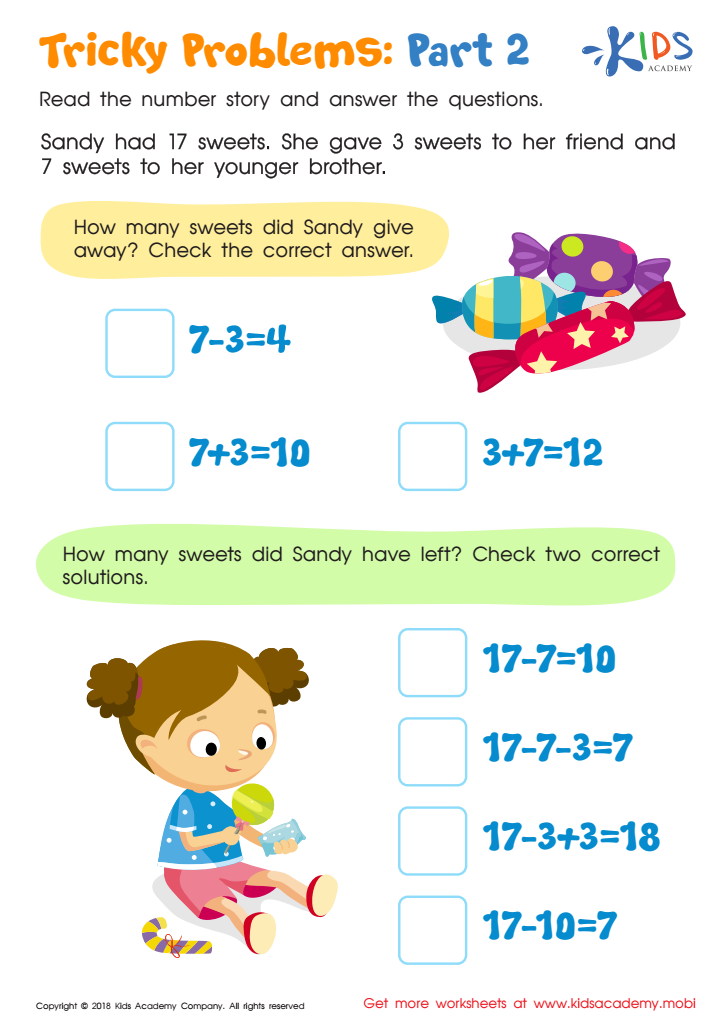
Tricky Problems Worksheet: Part 2
 Assign to My Students
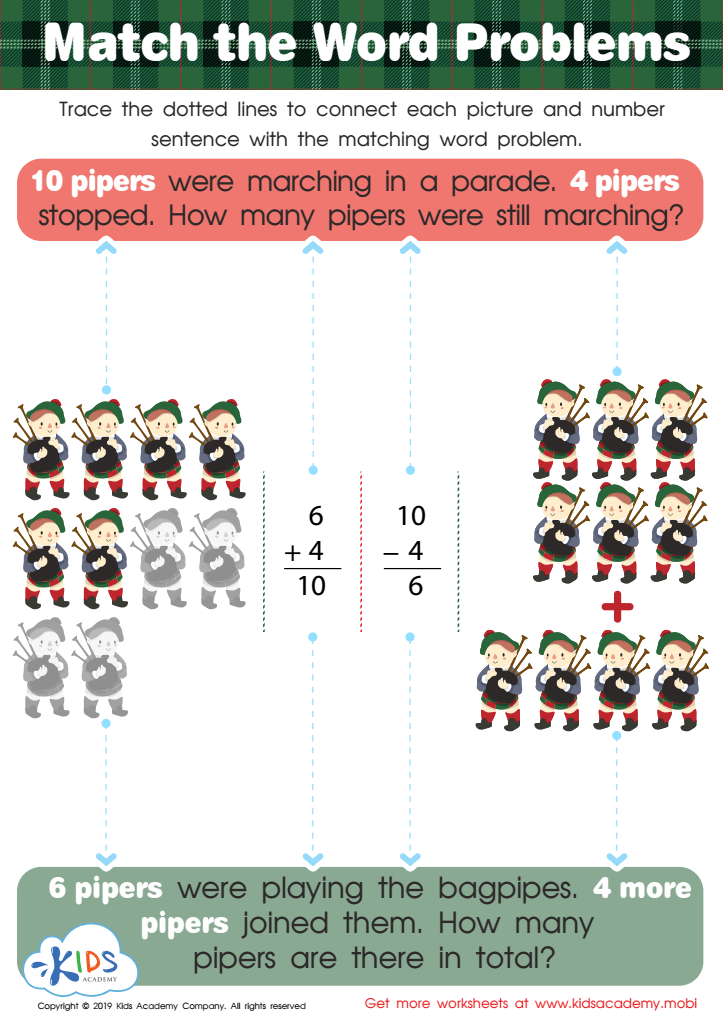
Match the Word Problems Worksheet
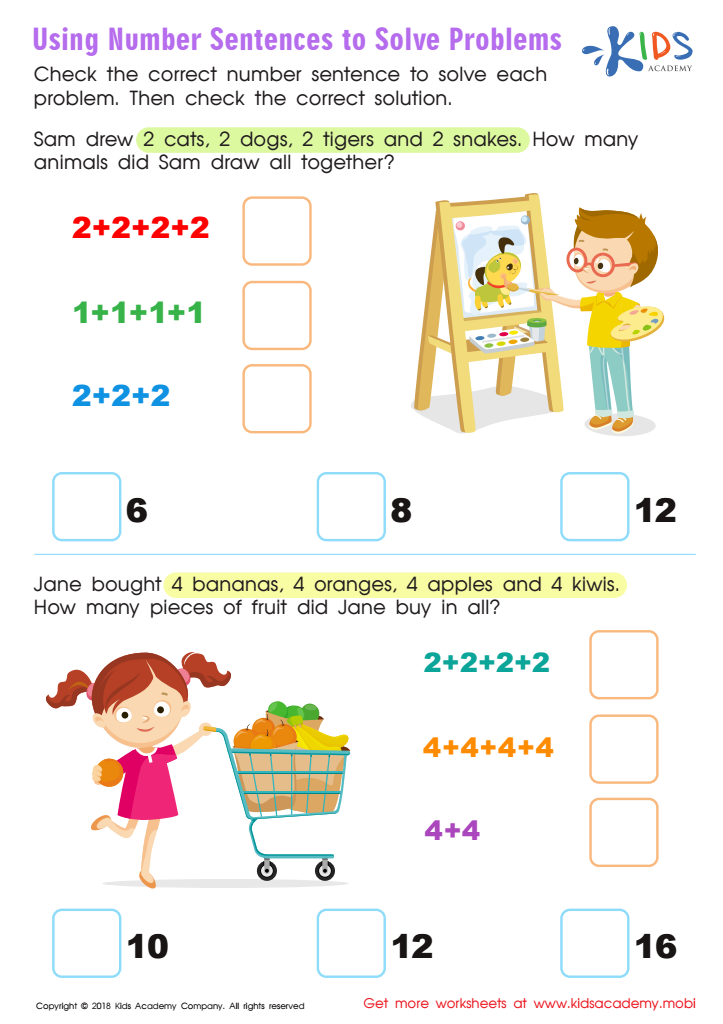
Using Number Sentences to Solve Problems Worksheet








Logical thinking is a crucial skill that lays the foundation for problem-solving and critical thinking, both essential in everyday life. For children aged 4-9, engaging with word problems is particularly beneficial as it helps them develop their logical reasoning abilities and enhances their understanding of mathematics.
Word problems encourage children to interpret information, relate it to various contexts, and think creatively about solutions. This process not only reinforces arithmetic skills but also builds the ability to analyze situations critically, discerning key information and identifying relationships between different elements.
By incorporating word problems into learning, parents and teachers foster a growth mindset, helping children approach challenges with confidence. This age is a formative period where the ability to reason logically can influence academic success and life skills. Additionally, word problems often require collaborative discussions, enhancing communication skills and promoting teamwork.
Moreover, logical thinking is not confined to mathematics; it transcends into reading comprehension, science, and even social studies, making it a versatile skill that promotes holistic learning. Therefore, prioritizing logical thinking through word problems is vital for shaping capable, independent learners. Investing in this development will yield benefits that extend far beyond the classroom.








