Comprehension skills Reading Non-Fiction Worksheets for Ages 4-9
5 filtered results
-
From - To
Enhance your child's reading abilities with our "Comprehension Skills Reading Non-Fiction Worksheets” designed for ages 4-9. These expertly crafted worksheets help young learners develop essential techniques for understanding and analyzing informational texts. By engaging with various topics, kids improve their ability to discern crucial details, infer meanings, and make connections to real-world knowledge. Perfect for reinforcing classroom learning, our worksheets provide structured, easy-to-follow activities that make reading non-fiction fun and educational. Spark curiosity and foster a love for reading while ensuring your child gains confidence and proficiency in comprehending non-fiction materials. Ideal for both homeschool and traditional educational settings.
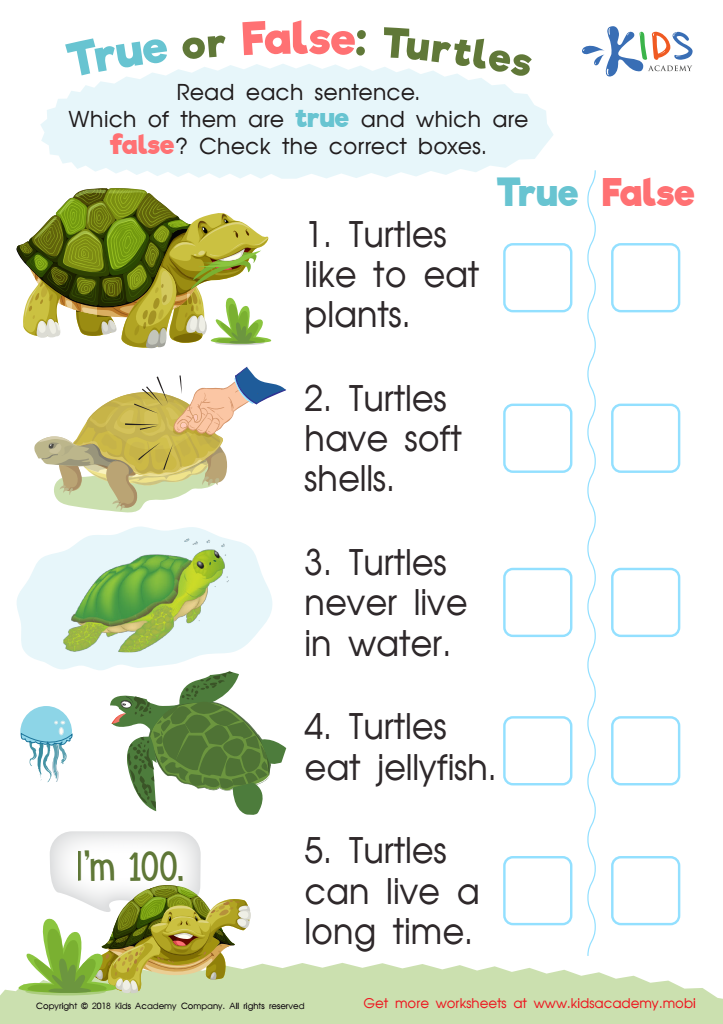
True or False: Turtles Worksheet
 Assign to My Students
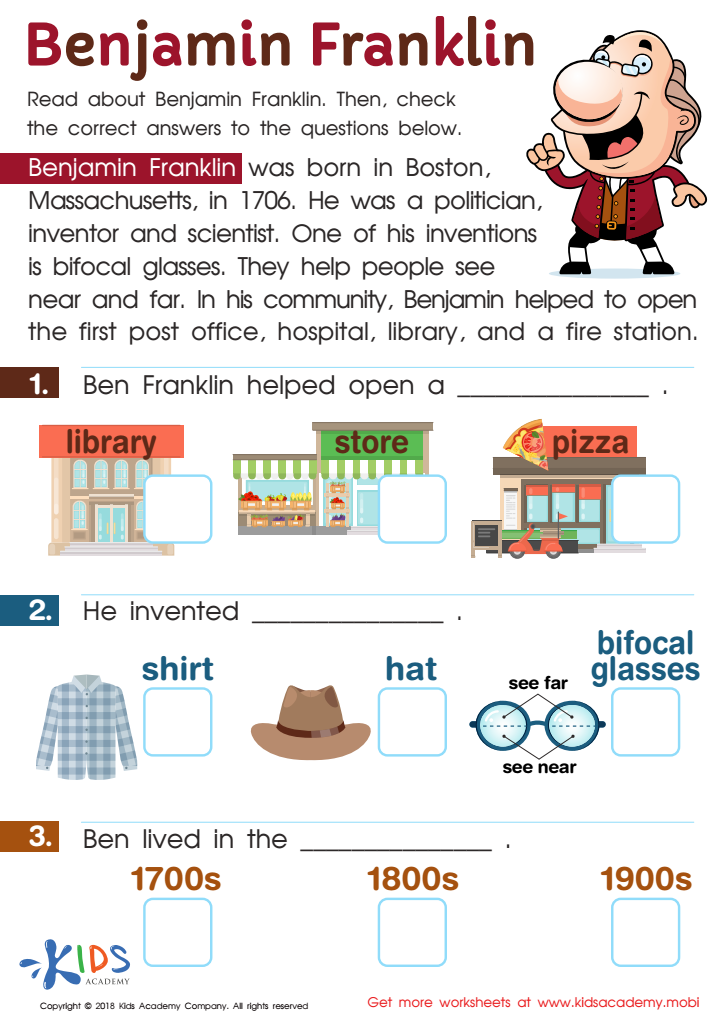
Benjamin Franklin Worksheet
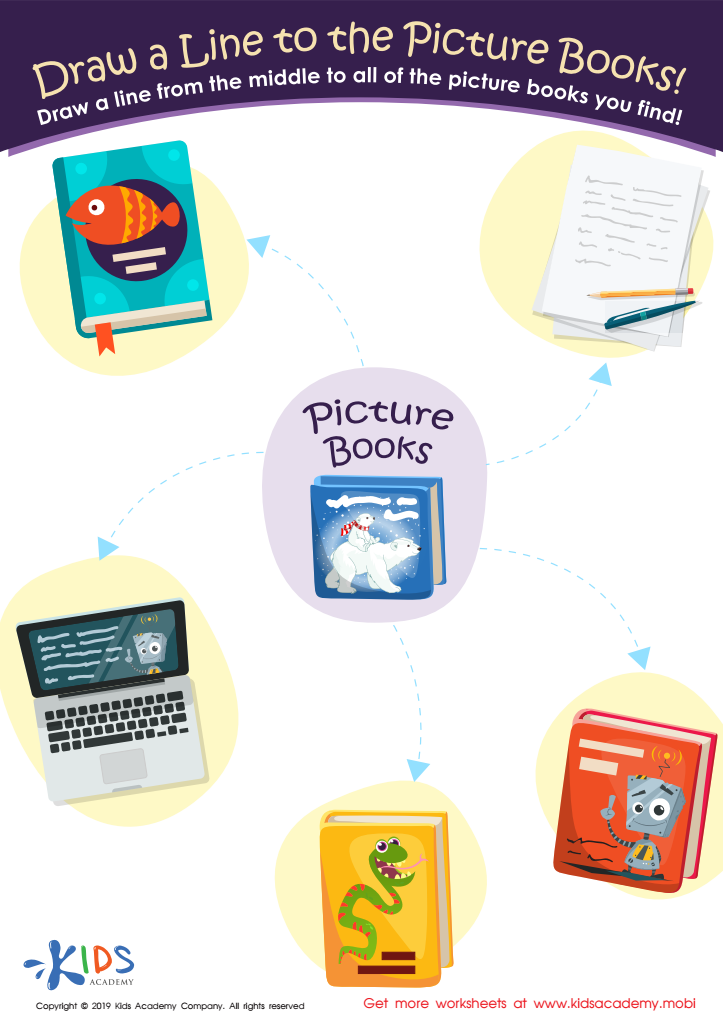
Draw a Line to the Picture Books Worksheet
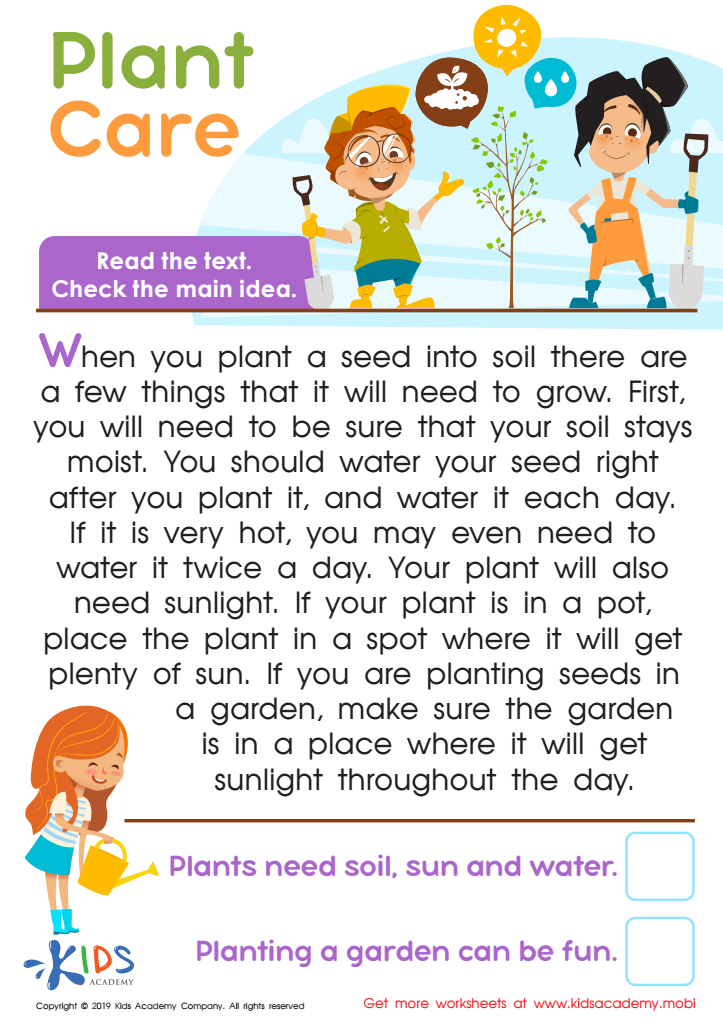
Plant Care Worksheet
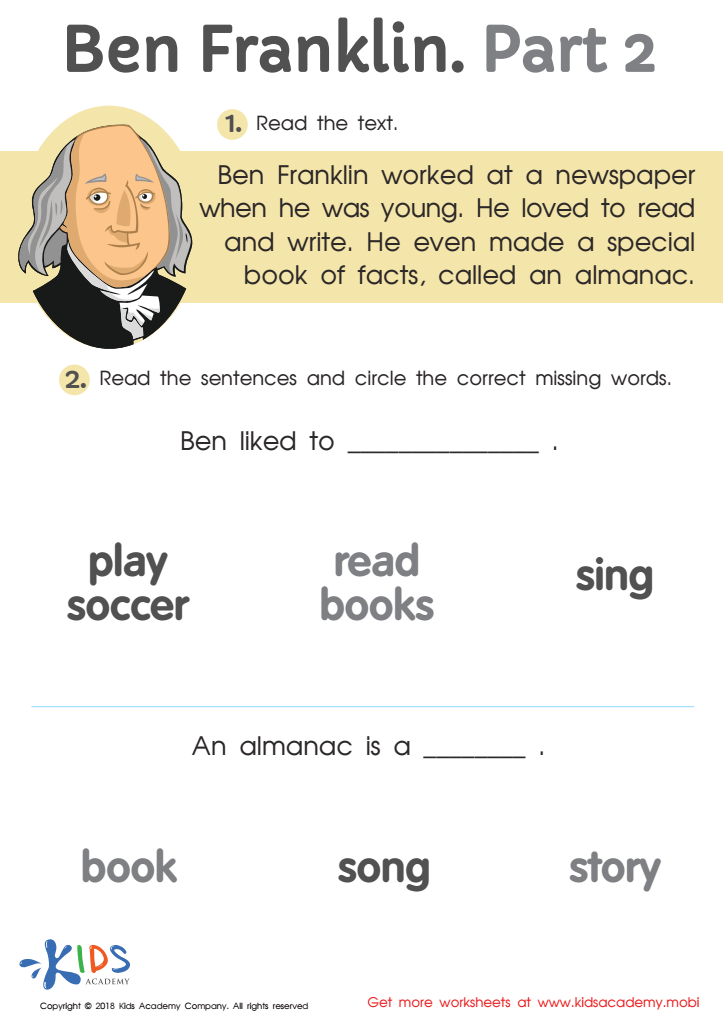
Ben Franklin Part 2 Worksheet








Parents and teachers should prioritize comprehension skills in reading non-fiction for children ages 4-9 because these skills serve as foundational blocks for lifelong learning and critical thinking. At this developmental stage, children are highly receptive to new information. Reading non-fiction helps to broaden their understanding of the world around them. Comprehending non-fiction texts enables kids to gather facts, understand processes, and make sense of real-world events, which can significantly enhance their academic performance across various subjects such as science, social studies, and mathematics.
Moreover, effective comprehension of non-fiction helps children become independent learners. When youngsters can dissect complex information, analyze details, and synthesize new ideas, they develop problem-solving skills that are crucial for everyday decision-making. These skills also foster better academic performance as the ability to understand and retain factual information is essential in standardized tests and classroom settings.
In addition, non-fiction reading promotes vocabulary expansion and precise language use, further strengthening communication skills. As children grow, the capacity to comprehend non-fiction texts will aid them in becoming informed citizens capable of making knowledgeable personal and civic decisions. Ultimately, fostering these skills early on sets the stage for a lifetime of curiosity, knowledge acquisition, and intellectual growth.








