Reading Skills Reading Non-Fiction Worksheets for Ages 4-9
4 filtered results
-
From - To
Enhance your child's reading skills with our engaging Reading Non-Fiction Worksheets designed for ages 4-9. These printable resources offer a fun and interactive way for young learners to explore real-world topics while developing comprehension and critical thinking skills. Each worksheet features age-appropriate texts that encourage curiosity and inspire a love for learning. Whether at home or in the classroom, our non-fiction reading exercises promote vocabulary building, fact retention, and discussion opportunities. Perfect for early grade educators and parents alike, these worksheets will support your child’s literacy journey, making reading a delightful adventure! Download our worksheets and foster a mix of knowledge and imagination today!
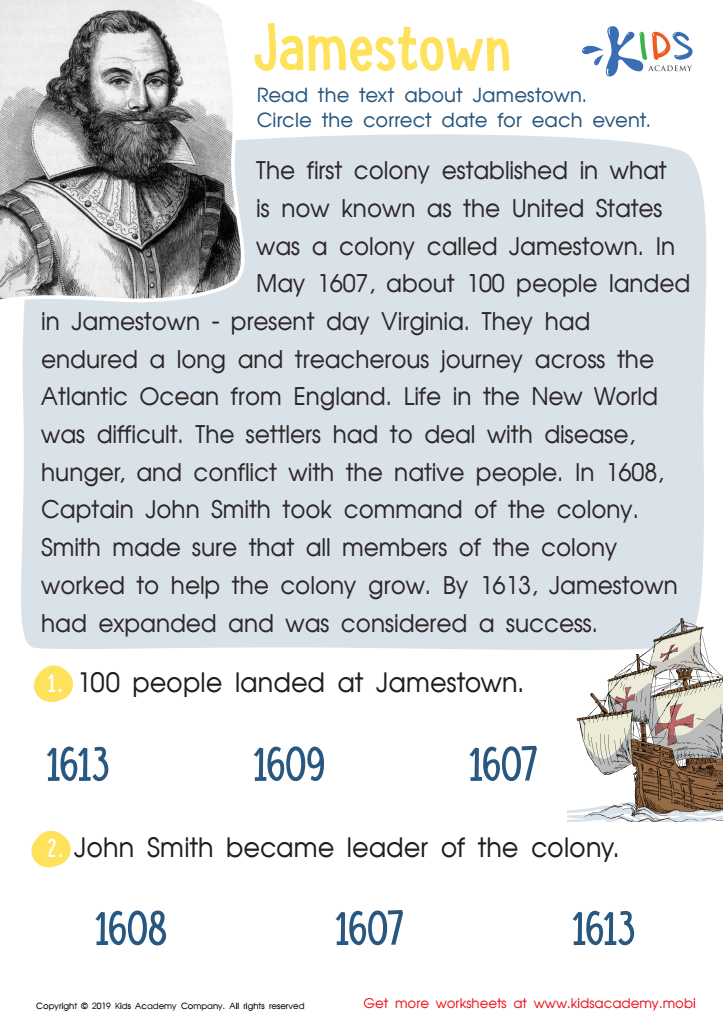
Jamestown Worksheet
 Assign to My Students
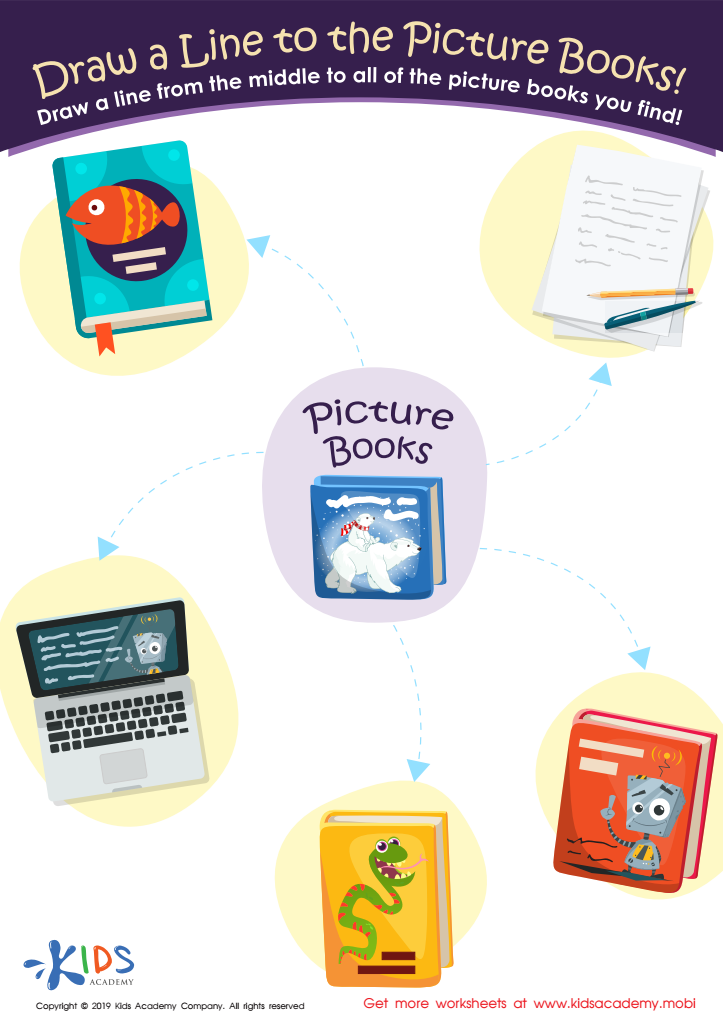
Draw a Line to the Picture Books Worksheet
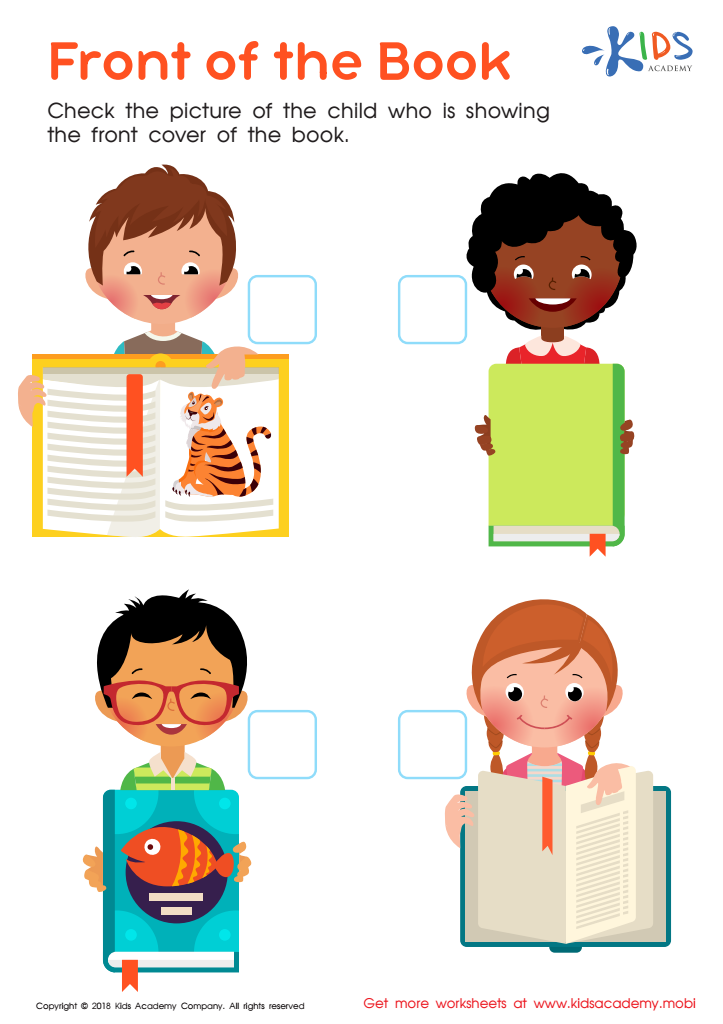
Front of the Book Worksheet
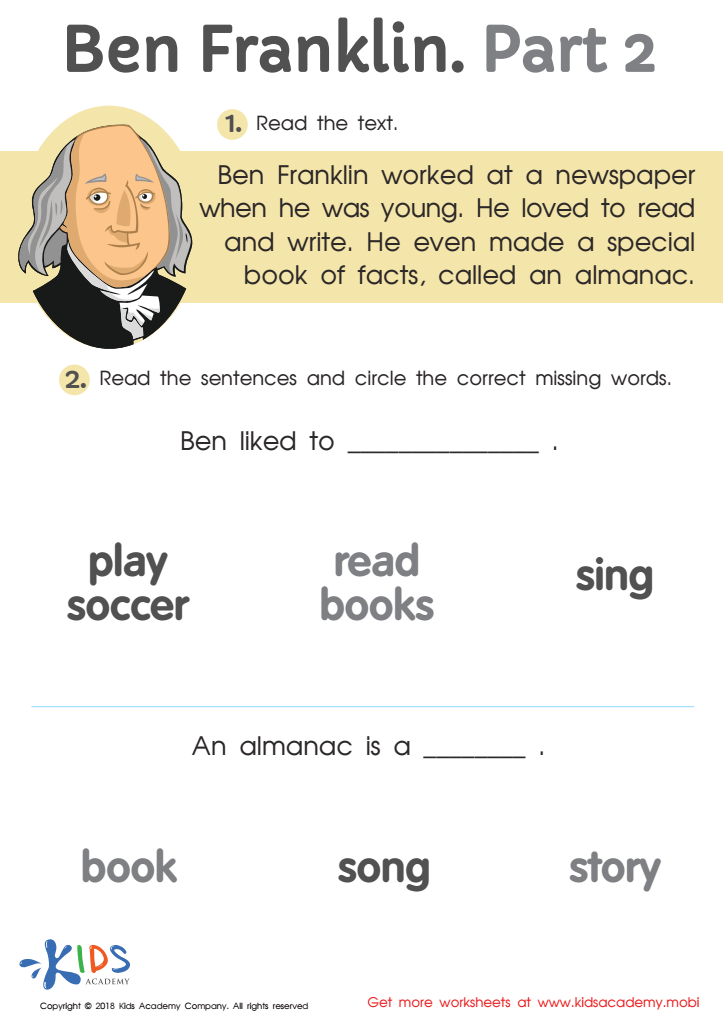
Ben Franklin Part 2 Worksheet








Parents and teachers should prioritize reading non-fiction skills for children aged 4-9 because these skills are foundational for lifelong learning and critical thinking. Early exposure to non-fiction materials helps children understand the world around them, fostering curiosity and a desire to explore various topics. Non-fiction texts introduce factual information, diverse concepts, and a variety of formats—such as biographies, reference books, and articles—opening windows into subjects like science, history, and nature.
Developing reading non-fiction skills enhances vocabulary and comprehension, which are vital for academic success. Children learn to engage with text features such as captions, charts, and glossaries, sharpening their ability to extract relevant information and analyze it. This breeds confidence in their reading abilities and promotes independent learning.
Furthermore, non-fiction encourages discussions about real-world issues, empowering children to express their thoughts and opinions, thus enhancing their communication skills. In an era where critical thinking and informed citizens are essential, fostering a strong foundation in reading non-fiction not only supports literacy but also cultivates inquisitive, knowledgeable individuals. Ultimately, encouraging these skills sets the stage for a successful educational journey and well-rounded understanding of the world.








