
Vocabulary Building Reading Non-Fiction Worksheets for Ages 4-9
4 filtered results
Difficulty Level
Grade
Age
-
From - To
Subject
Activity
Standards
Enhance your child's language skills with our engaging Vocabulary Building Reading Non-Fiction Worksheets, designed specifically for ages 4-9. These interactive resources encourage young learners to explore fascinating topics while expanding their vocabulary. Each worksheet integrates informative content for kids, making the reading experience both educational and enjoyable. Ideal for home or classroom use, these exercises boost comprehension and promote critical thinking. Parents and educators can easily access our printable materials, ensuring that children develop strong language abilities from an early age. Encourage a love for reading and learning with our thoughtfully crafted non-fiction worksheets today!
Favorites
With answer key
Interactive
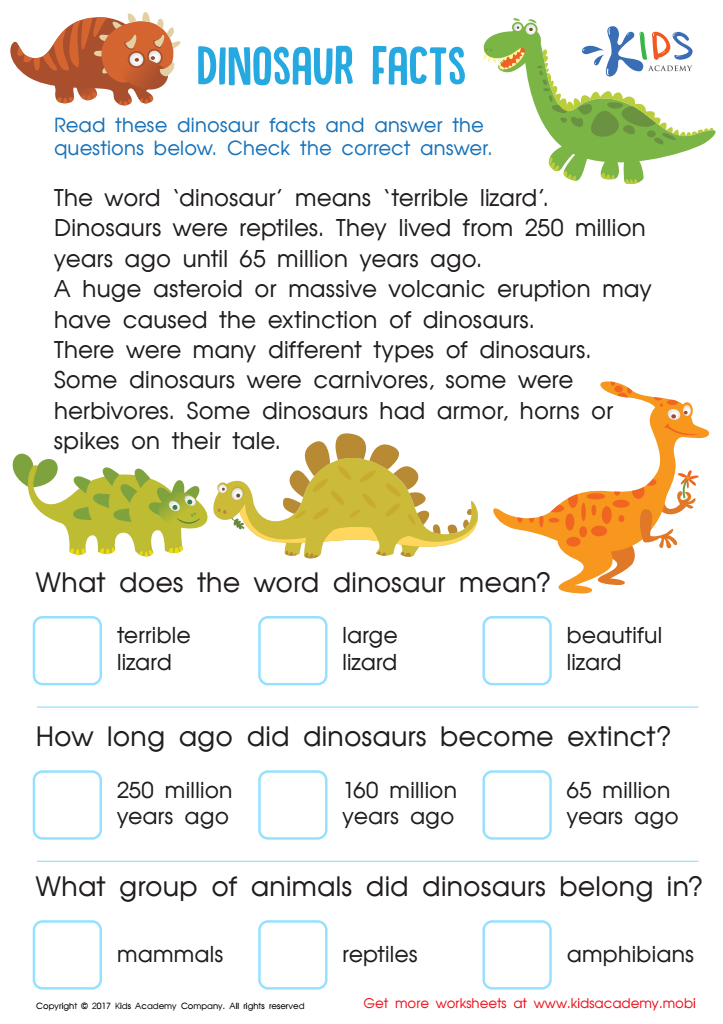
Dinosaur Facts Worksheet
Help your child improve reading skills with engaging nonfiction texts! This dinosaur facts worksheet will teach fun information and test kids on the key details. It'll keep them motivated and ready to learn!
 Assign to My Students
Dinosaur Facts Worksheet
Worksheet
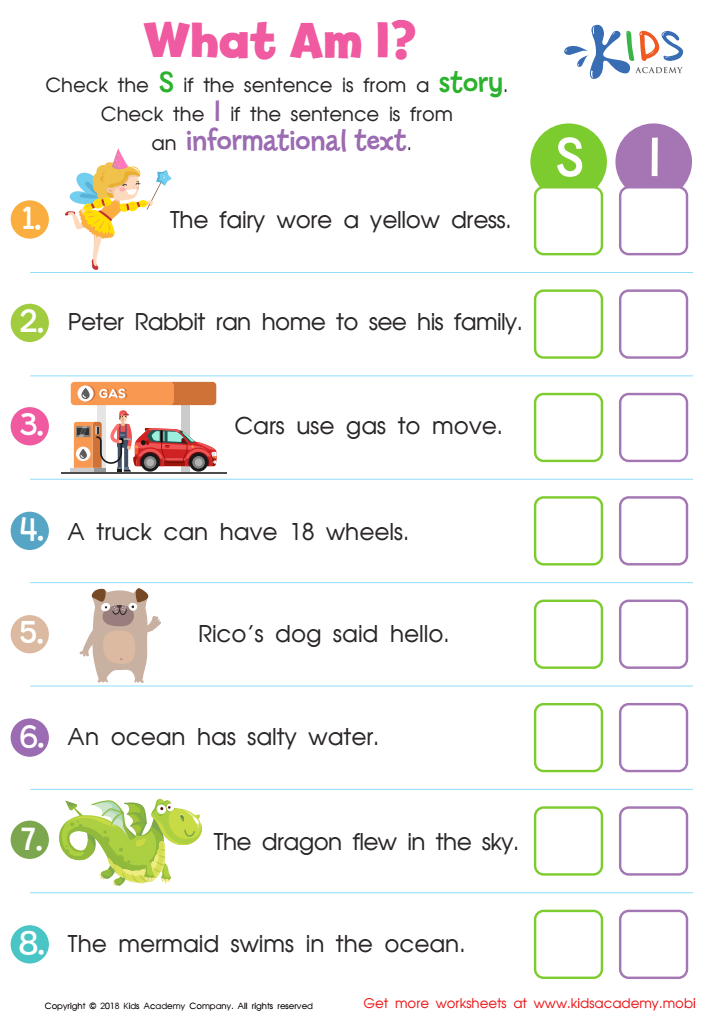
What Am I? Worksheet
This worksheet assesses students' ability to differentiate between stories and texts they read for facts. Students learn to distinguish between reading for pleasure and reading for information. It includes statements from both a story and an informational text, and students must decide what type of text it is.
What Am I? Worksheet
Worksheet
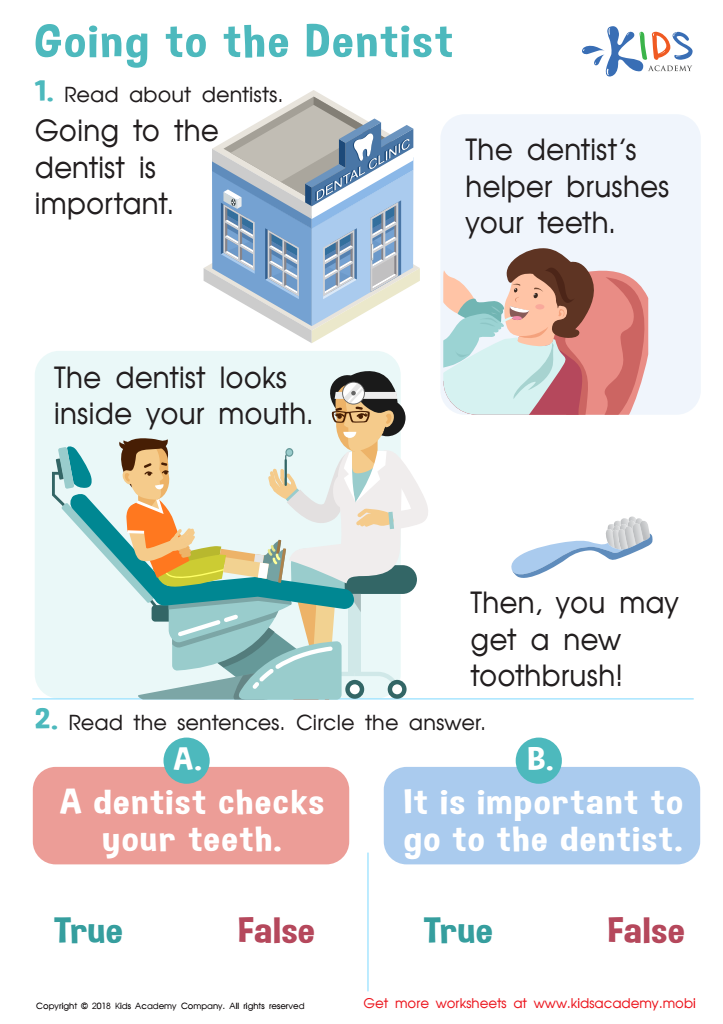
Going to the Dentist Part 2 Worksheet
Visiting the dentist can be nerve-wracking for children. This informative PDF will not only explain what the dentist does, but also use pictures to assure children. They'll learn why seeing the dentist is important and be able to verify their understanding through true/false questions.
Going to the Dentist Part 2 Worksheet
Worksheet
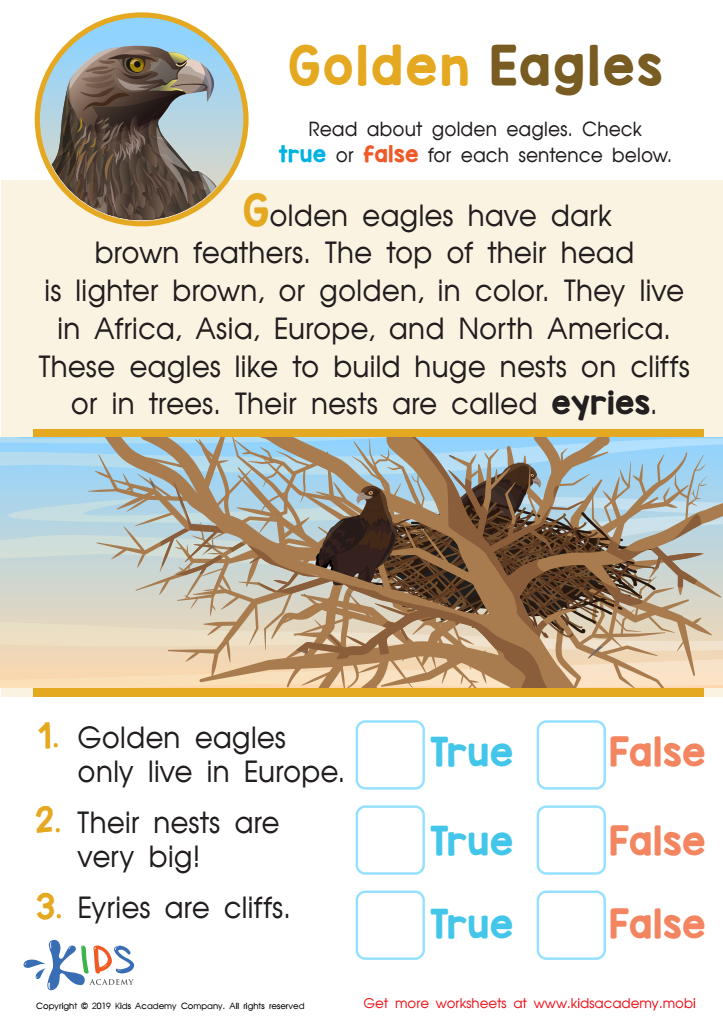
Golden Eagles Worksheet
Check your child's reading comprehension with this fascinating worksheet! Read the passage at the top of the page and discuss what was learned about golden eagles. Then, read the statements at the bottom and ask if they are true or false. Guide your child to circle the correct answer then read the text to back up the answer.
Golden Eagles Worksheet
Worksheet
Join Kids Academy for Free
Who is primarily going to use this learning content?








Vocabulary building through reading non-fiction is crucial for children aged 4-9, as it lays the foundation for literacy and cognitive development. During these formative years, children are naturally curious and eager to learn about the world around them. Non-fiction texts offer factual information about various subjects, enriching their understanding and expanding their vocabulary with new words and concepts.
Parents and teachers should prioritize non-fiction reading because it helps children associate words with real-world meanings, thus deepening comprehension. This genre also encourages critical thinking as children learn to differentiate facts from opinions and assess the reliability of different sources.
Moreover, a robust vocabulary is pivotal for academic success across subjects. As children progress in their education, having a strong vocabulary allows them not only to enhance their reading skills but also to express themselves clearly in speaking and writing. Engaging with non-fiction material encourages discussions at home and in the classroom, further reinforcing language skills.
In summary, by promoting vocabulary building through non-fiction, parents and teachers equip children with essential tools for effective communication, analytical thinking, and a lifelong love of learning. This vital early investment sets the stage for future academic achievement and knowledge exploration.








