Vocabulary development Animals Worksheets for Ages 4-9
4 filtered results
-
From - To
Enhance your child’s vocabulary skills with our engaging Animals Worksheets designed for ages 4-9! These fun and interactive resources introduce young learners to a variety of animals, helping them expand their word knowledge while exploring the wonders of the animal kingdom. Each worksheet is carefully crafted to stimulate curiosity, encouraging children to identify, describe, and learn about different species in an enjoyable way. With colorful illustrations and age-appropriate activities, these worksheets make vocabulary development exciting and accessible. Perfect for classroom or home use, these resources help build a strong foundation for literacy, critical thinking, and overall language skills. Start exploring today!
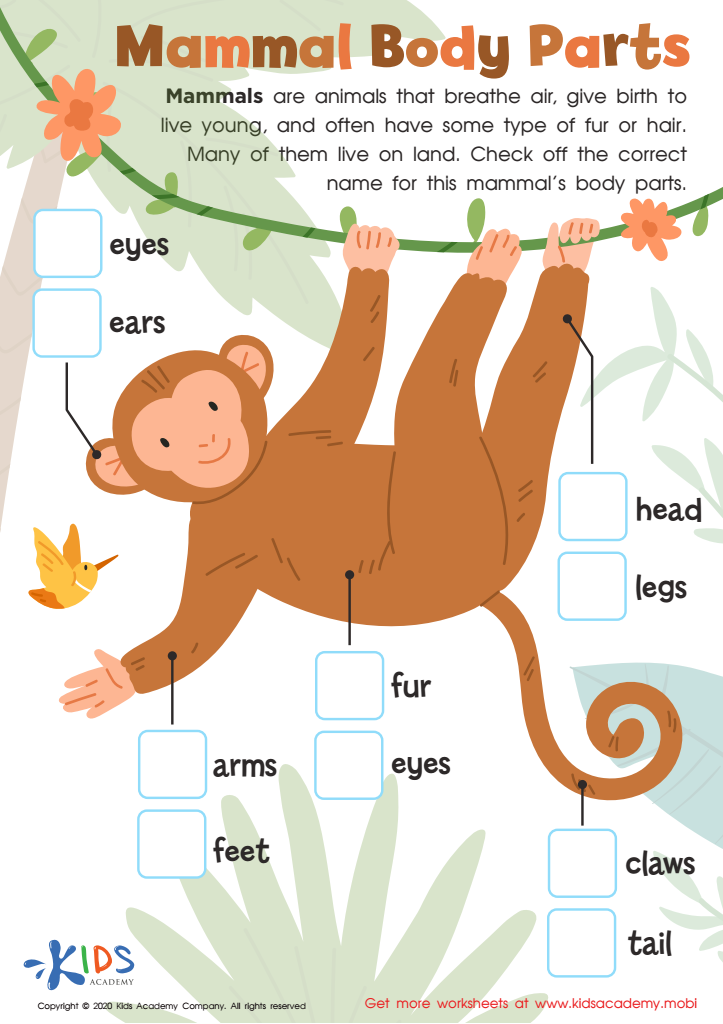
Mammal Body Parts Worksheet
 Assign to My Students
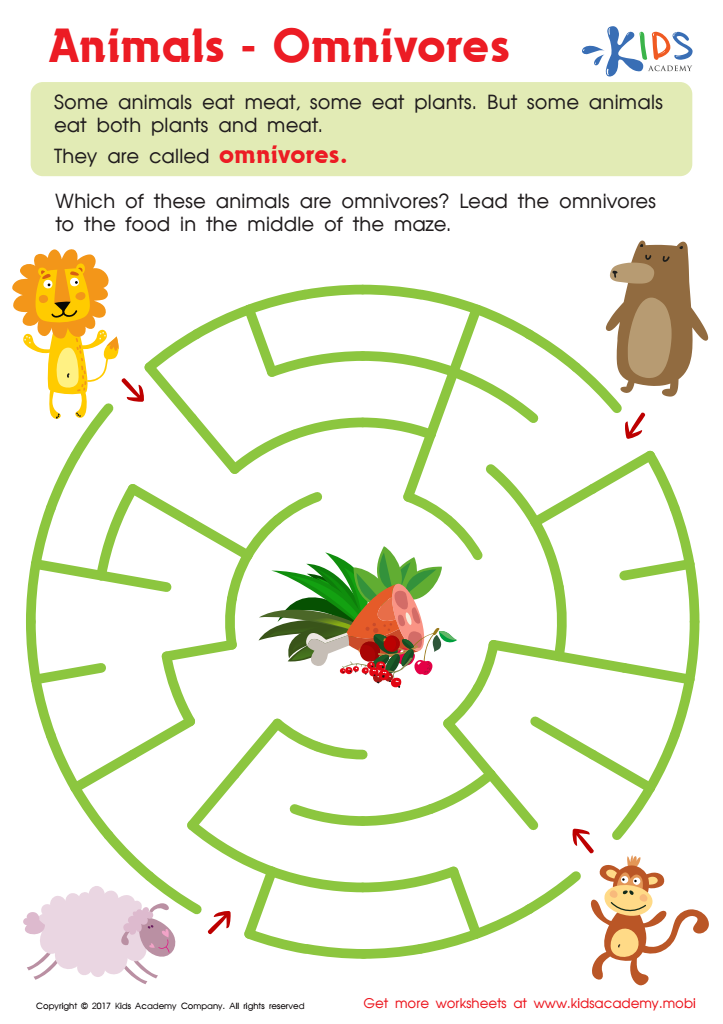
Omnivores Animals Worksheet
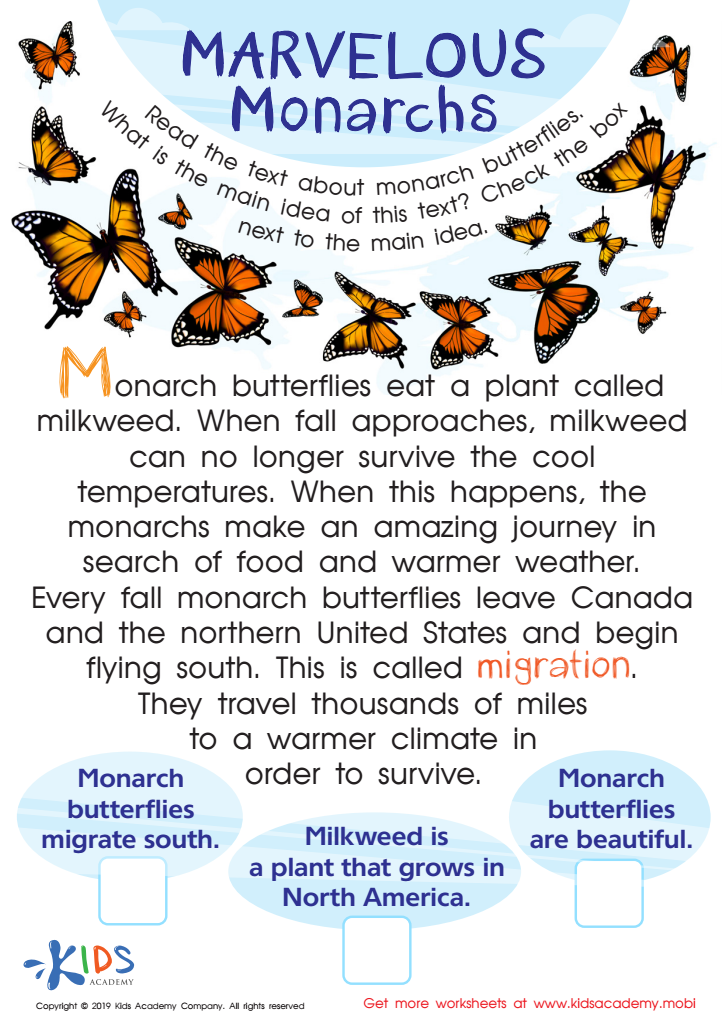
Marvelous Monarchs Worksheet
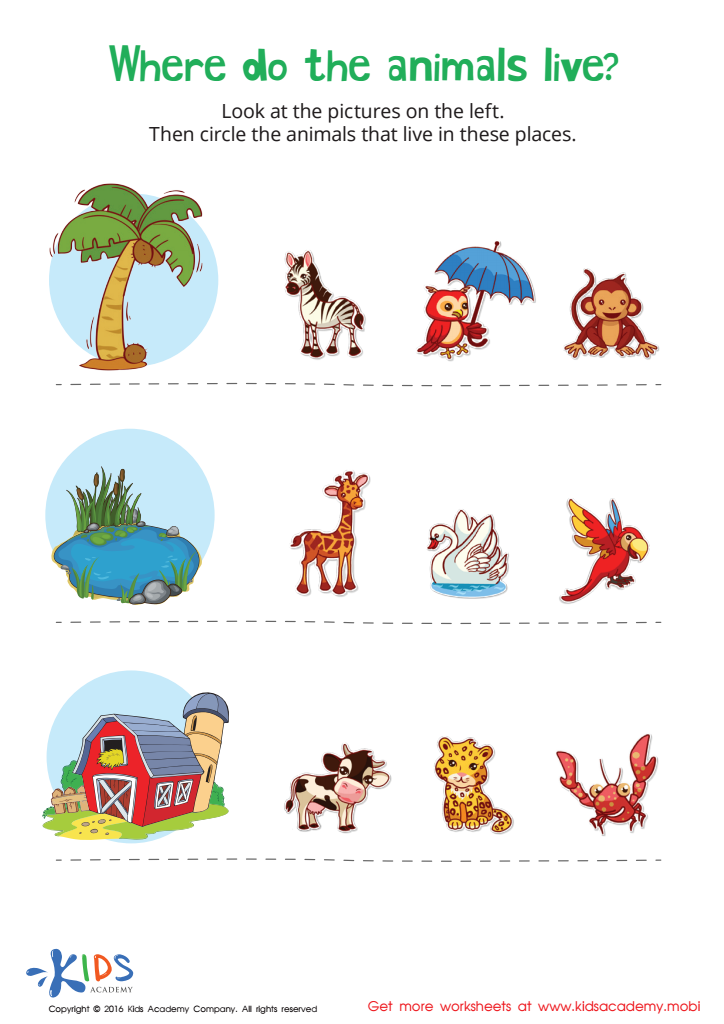
Where Animals Live Worksheet







Vocabulary development, particularly regarding animals, plays a crucial role in the cognitive and linguistic growth of children aged 4-9. At this formative stage, children are naturally curious about the world, and learning about animals helps them expand their vocabulary while fostering a deeper understanding of their environment.
When parents and teachers introduce children to animal-related vocabulary, they facilitate critical skills such as categorization and comparison. Children learn to group animals by characteristics—such as habitats, diets, and behaviors—enhancing their analytical thinking. Moreover, discussing animals can spark interest in science, leading to exploration of ecosystems, biology, and conservation.
Additionally, a robust vocabulary in this area can boost literacy skills. Whether reading storybooks featuring animals or engaging in discussions about pets, children are more likely to grasp context and comprehend texts when they have adequate vocabulary. This lays the groundwork for academic success in later years.
Furthermore, social skills are nurtured as children share their knowledge about animals with peers, promoting communication and collaboration. Encouraging a rich vocabulary related to animals contributes to a well-rounded education, fostering curiosity, empathy, and a lifelong love for learning in young children. Therefore, investing time in vocabulary development is essential for holistic child growth.