Listening skills Elementary Phonics Worksheets for 4-Year-Olds
4 filtered results
-
From - To
Welcome to our "Listening Skills Elementary Phonics Worksheets" designed specifically for 4-year-olds! These engaging worksheets help young learners develop crucial listening skills in a fun and interactive way. Through a variety of activities, children will listen to sounds, identify phonetic patterns, and enhance their ability to process auditory information. Our resources are tailored to align with early childhood education standards, ensuring a solid foundation in phonics while boosting confidence in listening. Perfect for home or classroom use, these worksheets make learning enjoyable and effective. Join us in nurturing a love for learning and language skills in your little ones today!
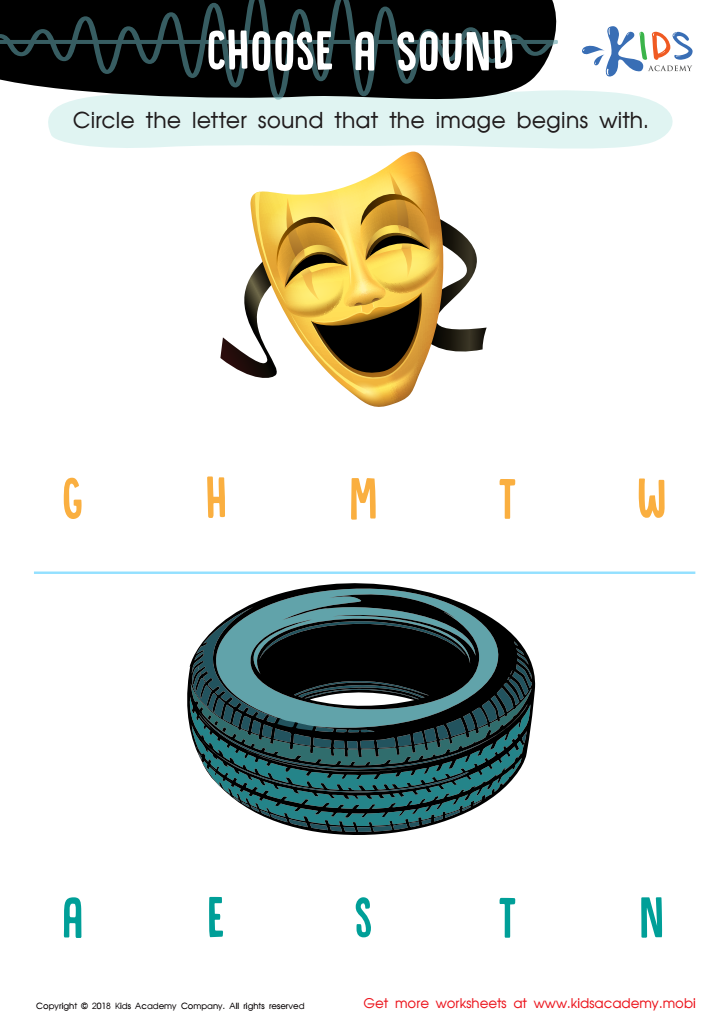
Choose a Sound Worksheet
 Assign to My Students
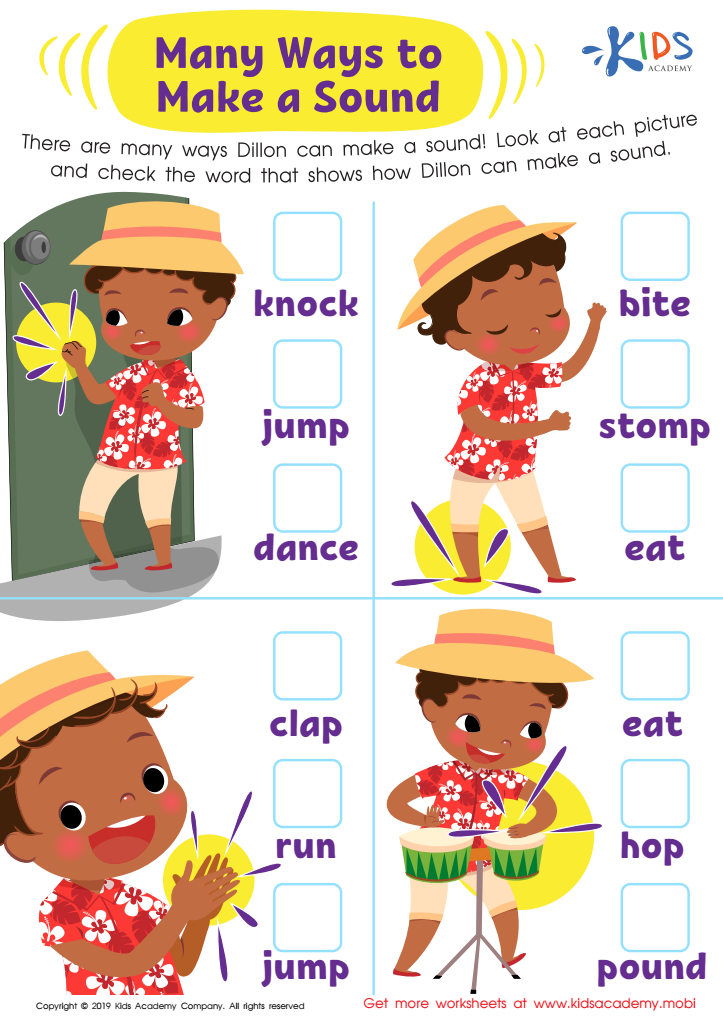
Many Ways to Make a Sound Worksheet
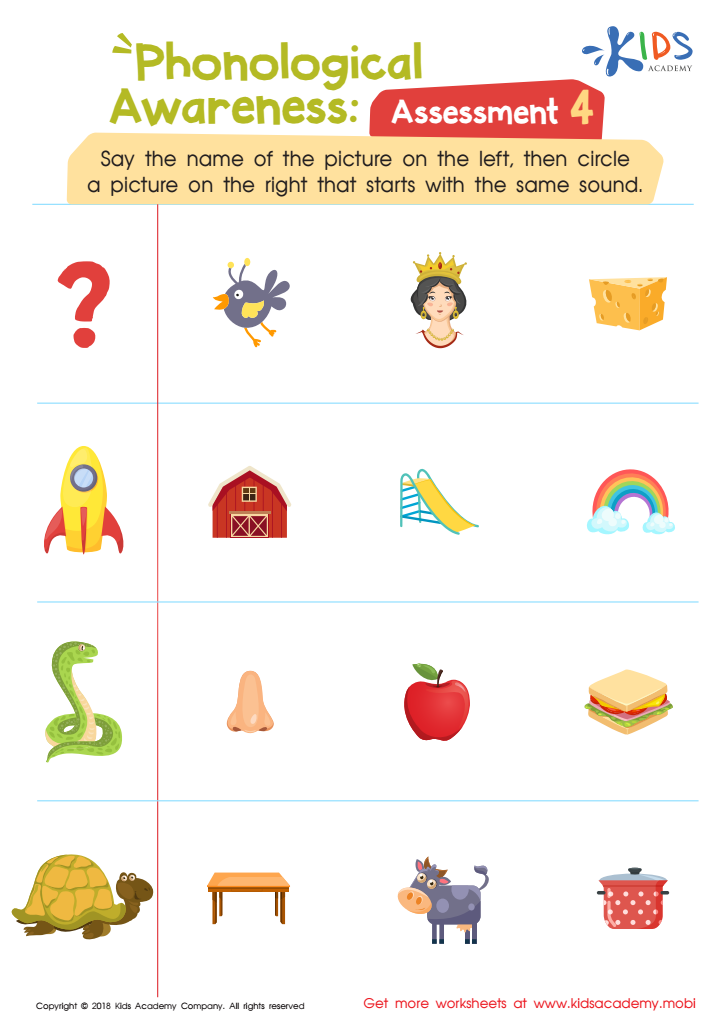
Phonological Awareness: Assessment 4 Worksheet
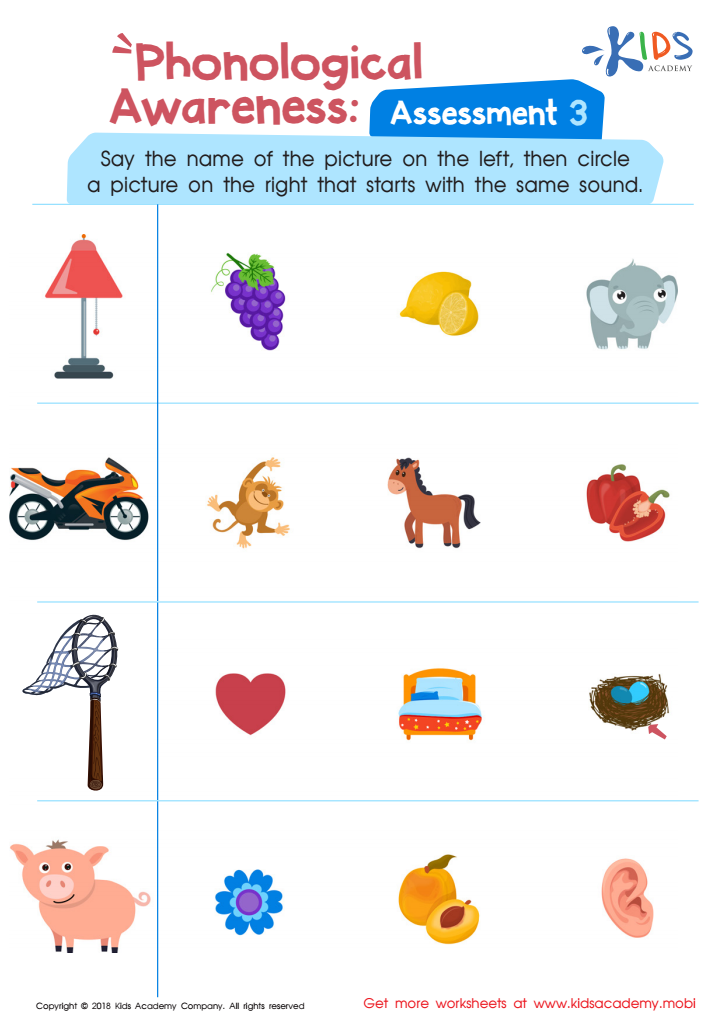
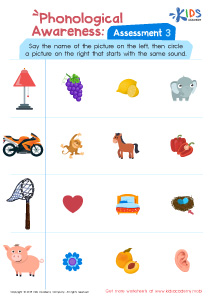
Phonological Awareness: Assessment 3 Worksheet




Listening skills are crucial for the development of young children, particularly when it comes to phonics at the elementary level. For 4-year-olds, who are just beginning their educational journey, the ability to listen effectively lays a strong foundation for future reading and language comprehension. Parents and teachers should prioritize listening skills as they directly impact a child’s ability to understand and manipulate sounds in words, which is essential for learning to read.
By honing listening skills, children improve their ability to distinguish between different sounds and syllables, enhancing their phonetic awareness. This phonetic understanding is the cornerstone of reading; if a child can easily recognize and reproduce the sounds they hear, they are more likely to decode words successfully and build a richer vocabulary.
Moreover, engagement in listening activities fosters attention span and memory retention. When teachers and parents encourage activities such as storytelling, rhyming games, or songs, they help children become active listeners, ultimately boosting their confidence in communication.
In summary, nurturing listening skills during phonics instruction not only prepares 4-year-olds for reading but also fosters critical thinking, effective communication, and social skills. Therefore, both educators and parents play an important role in this essential aspect of early childhood development.