Vocabulary development Elementary Phonics Worksheets for 4-Year-Olds
3 filtered results
-
From - To
Enhance your child's early literacy skills with our Vocabulary Development Elementary Phonics Worksheets tailored for 4-year-olds. These engaging and fun worksheets introduce young learners to essential phonics concepts, helping them build a strong vocabulary foundation. Each activity promotes letter recognition, sound association, and word formation, making learning enjoyable through colorful visuals and interactive tasks. Designed by educational specialists, our worksheets encourage creativity and critical thinking while supporting your child's reading and writing journey. Discover a world of learning opportunities that foster language development and confidence—perfect for preschool environments or at-home practice. Start nourishing your child's love for words today!
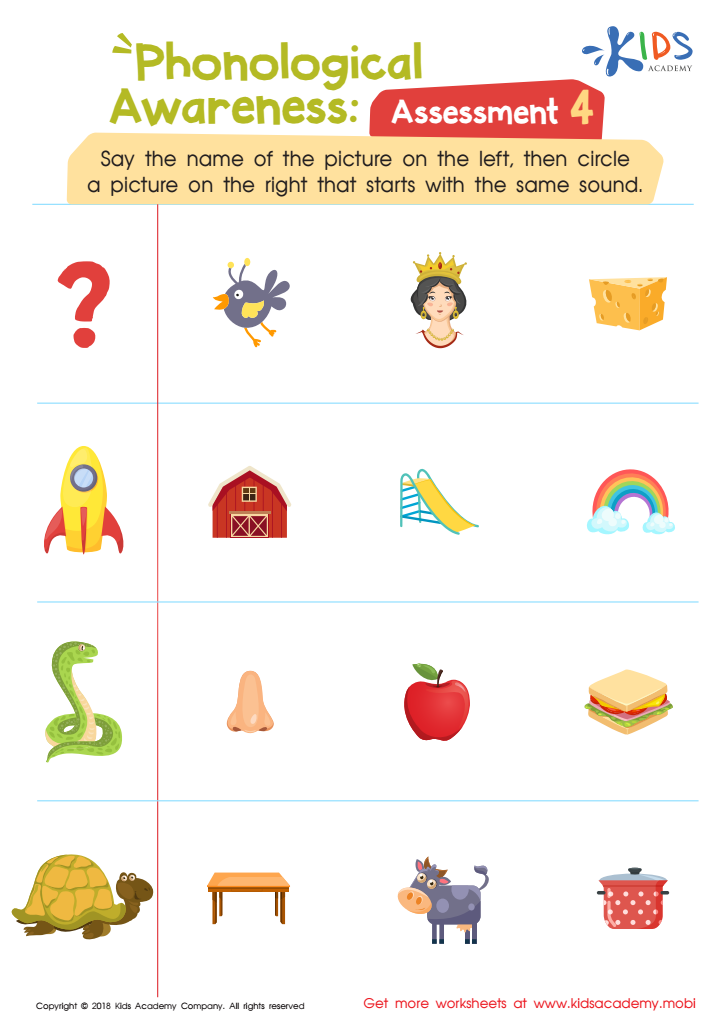
Phonological Awareness: Assessment 4 Worksheet
 Assign to My Students
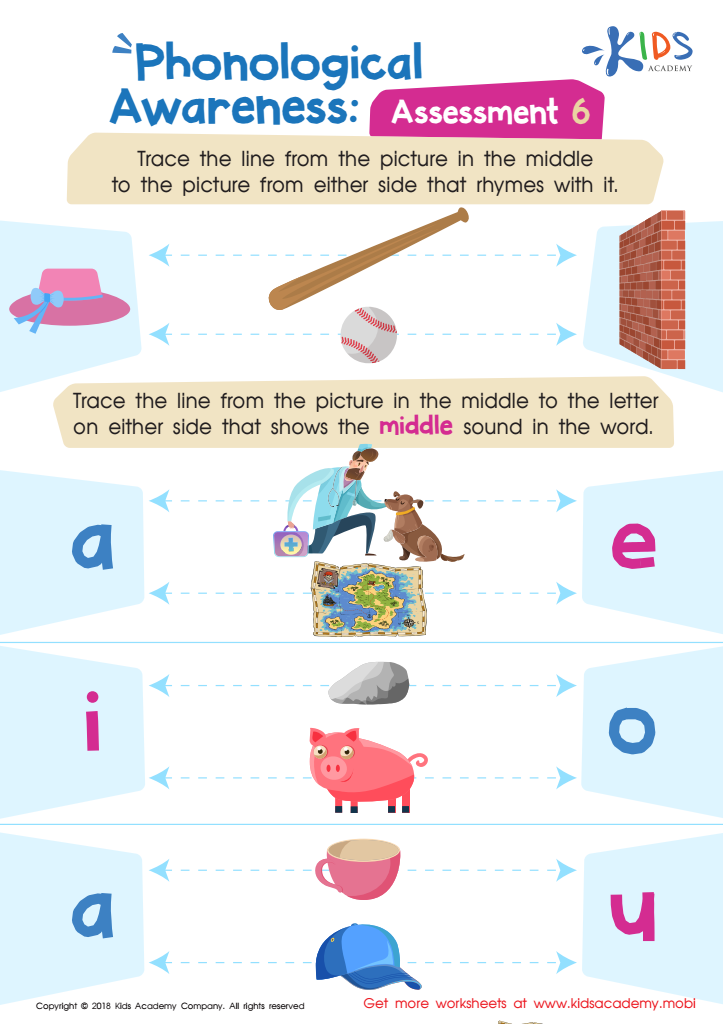
Phonological Awareness: Assessment 6 Worksheet
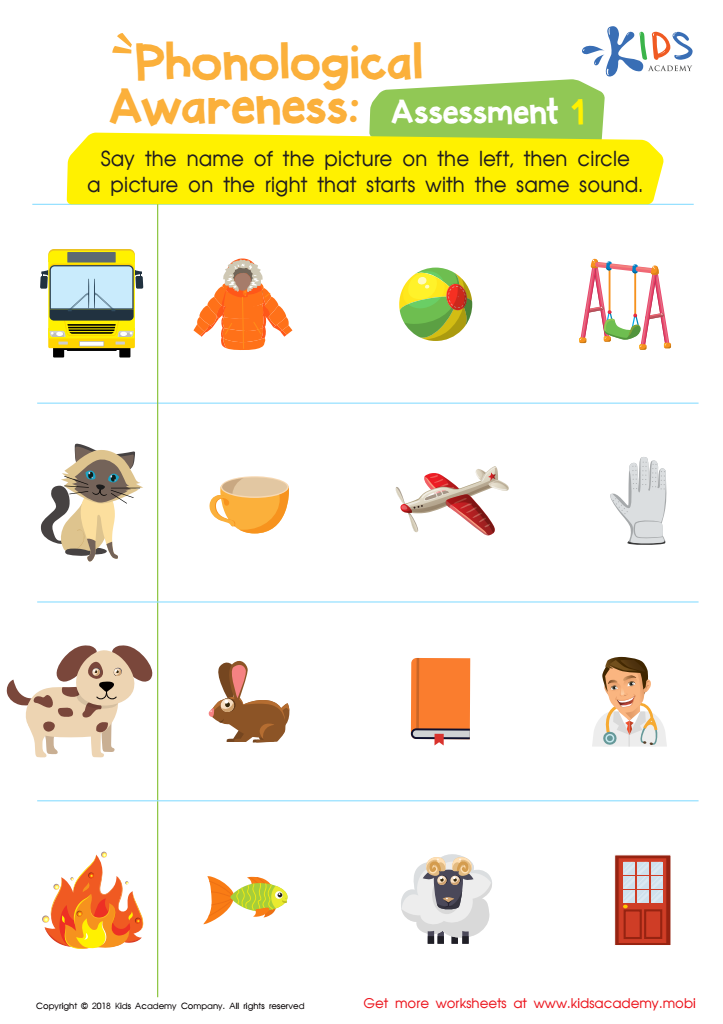
Phonological Awareness: Assessment 1 Worksheet




Vocabulary development and phonics are foundational elements in early childhood education, particularly for 4-year-olds. At this age, children are remarkably receptive to language acquisition, making it the perfect time for parents and teachers to nurture these skills. Effective vocabulary development fosters critical thinking, enhances communication, and prepares children for academic success. A rich vocabulary allows young learners to express their thoughts, feelings, and ideas confidently, laying the groundwork for effective social interactions.
Phonics, on the other hand, is essential for decoding words, which enables children to read. When children learn the relationship between letters and sounds, they develop fundamental reading skills that are crucial for their later educational journey. Early exposure to phonics helps children understand phonemic awareness, aiding in spelling and writing as well.
Engaging parents in supporting vocabulary and phonics development can create a collaborative effort, reinforcing what children learn in the classroom. By integrating discussions about new words, rhymes, and simple phonetic activities into daily routines, adults can significantly boost literacy skills. In summary, investing in vocabulary and phonics development during these formative years paves the way for lifelong learning and a love for reading, ultimately benefiting both the child’s academic and personal growth.







