Introduce your 4-year-old to the world of letters with our engaging Alphabet Familiarity Letter Recognition Worksheets. Specially designed for preschoolers, these worksheets help children identify, recognize, and memorize each letter of the alphabet through fun activities. Each sheet features vibrant images and simple exercises that make learning enjoyable and effective. From tracing letters to matching them with corresponding pictures, our worksheets promote fine motor skills and early literacy. Perfect for at-home practice or classroom use, these resources provide the foundational skills necessary for reading and writing success. Explore now and make alphabet learning an exciting adventure!

Check out this FREE Trial Lesson on Letter Recognition for age 4!

Identify Uppercase Letters A-C

Favorites
With answer key
Interactive
  • 4
  • Alphabet familiarity
  • Letter Recognition
Find Uppercase Letters G, H, and I Worksheet Preview

Find Uppercase Letters G, H, and I Worksheet

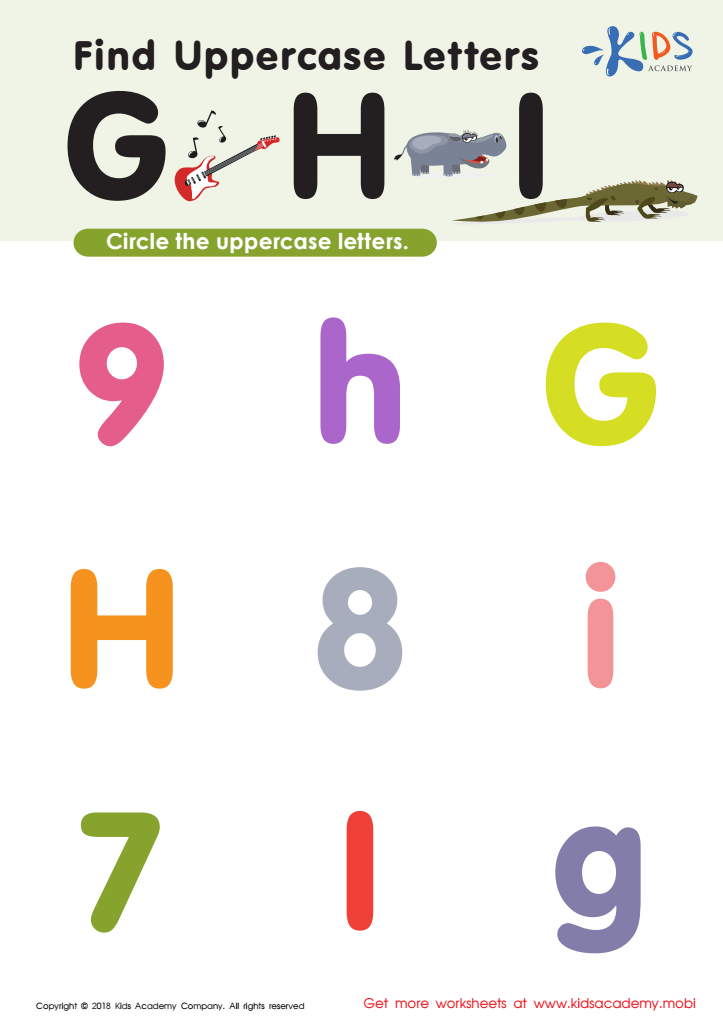
Find G, H, and I in uppercase with this downloadable worksheet! Numbers are included to challenge your kindergartener's letter recognition skills. Plus, practice G, H, and I sounds using the cute graphics. Perfect for learning letter case recognition!
Find Uppercase Letters G, H, and I Worksheet
Worksheet
Find Uppercase Letters Worksheet

Find Uppercase Letters Worksheet

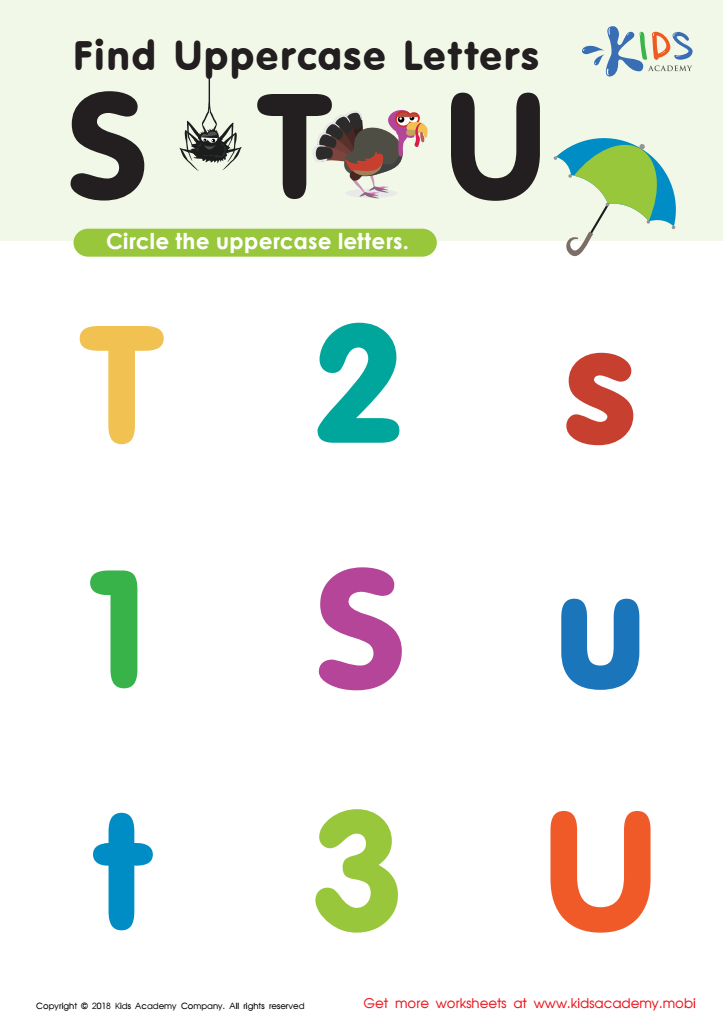
What level is your kid at now? Can they tell the difference between small and uppercase letters? Ask them to name words beginning with S, T and U, then help them find and circle the uppercase letters S, T and U in a mix of small letters, numbers and uppercase letters.
Find Uppercase Letters Worksheet
Worksheet
Find Uppercase Letters J, K, and L Worksheet Preview

Find Uppercase Letters J, K, and L Worksheet

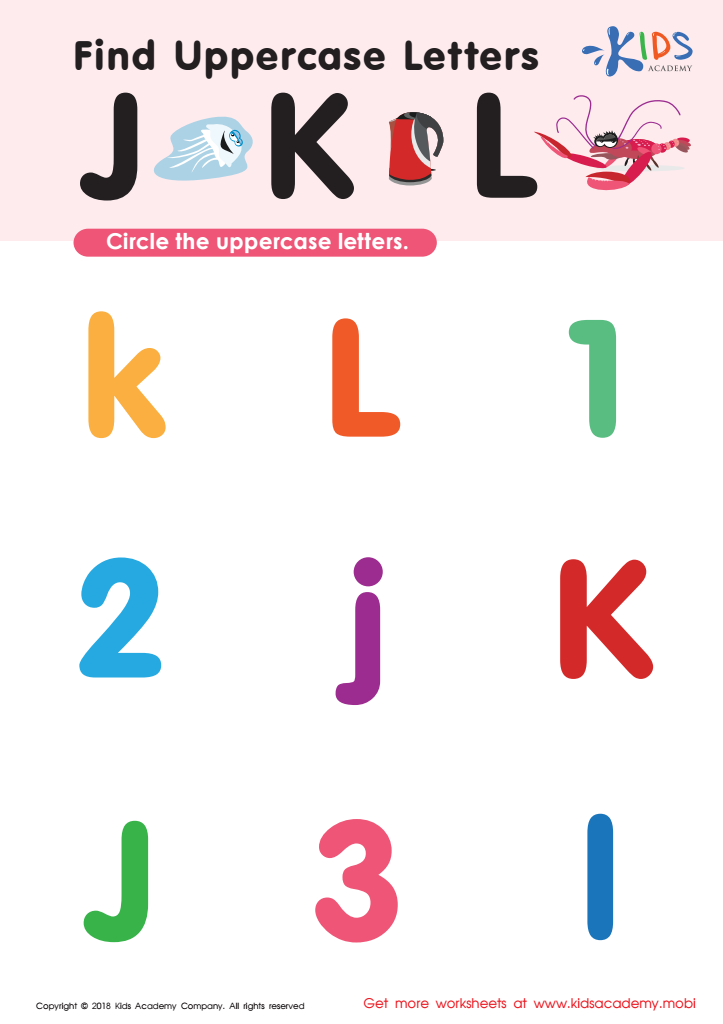
Search for the uppercase letters J, K, and L in this fun worksheet! Help your child identify the starting sound of each picture, then look for the letters. Keep an eye out for numbers that look like letters. Swim with the jellyfish and solve this delightful puzzle!
Find Uppercase Letters J, K, and L Worksheet
Worksheet
Find lowercase Letters s t u Worksheet


Find lowercase Letters s t u Worksheet

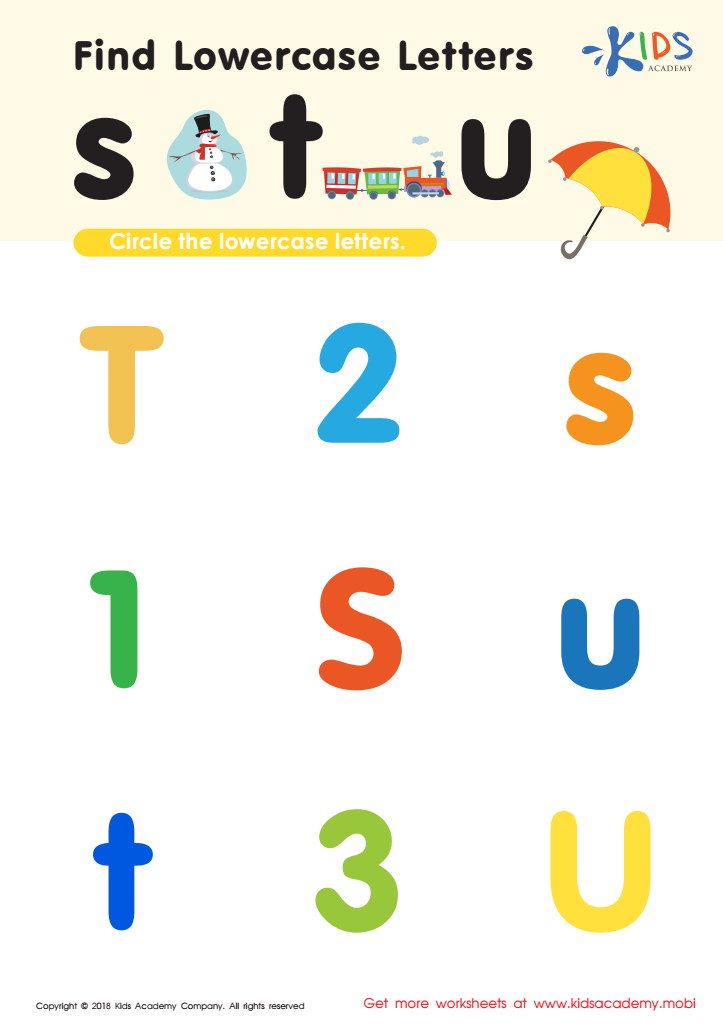
Puzzles are great for boosting your child's thinking skills. Can they identify lowercase letters s, t and u? This free printout contains the letters mixed in with uppercase letters and numbers, all presented in a fun, colorful format - sure to keep them entertained as they learn!
Find lowercase Letters s t u Worksheet
Worksheet
Find Uppercase Letters A, B, and C Worksheet Preview

Find Uppercase Letters A, B, and C Worksheet

Check out this PDF worksheet and spot all the capital letters! Arranged as a puzzle, this exercise will test little learners to read and recognize uppercase letters and tell the difference between letters and numbers. To help them, use the pictures on top of the page to practice the sounds A, B and C make! 80 words.
Find Uppercase Letters A, B, and C Worksheet
Worksheet
Lowercase Letters Search: Assessment Worksheet

Lowercase Letters Search: Assessment Worksheet

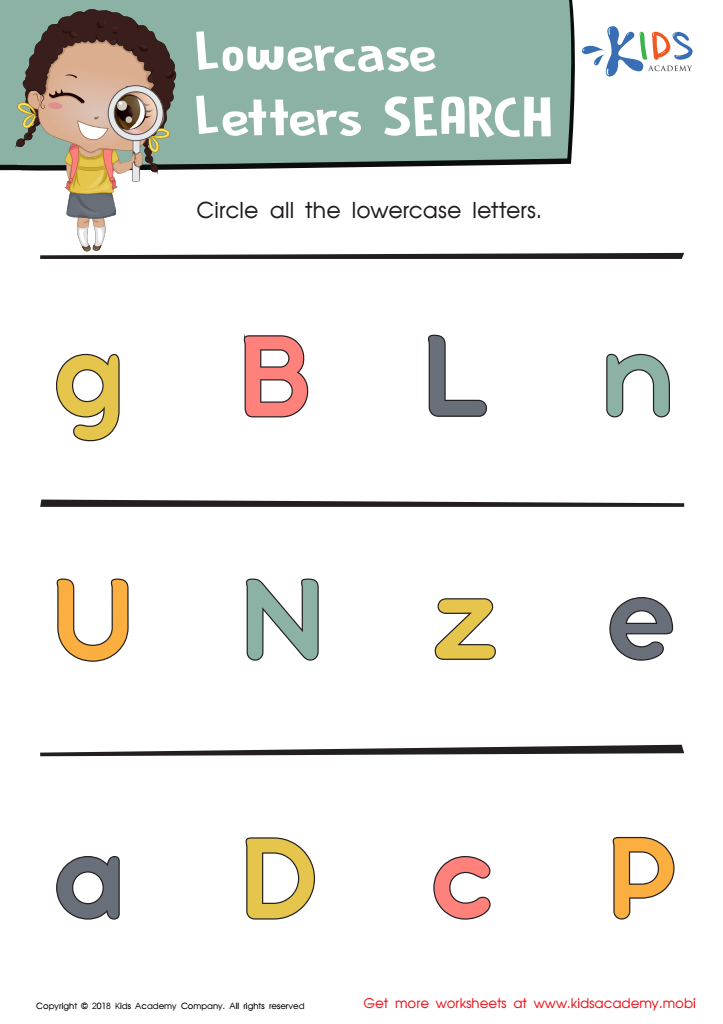
Circle all the lowercase letters in this worksheet. Identify them among a mix of uppercase and lowercase letters. Your child will have fun with this exercise thanks to its bright primary colors. Enjoyment and learning go hand-in-hand!
Lowercase Letters Search: Assessment Worksheet
Worksheet
Find Lowercase Letters v w x Worksheet


Find Lowercase Letters v w x Worksheet

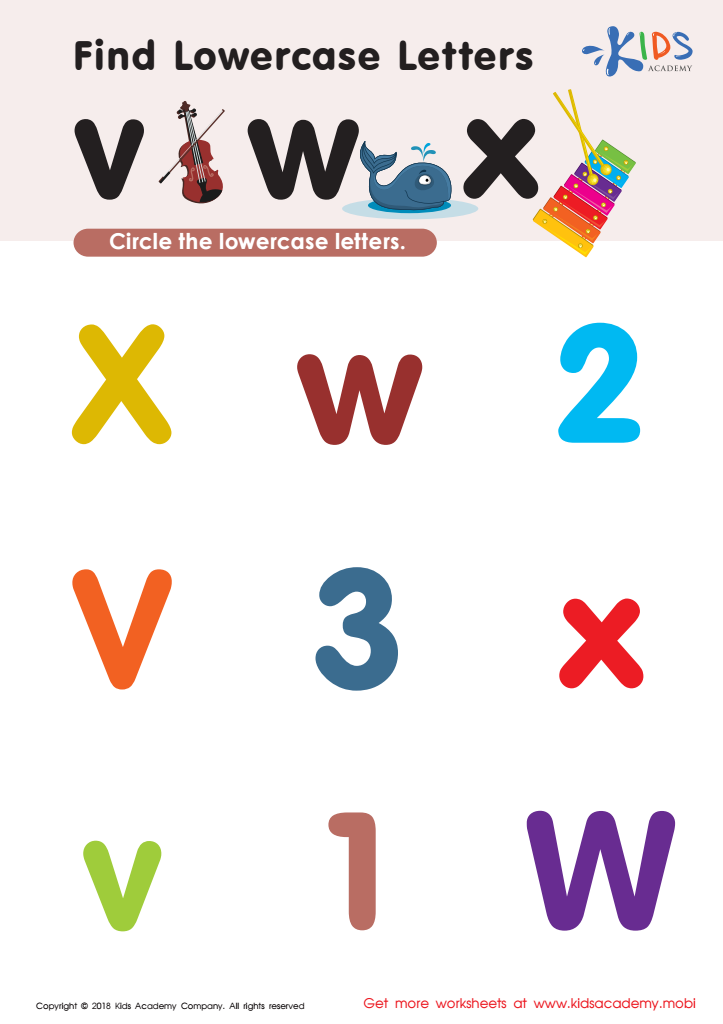
If your child doesn't know the alphabet, get them this helpful worksheet. It's an easy exercise to build their understanding of the alphabet and lowercase letters. Find the letters v, w, and x among other uppercase letters and numbers in the downloadable PDF.
Find Lowercase Letters v w x Worksheet

Worksheet


Alphabet familiarity and letter recognition are foundational skills that set the stage for a child's educational journey, especially starting at the age of four. Parents and teachers should care deeply about these skills for several reasons.

First, early familiarity with the alphabet supports the development of crucial literacy skills. When children recognize letters and their associated sounds, they are better equipped to learn to read. This early literacy foundation helps them develop a more extensive vocabulary, better comprehension, and an improved ability to communicate effectively. Research shows that children who enter kindergarten with strong letter knowledge tend to excel in reading and writing tasks in later years.

Second, learning the alphabet can enhance cognitive development. Recognizing letters boosts memory, attention span, and the ability to discern patterns. These cognitive skills are not only beneficial for reading but also support broader academic achievements across subjects like math and science.

Thirdly, early engagement with letters promotes a positive attitude toward learning. Activities like singing alphabet songs, playing letter recognition games, and reading alphabet books can make learning fun and interactive, fostering a love for reading that can last a lifetime.

In summary, parents and teachers should invest time in helping 4-year-olds become familiar with the alphabet. This investment pays dividends in literacy, cognitive development, and a lifelonglove for learning.