Enhance your child’s letter recognition skills with our expertly designed Alphabet Tracing Letter Recognition Worksheets for 4-Year-Olds! These engaging worksheets, available on Kids Academy, are perfect for young learners to practice tracing each letter of the alphabet. Featuring fun and interactive exercises, they help kids develop fine motor skills, improve handwriting, and build a strong foundation in early literacy. Each worksheet combines playful illustrations with clear tracing instructions, making learning enjoyable and effective. Ideal for both preschool classrooms and at-home practice, these resources will have your child confidently reading and writing in no time. Explore now to jumpstart your child's educational journey!

Check out this FREE Trial Lesson on Letter Recognition for age 4!

H

Favorites
With answer key
Interactive
  • 4
  • Alphabet tracing
  • Letter Recognition
Letter R worksheets
Letter R worksheets

Letter R Tracing Page

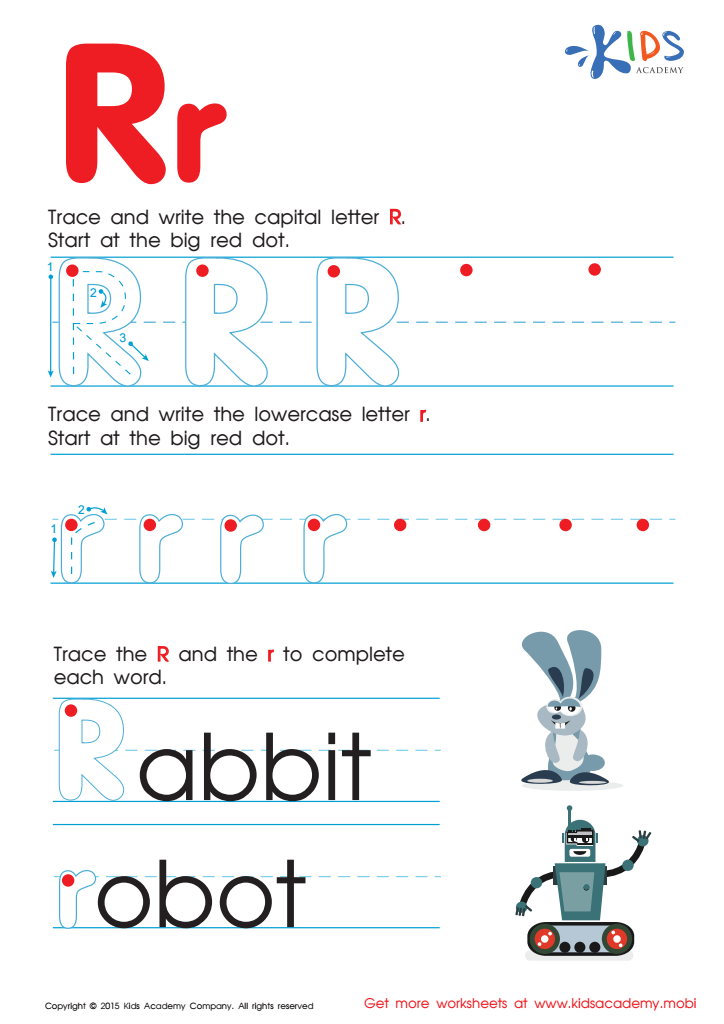
Trace and write the letter "R" with this worksheet for kindergarten. Start with the uppercase, then move on to the lowercase. Write the letters several times for practice. Then help complete the words for the rabbit and robot, spelling carefully. More ABC worksheets can be found at Kids Academy.
Letter R Tracing Page
Worksheet
Letter P worksheets
Letter P worksheets

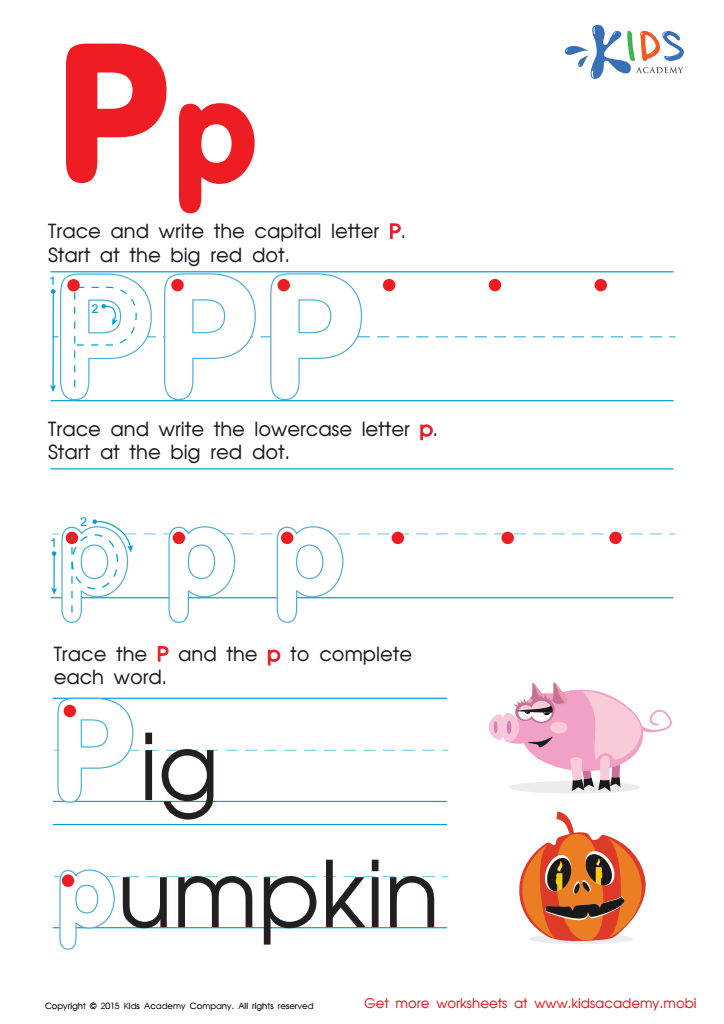
Letter P Tracing Page

Trace the lines from the red dot to learn to write "P"! Then practice this letter with the fun activities: complete the word "Pig" and "Pumpkin". Check out Kids Academy to get more free ABC worksheets.
Letter P Tracing Page
Worksheet
Letter Q worksheets
Letter Q worksheets

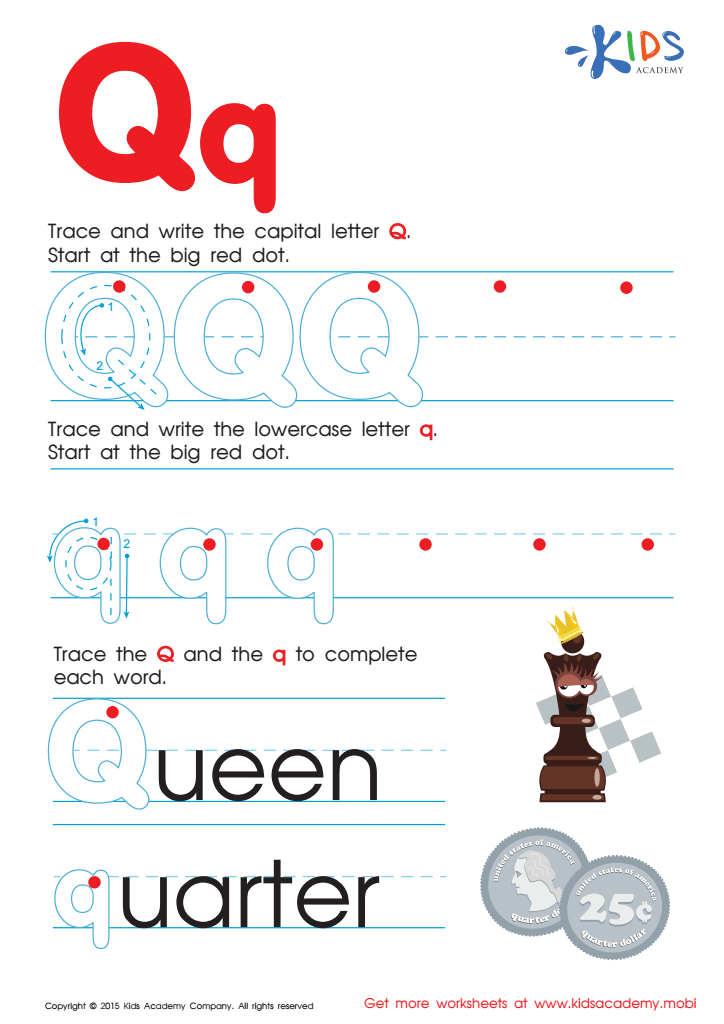
Letter Q Tracing Page

Learn the letter "Q"! Trace and write it a few times in upper and lowercase. Then help the Queen by writing her initial letter. Finally, write "quarters" and practice with more alphabet worksheets.
Letter Q Tracing Page
Worksheet
Letter H worksheets
Letter H worksheets

Letter H Tracing Page

Trace the letter "H", then practice writing its lowercase form. Finally, choose your favorite form of transport and ride away! Get our worksheets to make learning fun and easy.
Letter H Tracing Page
Worksheet
Letter A Tracing Worksheet Preview

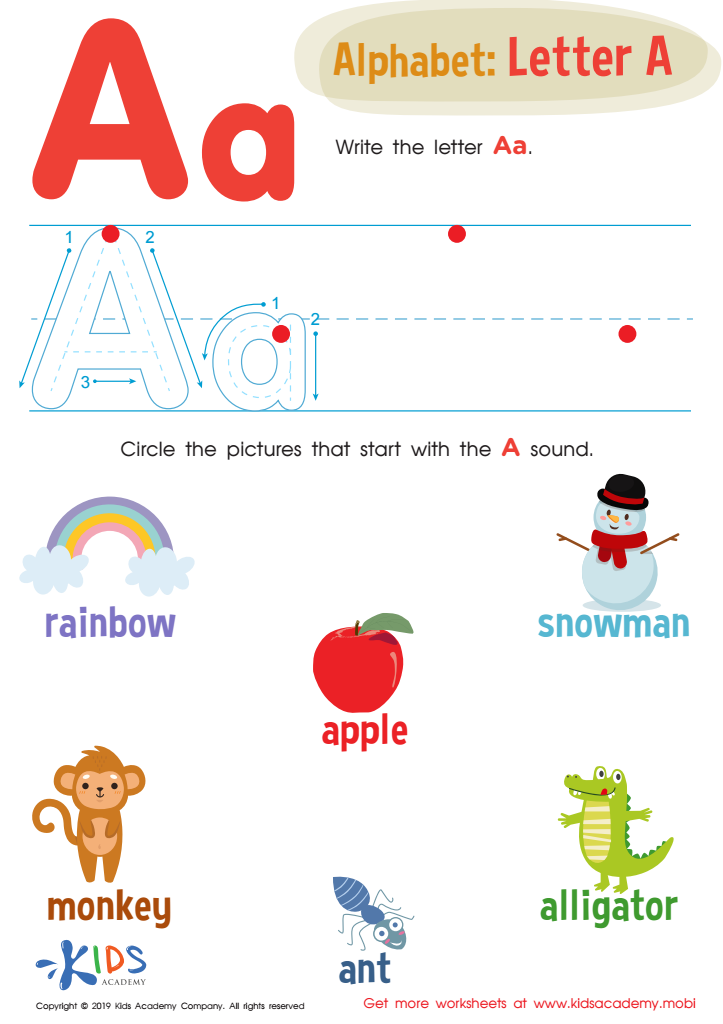
Letter A Tracing Worksheet

Learning the letter "A" is essential. This worksheet helps kids trace and write it, boosting their skill. They also circle pictures with the "A" sound, with both the word and picture provided. This helps them learn how to pronounce words like "apple" correctly.
Letter A Tracing Worksheet
Worksheet
Letter T worksheets
Letter T worksheets

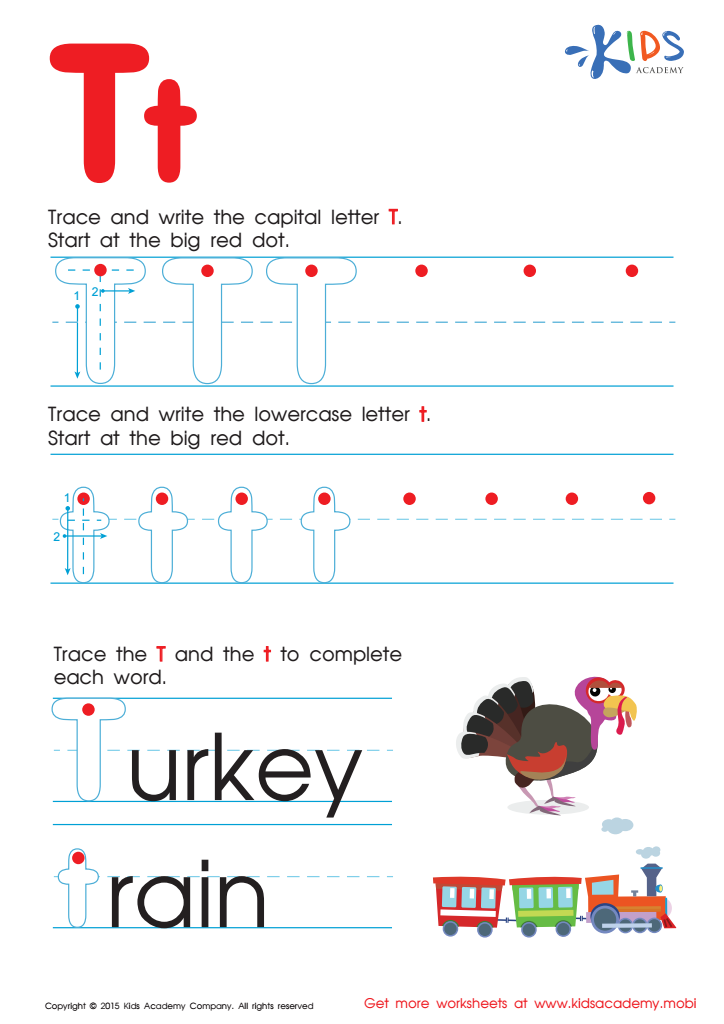
Letter T Tracing Page

Trace letters, complete words, draw pictures and see your kids having fun! Kids Academy offers alphabet tracing worksheets to learn to write letters. Start with the big red dot, trace the letter, then write it. Practice uppercase and lowercase. Have fun completing words with a Turkey or a rain-train and draw pictures. Get more printable worksheets to make learning enjoyable.
Letter T Tracing Page
Worksheet
Letter X Coloring Page

Letter X Coloring Sheet

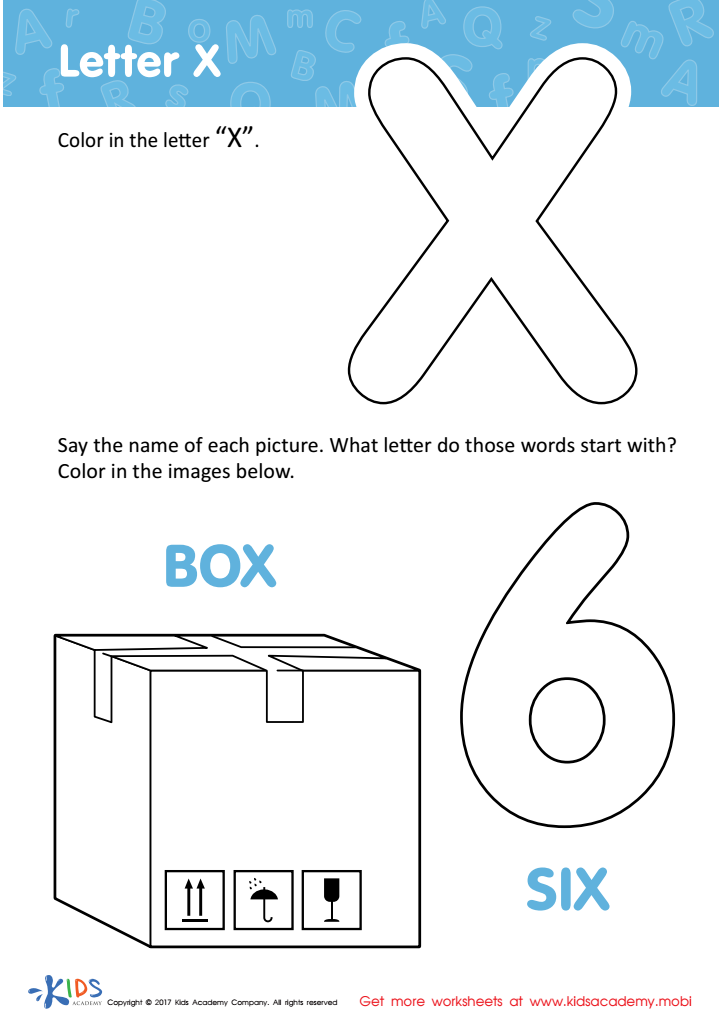
Help your little learner find the letter "X" with this coloring page. Go over the sounds it makes and how to find it at the end of words. Unlock the mystery of this unique letter - it's one of the most challenging but rewarding letters to learn!
Download (PDF)
Assign to My Students
Letter X Coloring Sheet
Worksheet
letter d worksheets
letter d worksheets

Letter D Tracing Page

Trace and write capital and lowercase letter "D" with our free printable alphabet worksheet! Be careful not to mix up "b" and "d" - just look at the ducks and write their first letter. The dolphin wants to join the fun too - do you like dolphins? Get more fun worksheets and activities at Kids Academy!
Letter D Tracing Page
Worksheet


Alphabet tracing and letter recognition are foundational skills critical for early literacy development in 4-year-olds. Parents and teachers should care about this process because it sets the stage for reading and writing proficiency. When children trace alphabets, they not only learn to identify individual letters but also understand their shapes, sounds, and how they fit together to form words.

At this age, children are developing fine motor skills. Alphabet tracing activities enhance their hand-eye coordination and muscle memory required for writing. Furthermore, recognizing letters boosts their visual memory and cognitive associations, essential for decoding words while reading.

Early proficiency in letter recognition often correlates with later reading success. Children who are familiar with the alphabet can more easily grasp phonics – the relationship between letters and sounds. This understanding helps them become confident readers, leading to better academic performance.

Moreover, engaging in alphabet tracing exercises can be a joyful and interactive experience. It fosters a sense of achievement, builds patience, and improves concentration in young learners. By valuing and promoting these activities, parents and teachers lay a vital groundwork that supports lifelong learning and nurtures an early love for reading and writing.