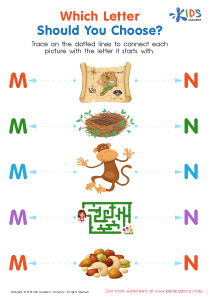
Lowercase identification Lowercase/Small Letters Worksheets for 4-Year-Olds
5 filtered results
-
From - To
Help your 4-year-olds master lowercase letter identification with our engaging worksheets! Designed specifically for early learners, these printable activities make learning fun and interactive. Each worksheet encourages kids to recognize and differentiate lowercase letters through colorful exercises, including tracing, matching, and coloring. Perfect for at-home learning or classroom activities, our lowercase identification worksheets foster essential pre-reading skills while promoting hand-eye coordination. With a variety of exercises that cater to different learning styles, children will gain confidence in their understanding of the alphabet. Download now and give your child a head start in literacy with our delightful lowercase small letters worksheets!
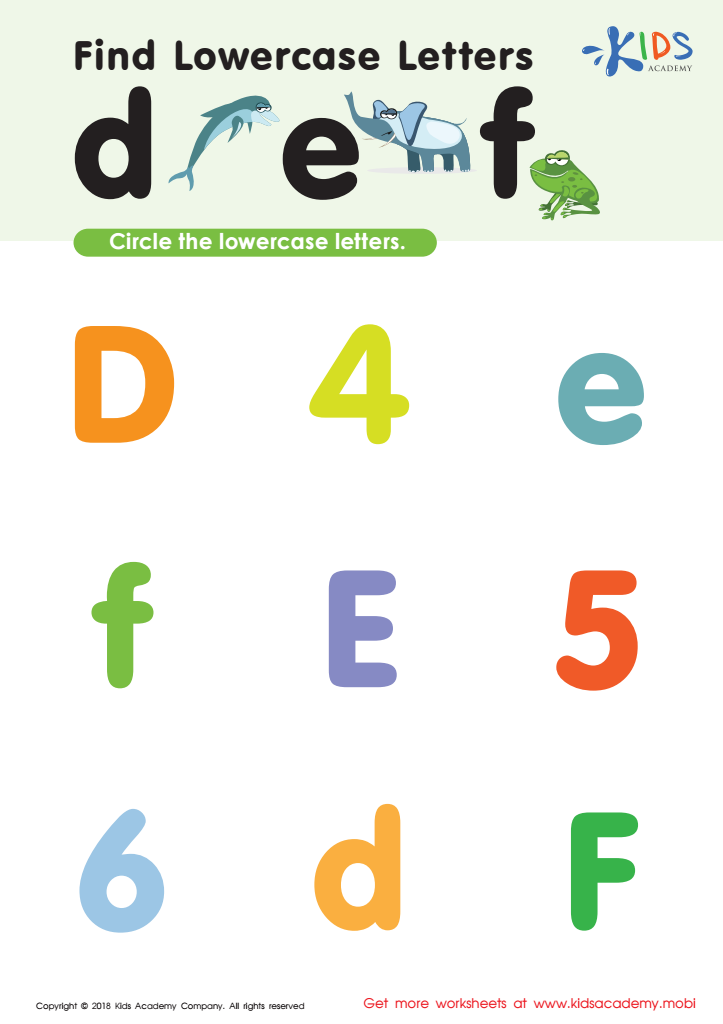
Find Lowercase Letters d e f Worksheet
 Assign to My Students
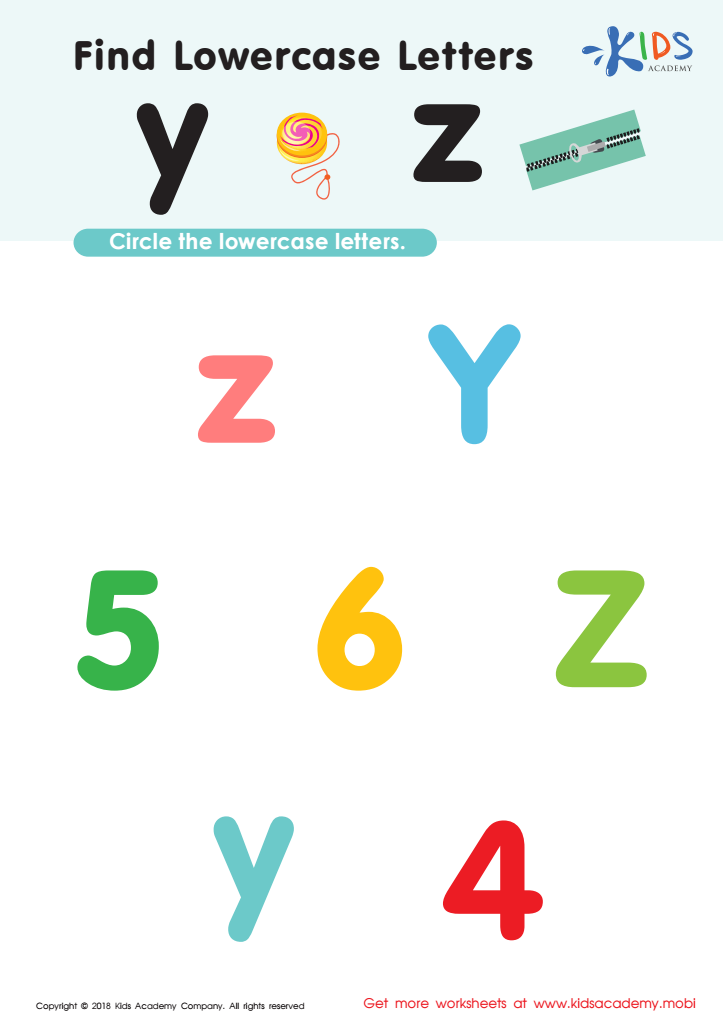
Find Lowercase Letters y z Worksheet

Find lowercase letters a b c Worksheet
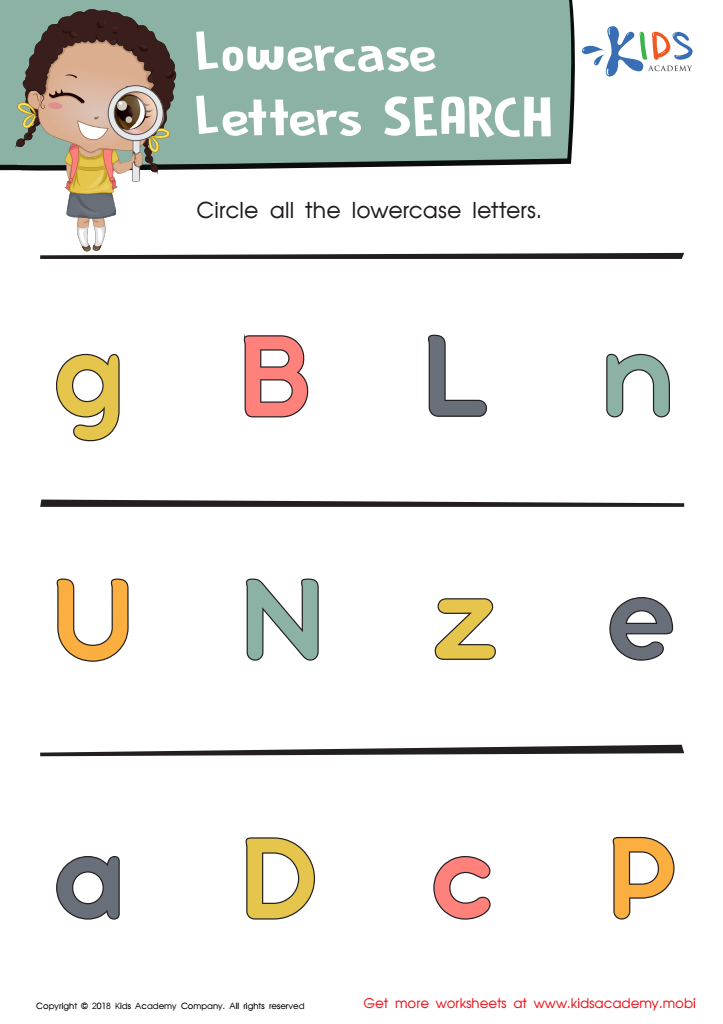
Lowercase Letters Search: Assessment Worksheet

Find Lowercase Letters v w x Worksheet


Lowercase letter identification is pivotal for 4-year-olds, as it lays the foundation for their literacy development. At this age, children are naturally curious and primed for learning, making it an ideal time to introduce the concept of lowercase letters. Understanding lowercase letters is essential for reading and writing, since the majority of text children encounter in books, labels, and everyday communication is in lowercase.
Moreover, recognizing and differentiating lowercase letters enhances fine motor skills and cognitive development, as children learn to form letters and words. Without a strong grasp of lowercase letters, children may struggle with reading fluency later on, hindering their overall academic performance.
Parents and teachers should strive to make learning lowercase letters fun and engaging through interactive games, storytelling, and hands-on activities that spark a child’s interest.
By prioritizing lowercase letter identification, adults not only contribute to a child's early literacy skills but also foster a love for reading and learning. Creating a supportive learning environment where lowercase letters are regularly practiced will significantly impact a child's confidence and ability to communicate effectively, laying both social and academic groundwork for future success.