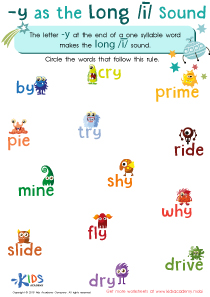
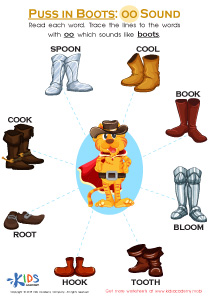
Discover our engaging "Vowel Recognition Missing Vowels Worksheets" designed for 4-year-olds to enhance their understanding of vowels. These fun and interactive worksheets provide young learners with the opportunity to identify and fill in the missing vowels in a variety of words. Focused on age-appropriate activities, these resources encourage cognitive development and phonemic awareness. Through colorful visuals and simple words, children will enjoy practicing their vowel recognition skills while building confidence in their reading abilities. Perfect for home or classroom use, these worksheets are a valuable tool for early language development, ensuring that learning is both effective and enjoyable. Start exploring today!

Check out this FREE Trial Lesson on Missing Vowels for age 4!

The Short U Sound

Favorites
With answer key
Interactive
  • 4
  • Vowel Recognition
  • Missing Vowels
Phonics for Kids | Short Vowel Sound U | PDF Worksheet 1

Short Vowel Sound U Worksheet Worksheet
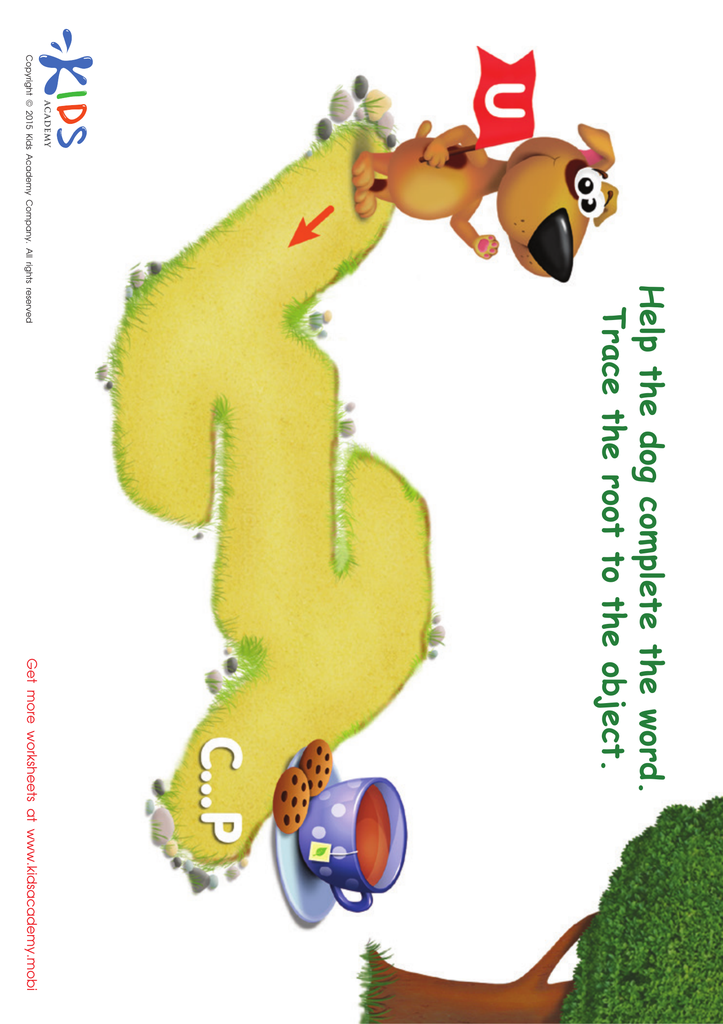
Help your early reader join the adorable dog on his way to the cup of tea with cookies. This traceable worksheet reinforces the short -u sound and strengthens fine motor skills. Kids don't realize they are practicing reading skills while having fun!
Short Vowel Sound U Worksheet Worksheet
Worksheet
Phonics for Kids | Short Vowel Sound U | PDF Worksheet 2

Short Vowel Sound U Worksheet

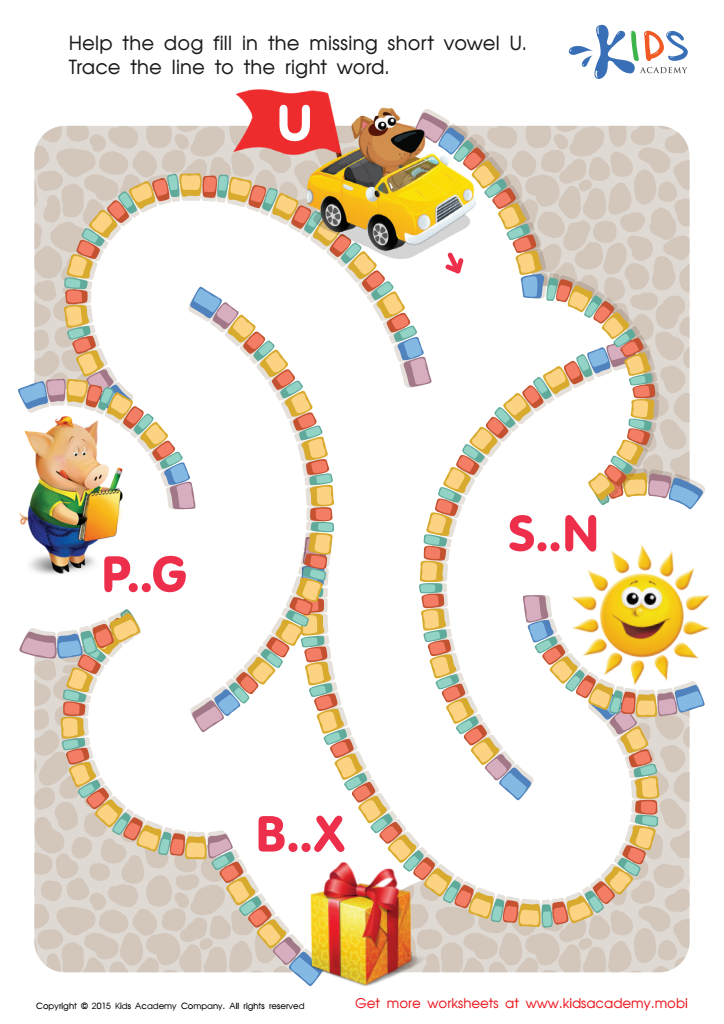
Practice abc phonics to help young learners link sounds to letters. This free printable phonics worksheet helps your kid learn the short vowel sound U. Guide them through the maze to help the dog complete the word "sun". Make sure they say the word out loud to emphasize the short U sound. Check out more phonics worksheets with mazes here.
Short Vowel Sound U Worksheet
Worksheet
Phonics for Kids | Short Vowel Sound I | PDF Worksheet 1

Short Vowel Sound I Worksheet

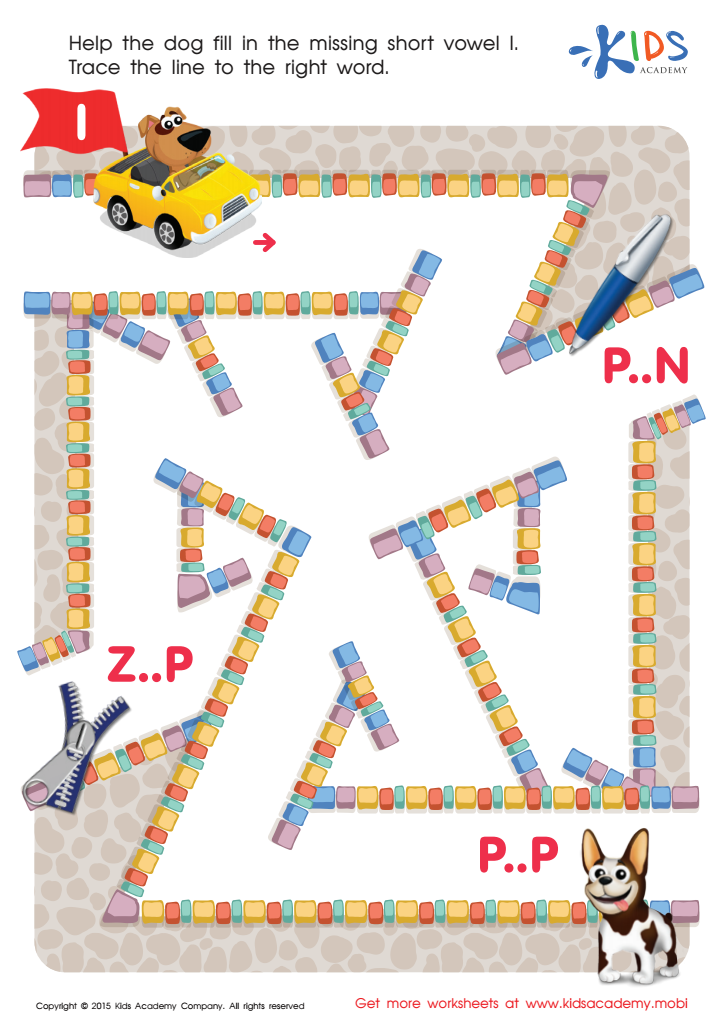
This free printable phonics worksheet will get your kid prepped for reading! It's a maze to help the dog complete the word “zip” with the missing letter I. Have your kid say the word aloud to learn the I sound. It's a great way to practice reading, writing and spelling skills. Check out here for more phonics worksheets!
Short Vowel Sound I Worksheet
Worksheet
Phonics for Kids | Short Vowel Sound E | PDF Worksheet 1

Short Vowel Sound E Worksheet

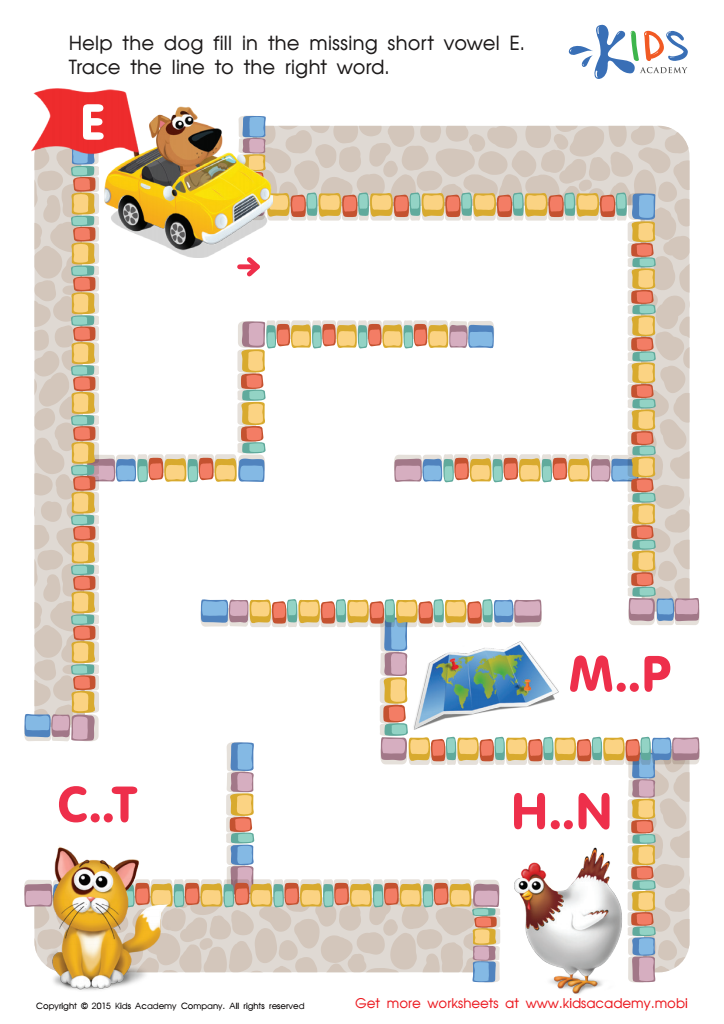
This free printable phonics worksheet helps kids learn the short vowel sound E. Kids need to help the dog complete the word “hen” by finding their way through a maze. It teaches kids to see the connection between letters and sounds and also strengthens their writing and spelling skills. Fun and educational, this phonics worksheet is great for kids. Want more? Check out here.
Short Vowel Sound E Worksheet
Worksheet
Phonics for Kids | Short Vowel Sound O | PDF Worksheet 1

Short Vowel Sound O Worksheet

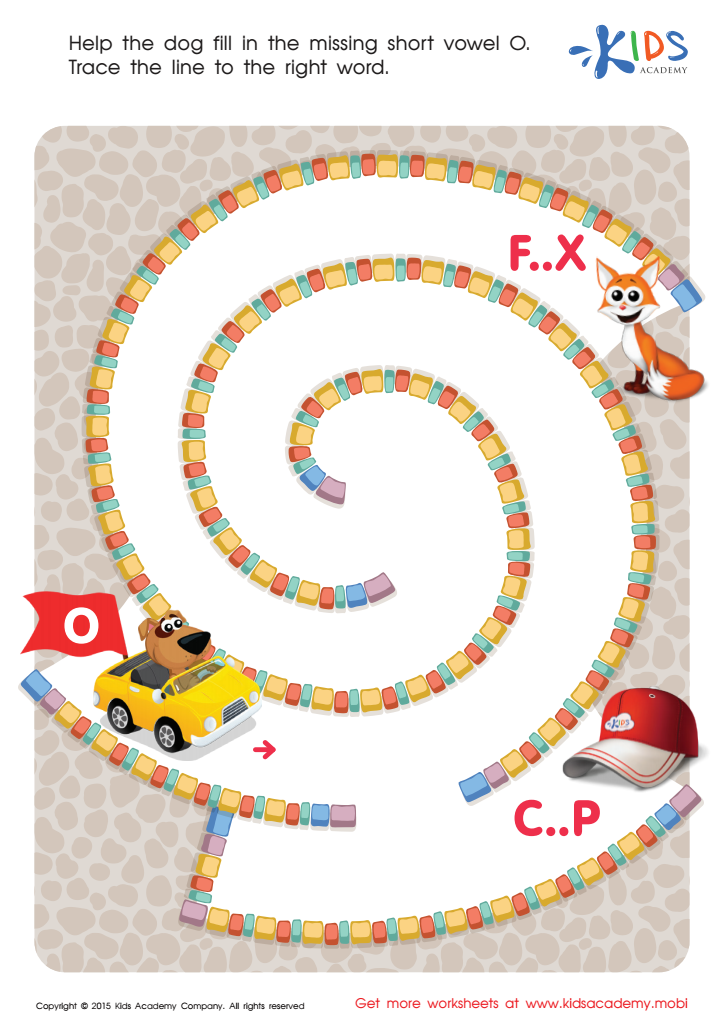
Help your child learn the short vowel sound O with this fun and free printable phonics worksheet! They'll need to complete the maze to help the dog finish the word "fox" with the missing letter O. Engage their fine motor muscles while they color or trace the maze with crayon or pencil. This educational activity is sure to bring a smile to your little learner's face! For more phonics worksheets, check here.
Short Vowel Sound O Worksheet
Worksheet


Vowel recognition is a foundational skill for early literacy and language development in young children. For 4-year-olds, understanding vowels is crucial as it helps them decode words and develop reading skills. When children engage in activities that involve "missing vowels," such as fill-in-the-blank exercises or games, they learn to identify vowel sounds and their placements in words. This reinforces phonemic awareness—the ability to hear, identify, and manipulate the individual sounds in words.

Parents and teachers should care about this skill because it lays the groundwork for future linguistic abilities. Mastery of vowels leads to improved reading comprehension, better spelling, and greater confidence in language use. Moreover, early exposure to missing vowels exercises fosters critical thinking and problem-solving skills, as children learn to recognize patterns and make predictions about word formation.

Additionally, fostering vowel recognition helps children become more engaged in learning, as interactive activities make language practice enjoyable. In a world where literacy is increasingly crucial for success, prioritizing vowel recognition can equip young learners with the tools needed to thrive academically and socially. By promoting these skills early, parents and teachers invest in a child’s long-term educational journey.