
Fine Motor Skills Phonics Worksheets for 4-Year-Olds
5 filtered results
Difficulty Level
Grade
Age
-
From - To
Subject
Activity
Standards
Nurture your child’s development with our "Fine Motor Skills Phonics Worksheets for 4-Year-Olds." Specially designed for preschoolers, these engaging worksheets boost both literacy and motor proficiency. Your little one will practice letter recognition and phonics while refining their hand-eye coordination through activities that involve tracing, matching, and coloring. Perfect for parents and educators, our high-quality, printable resources ensure that learning is fun and effective. Help your child build a solid foundation in reading and writing as they enhance their fine motor skills with these thoughtfully crafted worksheets. Start your learning adventure today!
Favorites
With answer key
Interactive
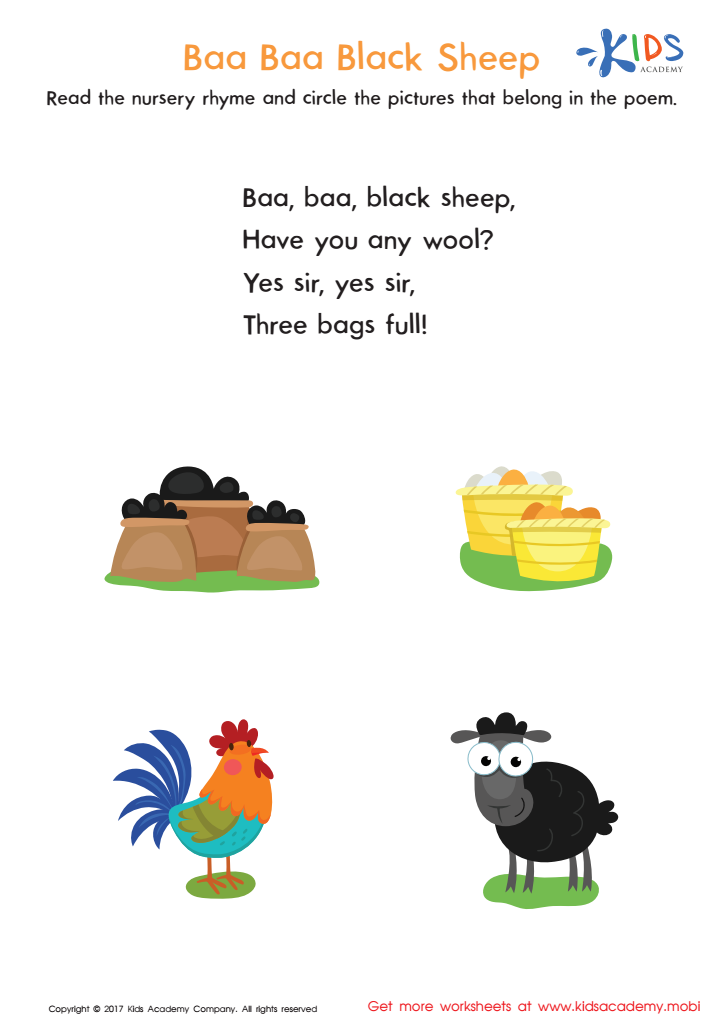
Baa Baa Black Sheep Printable
Jumpstart your child's reading skills with this printable Baa Baa Black Sheep worksheet! Recite the lines with them, then have them select the pictures associated with the poem to test comprehension. Fun and educational!
Baa Baa Black Sheep Printable
Worksheet
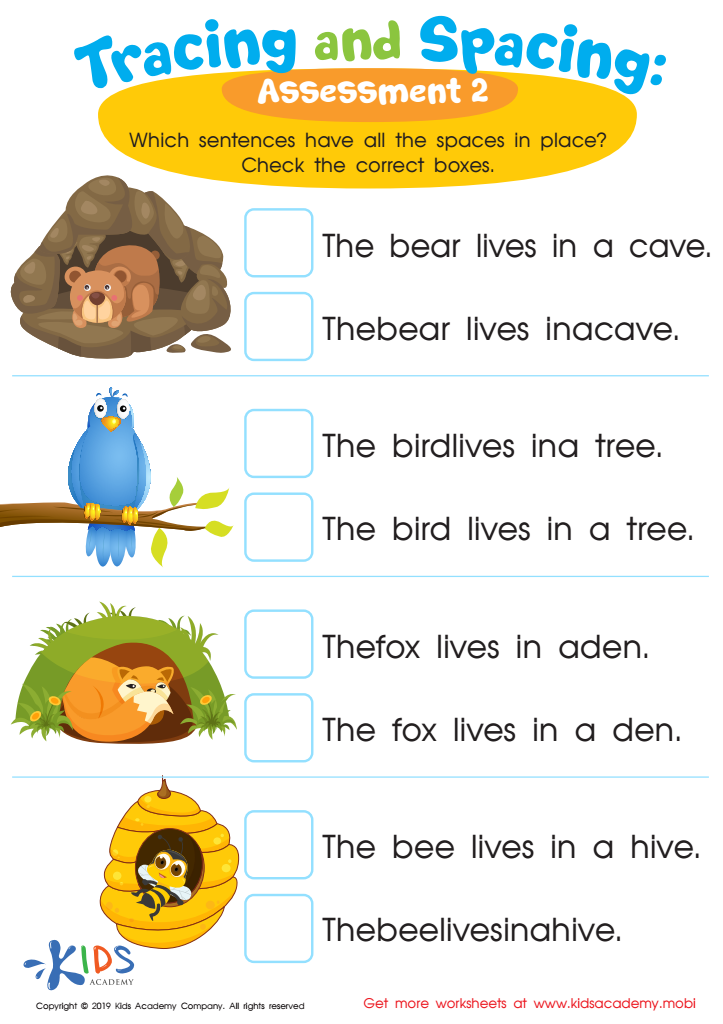
Tracing and Spacing: Assessment 2 Worksheet
Help your little learner master letter spacing by using this charming assessment worksheet! Illustrated animals are paired with sentences; read each sentence and look at the spacing. Check the box next to the correctly spaced sentences to complete the sheet.
Tracing and Spacing: Assessment 2 Worksheet
Worksheet
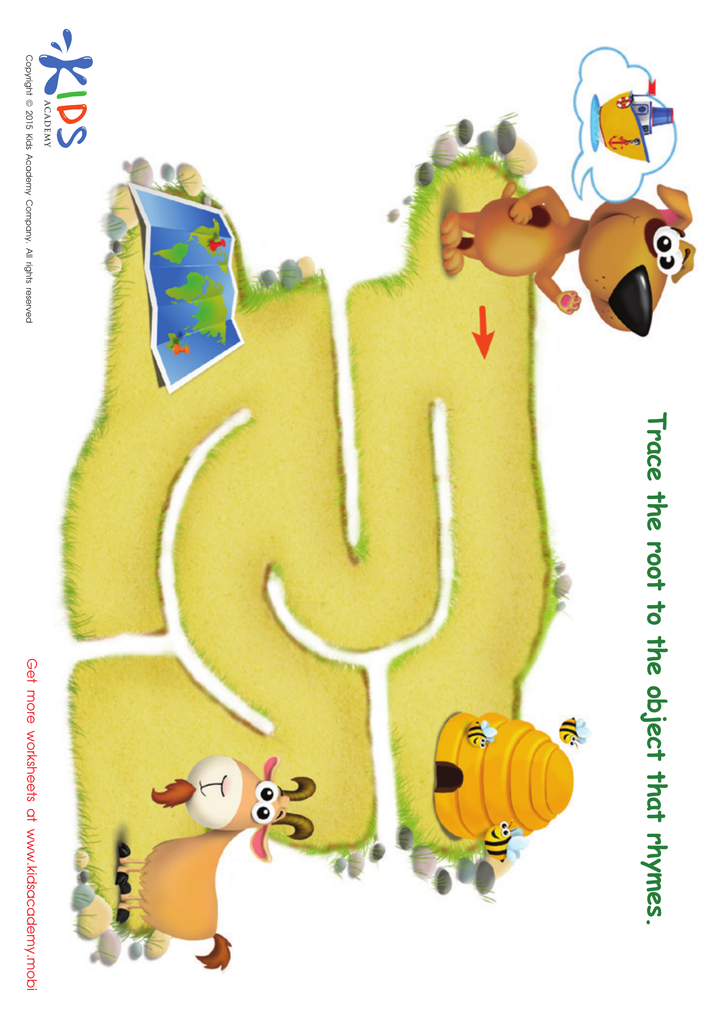
Boat Rhyming Words Worksheet
Help your preschooler complete the maze and rhyme with their favorite pooch! Draw a line from the dog to the matching item - is it a hive, a map or a goat? This fun activity lets them name the root words of pictures, and listen for rhymes to help them with phonics and reading.
Boat Rhyming Words Worksheet
Worksheet
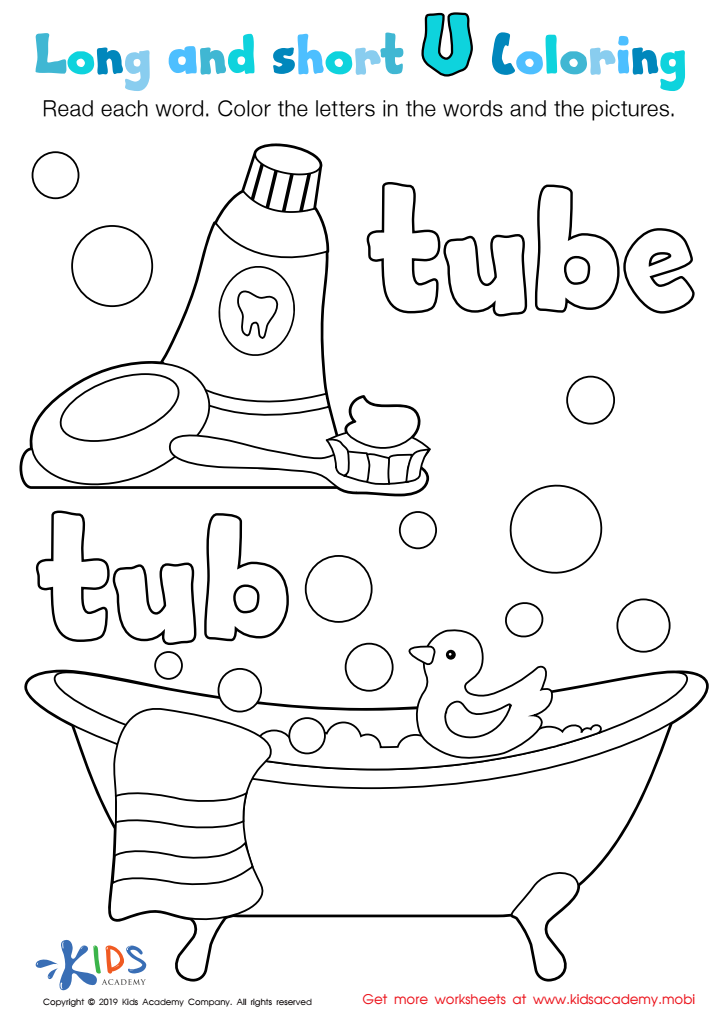
Long and Short U Worksheet
Revised: Spice up your lesson on long and short vowels with this fun printout! Kids read the words "tube" and "tub," then reinforce the sound by coloring in the words and pictures. It's a great way to make phonics class enjoyable!
Download (PDF)
 Assign to My Students
Assign to My Students
Long and Short U Worksheet
Worksheet
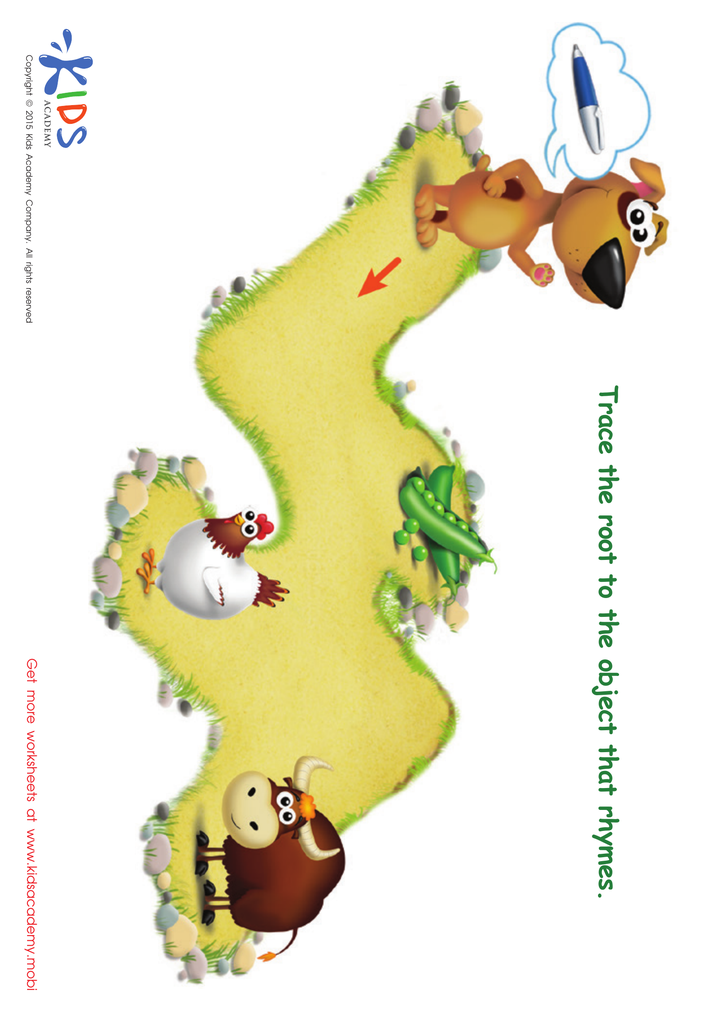
Pen Rhyming Words Worksheet
Check out the cute pup, pondering away. He's thinking of a root word - no suffix or prefix. Now check the hen, green beans, and the cow. Can you find the word that rhymes with pen? Draw a line from the root word to its rhyme for this simple yet beneficial worksheet. It helps young learners practice hearing and recognizing rhymes.
Pen Rhyming Words Worksheet
Worksheet
Join Kids Academy for Free
Who is primarily going to use this learning content?








Parents and teachers should focus on fine motor skills and phonics for 4-year-olds because these are foundational elements crucial for early childhood development. Fine motor skills involve the coordination of small muscles in movements—typically involving the synchronization of hands and fingers with the eyes. These skills are pivotal for tasks such as writing, buttoning clothes, and using scissors, which boost a child's ability to perform daily activities independently and confidently.
In parallel, phonics—a method for teaching reading and writing by developing learners’ phonemic awareness—enhances children's understanding of letter-sound relationships. Effective phonics instruction helps children decode new words, build their vocabulary, and improve comprehension, which are essential steps in becoming proficient readers and writers.
Combining fine motor skill development with phonics lessons can magnify the effectiveness of early education by providing a holistic approach. Manipulating letters, tracing words, and participating in hands-on phonics activities not only reinforce the connection between spoken and written language but also enhance the dexterity required for literacy tasks.
Investing time in developing these skills at a young age helps greatly in ensuring that children establish a strong foundation for future academic success and overall confidence. Early mastery in these areas promotes persistent achievement and aids in a smooth transition into more complex tasks in school and daily life.







