Letter-sound association Phonics Worksheets for 4-Year-Olds
3 filtered results
-
From - To
Our "Letter-Sound Association Phonics Worksheets for 4-Year-Olds" are designed to lay the foundation for early reading skills. Drawing from engaging activities, these printable worksheets help young learners connect letters with their corresponding sounds. Through fun and interactive exercises, children will practice identifying letter sounds, enhancing their phonemic awareness, and boosting their confidence in reading. These carefully crafted worksheets are perfect for preschoolers and aim to make learning enjoyable. With vibrant visuals and clear instructions, each sheet is tailored to spark an interest in reading and foster a love for learning in your child.
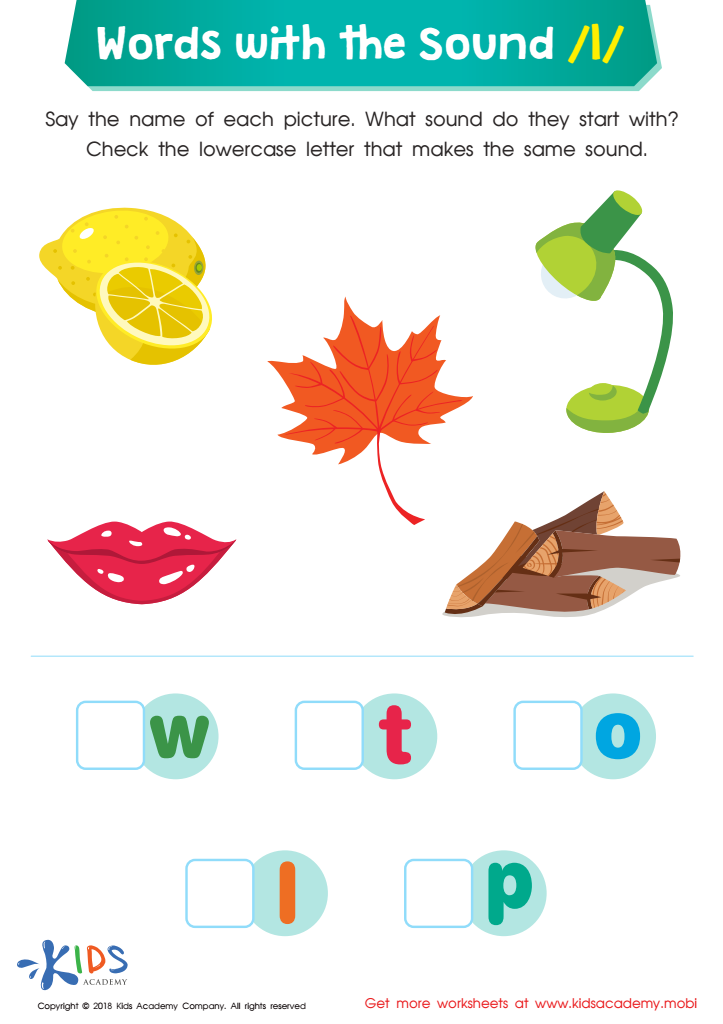
Words with Sound L Reading Worksheet
 Assign to My Students
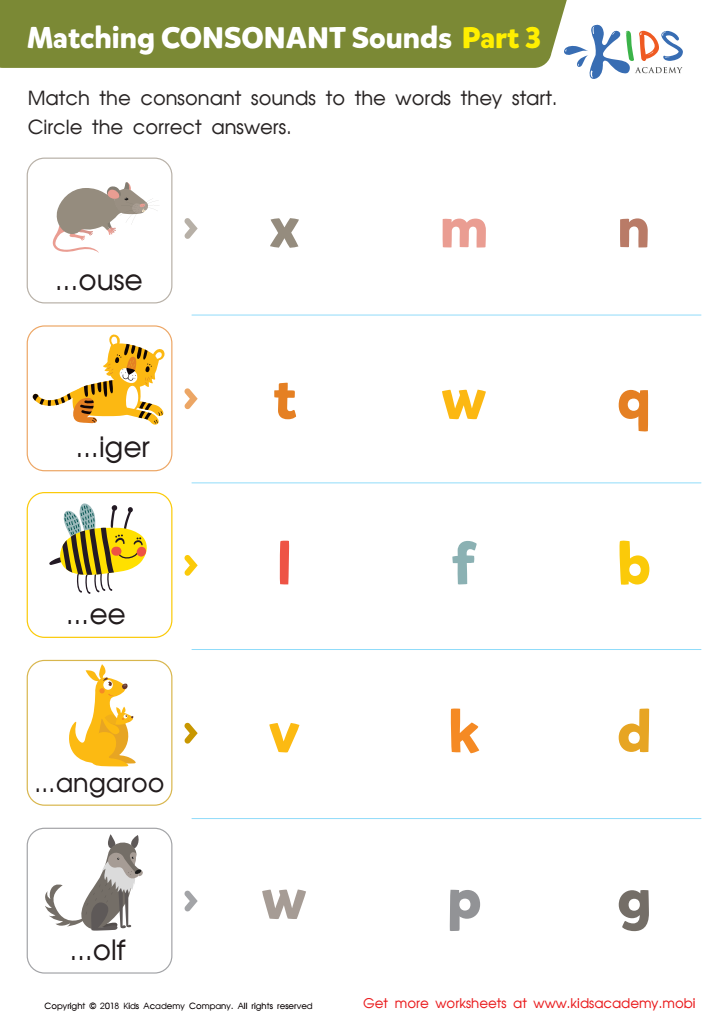
Matching Consonant Sounds: Part 3 Worksheet
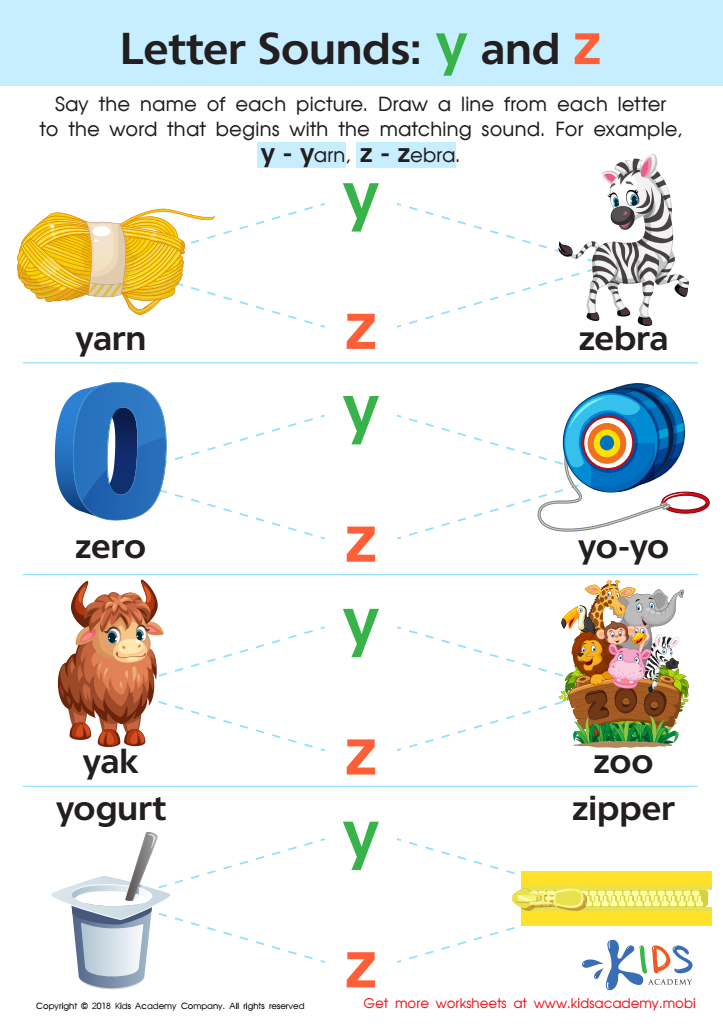
Letter Y and Z Sounds Worksheet








Understanding letter-sound associations, often referred to as phonics, is crucial for 4-year-olds as it lays the foundational skills for reading and writing. Phonics is essentially the relationship between the letters of the alphabet and the sounds they represent. Mastering this phonemic awareness is a critical milestone in early childhood education for several reasons.
Firstly, phonics helps children decode words, transforming a sequence of letters into recognizable sounds. This capability is the cornerstone of reading fluently and comprehending texts, which are essential skills for academic success. By associating letters with their corresponding sounds, children develop the ability to read novel words independently, fostering confidence and a love for reading.
Secondly, learning phonics at a young age can significantly impact a child's ability to spell. When children understand that letters and combinations of letters represent specific sounds, they can apply this knowledge to write words correctly. This builds their writing vocabulary and enables clear communication through text.
Moreover, early phonics instruction supports cognitive development. It enhances memory, attention to detail, and auditory processing skills, all of which are beneficial for broader learning experiences. By focusing on letter-sound associations early, parents and teachers equip children with the necessary tools to navigate the rich world of literacy, setting the stage for future academic achievements and lifelong learning.







