
Sight word recognition Phonics Worksheets for 4-Year-Olds
3 filtered results
Difficulty Level
Grade
Age
-
From - To
Subject
Activity
Standards
Discover our engaging Sight Word Recognition Phonics Worksheets designed specifically for 4-year-olds! These interactive worksheets help young learners master essential sight words, a crucial step in early literacy. Each activity combines fun visuals and phonics tasks to make learning enjoyable and effective. By practicing sight word recognition, children build reading confidence and improve their vocabulary skills. Our worksheets are perfect for at-home learning or classrooms, providing parents and teachers with valuable resources to support literacy development. Get started today and watch your child's reading skills flourish with our playful, tailored activities that make learning sight words an exciting adventure!
Favorites
With answer key
Interactive
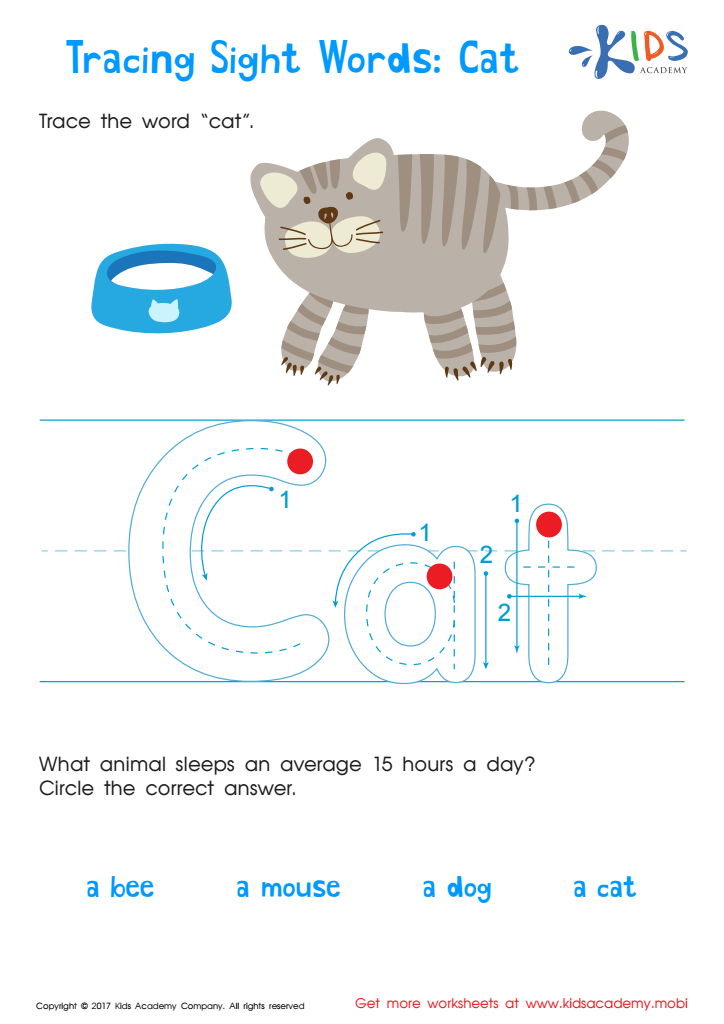
Cat Printable Sight Words Worksheet
Encourage your child's literacy with this fun sight words worksheet: cat PDF! It helps build a solid foundation for reading, featuring activities such as reading and tracing the word cat, and finding it amongst other sight words. With its cute cat, Kids Academy makes learning to read a delight!
Cat Printable Sight Words Worksheet
Worksheet
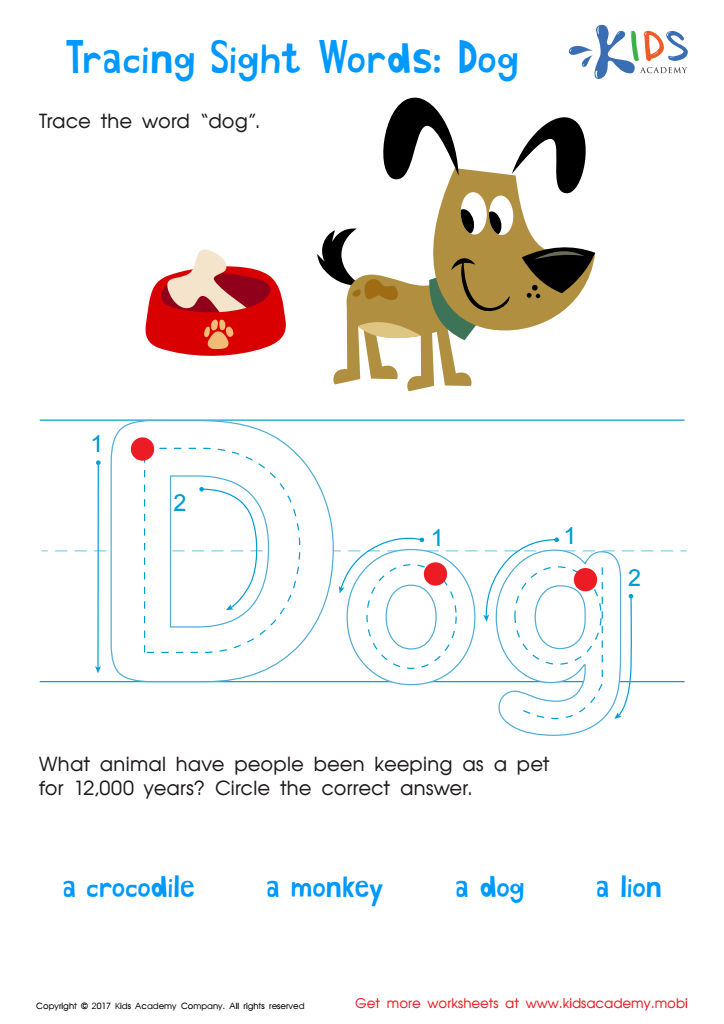
Dog Worksheet Sight Words Worksheet
Get your kids excited to read with our dog-themed sight words worksheet!
Excite your child to read with our sight words worksheet: dog edition! Featuring a lovable dog character to put a smile on any kid's face, this worksheet helps kids practice reading and writing the word "dog". Build a library of words they can read quickly and promote increasing literacy skills with early fluency! Get them ready for reading with our dog-themed sight words worksheet!
Dog Worksheet Sight Words Worksheet
Worksheet
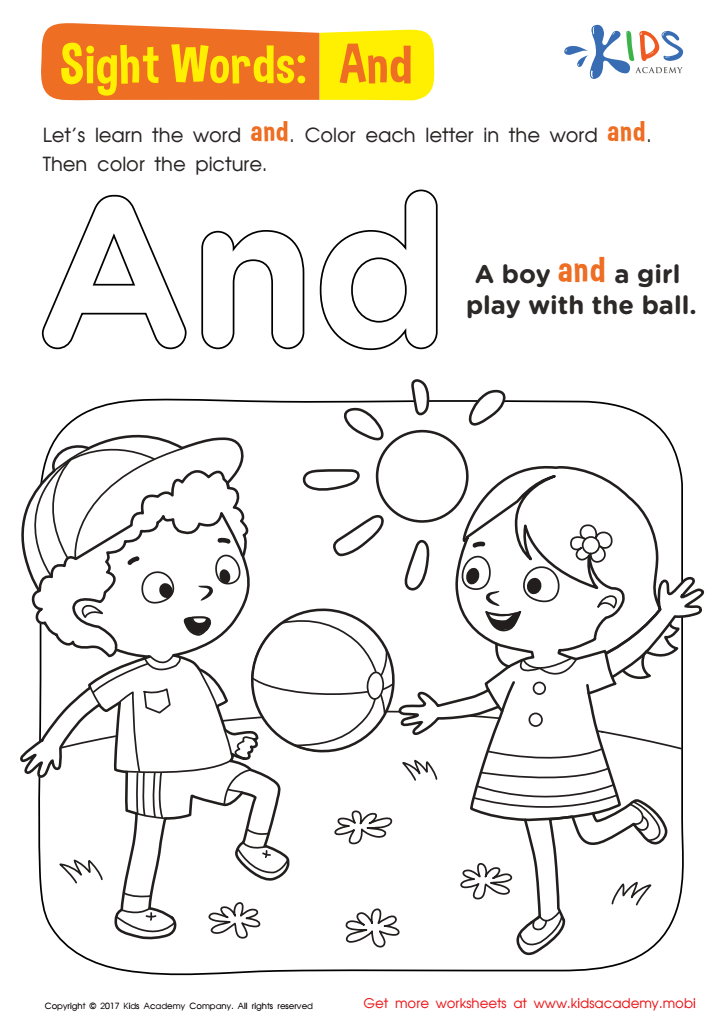
And Worksheet Sight Words Worksheet
Help your child get a jumpstart on reading with sight words! Print out this fun worksheet and get your child to read the sentence. Point out the word "and", then color the word and enjoy the rest of the scene! It's a great way to introduce sight words and get their early reading skills going!
Download (PDF)
 Assign to My Students
Assign to My Students
And Worksheet Sight Words Worksheet
Worksheet
Join Kids Academy for Free
Who is primarily going to use this learning content?








Sight word recognition and phonics are essential components of early literacy skills, particularly for 4-year-olds. At this stage, children are developing foundational language abilities that will support their reading and writing throughout their education. Sight words are common words that children learn to recognize on sight, improving their reading fluency and comprehension, while phonics involves understanding the relationship between letters and sounds, enabling them to decode new words.
Parents and teachers should prioritize these skills because proficient sight word recognition and phonics can boost a child's confidence and motivation in reading, setting a positive tone for their educational journey. Mastering these skills helps children grasp the building blocks of literacy, which are crucial for academic success in later grades. Furthermore, early exposure to reading strategies fosters a love for literature, encourages curiosity, and aids in language development.
Neglecting these skills during the formative preschool years can lead to challenges in reading as children progress in school. Therefore, by supporting sight word recognition and phonics, parents and teachers are not only teaching literacy but are also equipping children with vital tools for effective communication and learning in the future. Prioritizing these areas of development forms a strong foundation for lifelong learners.







