
Writing practice Tracing Letters Worksheets for 4-Year-Olds
4 filtered results
Difficulty Level
Grade
Age
-
From - To
Subject
Activity
Standards
Our "Writing Practice Tracing Letters Worksheets for 4-Year-Olds" are designed to make learning enjoyable and comprehensive for your little ones. These vibrant worksheets help children develop fine motor skills and letter recognition, setting a strong foundation for reading and writing. Each sheet features traceable letters that guide preschoolers in forming both uppercase and lowercase letters accurately. Through engaging and repetitive exercises, kids gain confidence as they practice pencil control while learning the alphabet. Perfect for early learners, these tools inspire creativity and build essential skills for kindergarten readiness. Make early literacy fun and effective with our expertly crafted tracing worksheets!
Favorites
With answer key
Interactive
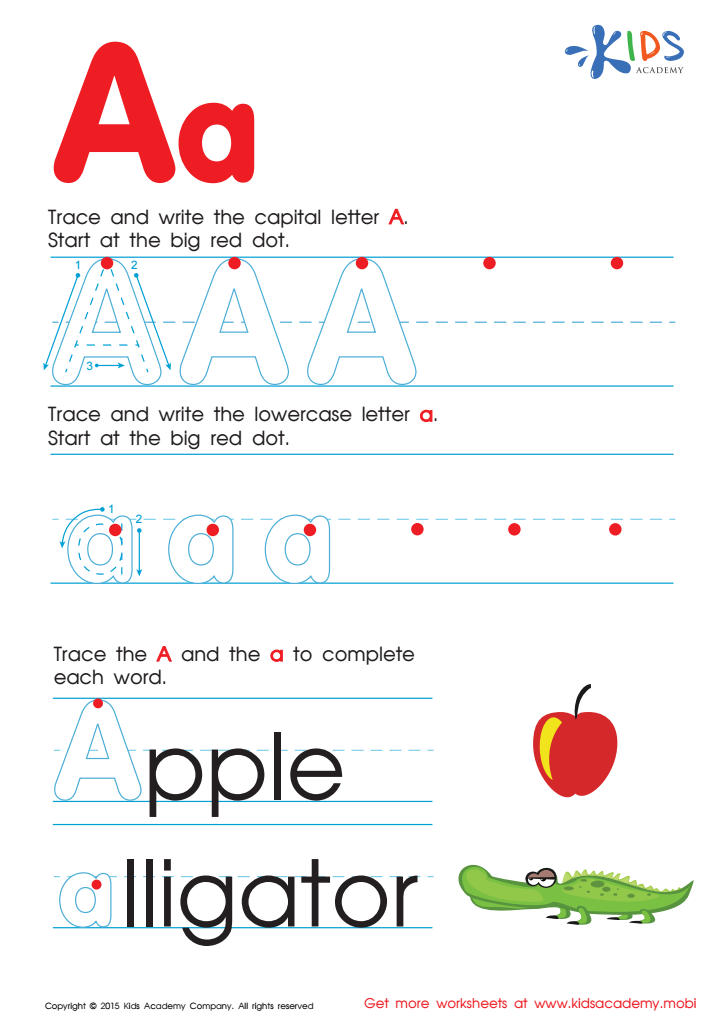
Letter A Tracing Page
Trace and write the letter "A"! Start with the big red dot, then do the capital and lowercase versions. Then write it again with two words - apple and alligator. Download more tracing worksheets at Kids Academy.
 Assign to My Students
Letter A Tracing Page
Worksheet
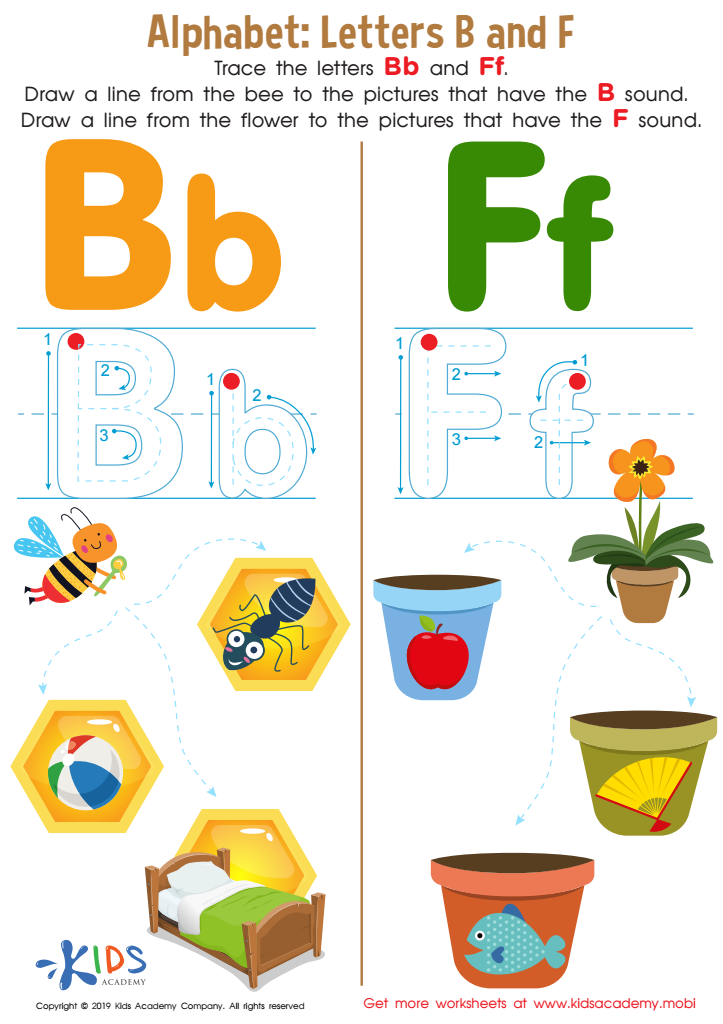
Letters B and F Tracing Worksheet
Does your kid know the letters B and F? This tracing sheet helps them practice by tracing each letter, then drawing a line from a bee and a flower to related words. Recognizing words with pictures develops a great skill, and students will master it in no time!
Letters B and F Tracing Worksheet
Worksheet
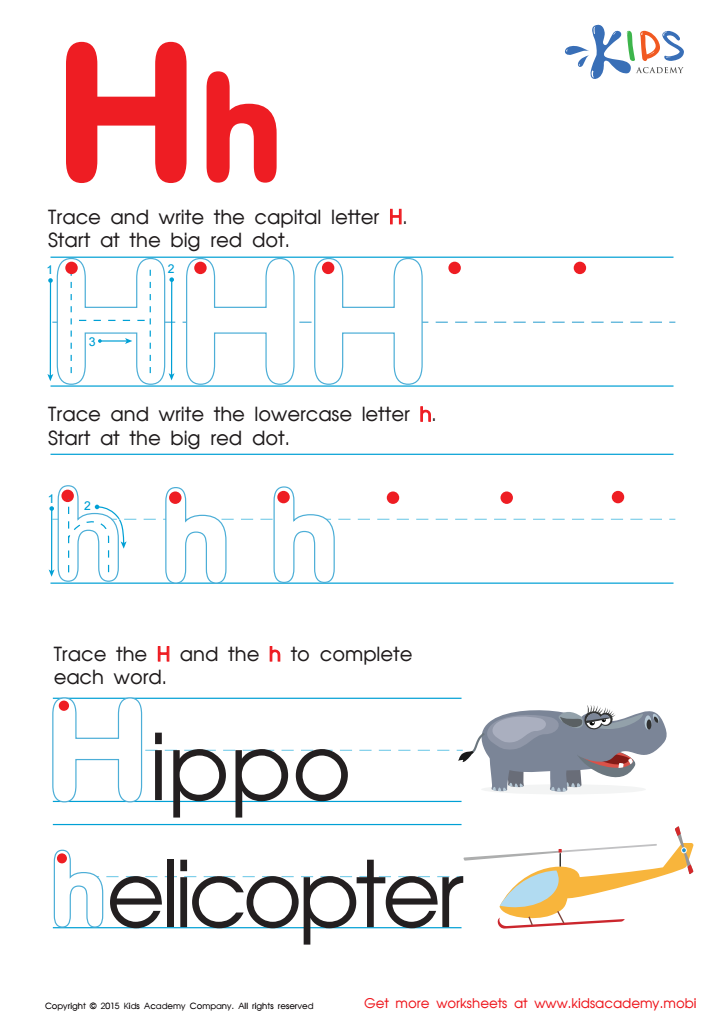
Letter H Tracing Page
Trace the letter "H", then practice writing its lowercase form. Finally, choose your favorite form of transport and ride away! Get our worksheets to make learning fun and easy.
Letter H Tracing Page
Worksheet
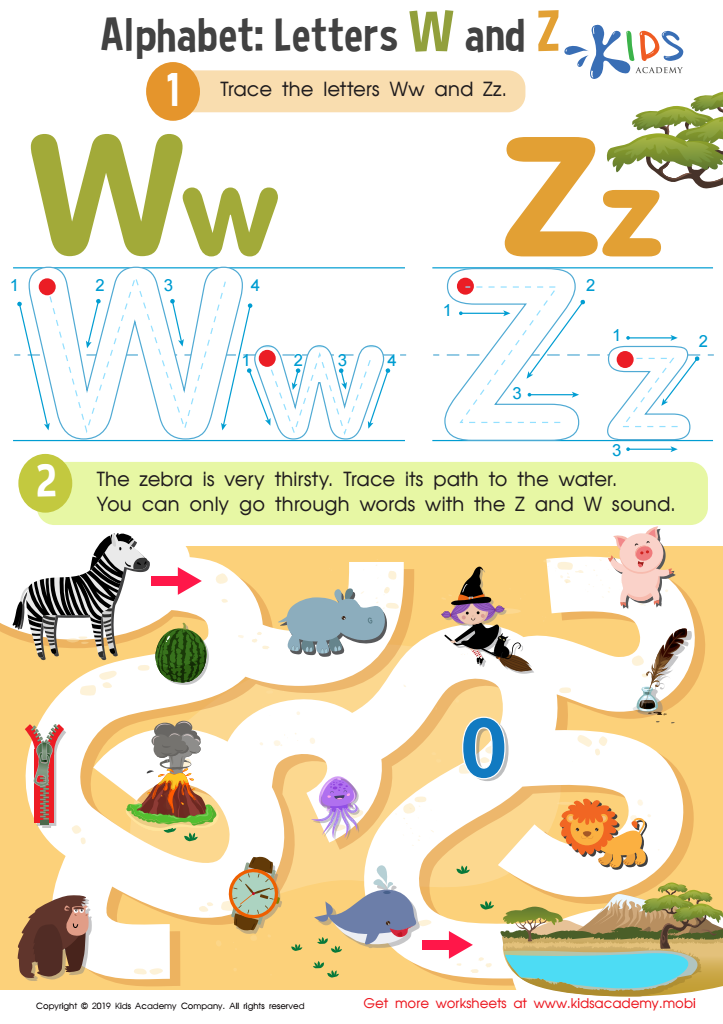
Letters W and Z Tracing Worksheet
Kids will go on a safari exploration of letters W and Z with this worksheet. Students will trace «W» and «Z» and then help the zebra find their watering hole, only following the path of the «W» and «Z» words among many others. It'll be a fun learning activity!
Letters W and Z Tracing Worksheet
Worksheet
Join Kids Academy for Free
Who is primarily going to use this learning content?







Writing practice, including tracing letters, is crucial for 4-year-olds because it lays the foundation for essential literacy skills. At this age, children are in a critical period of cognitive and motor development where they can benefit immensely from structured activities. Tracing letters helps improve fine motor skills by strengthening the small muscles in their hands and fingers, which are essential for writing. Beyond motor skills, it enhances hand-eye coordination and precision.
Furthermore, tracing letters introduces children to the alphabet, allowing them to become familiar with the shapes and sounds of letters. This familiarity is fundamental for later reading and writing proficiency. As children trace, they also begin to understand the left-to-right directionality of writing, a key component of English literacy.
Moreover, regular practice fosters a sense of achievement and confidence. Completing a tracing task gives children tangible evidence of their progress, motivating them to tackle more complex writing activities later on. It also encourages attention to detail and focus, skills crucial for academic success.
For parents and teachers, incorporating letter tracing into daily routines can offer a structured yet enjoyable way for children to develop foundational skills. By investing time in tracing activities, adults are supporting children's long-term educational journey, making early literacy experiences both positive and effective.








