Visual discrimination skills Upper & Lowercase Letters Worksheets for 4-Year-Olds
4 filtered results
-
From - To
Boost your 4-year-old's learning journey with our Visual Discrimination Skills Upper & Lowercase Letters Worksheets! Designed to enhance early literacy skills, these engaging activities help children recognize, differentiate, and match uppercase and lowercase letters. Our worksheets are colorfully illustrated and crafted to captivate young minds, making learning both fun and effective. Perfect for home or classroom settings, they support foundational reading abilities and foster attention to detail. Empower your preschooler’s alphabet mastery and visual acuity—explore our collection to give them the confidence they need for future academic success! Download now and watch your child thrive.
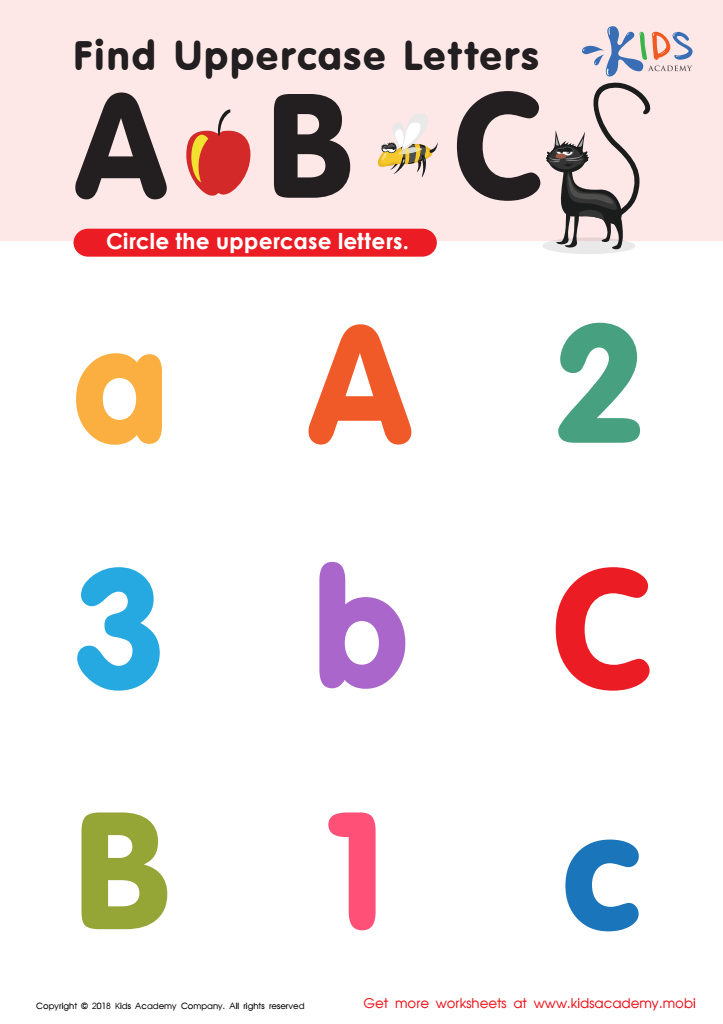
Find Uppercase Letters A, B, and C Worksheet
 Assign to My Students

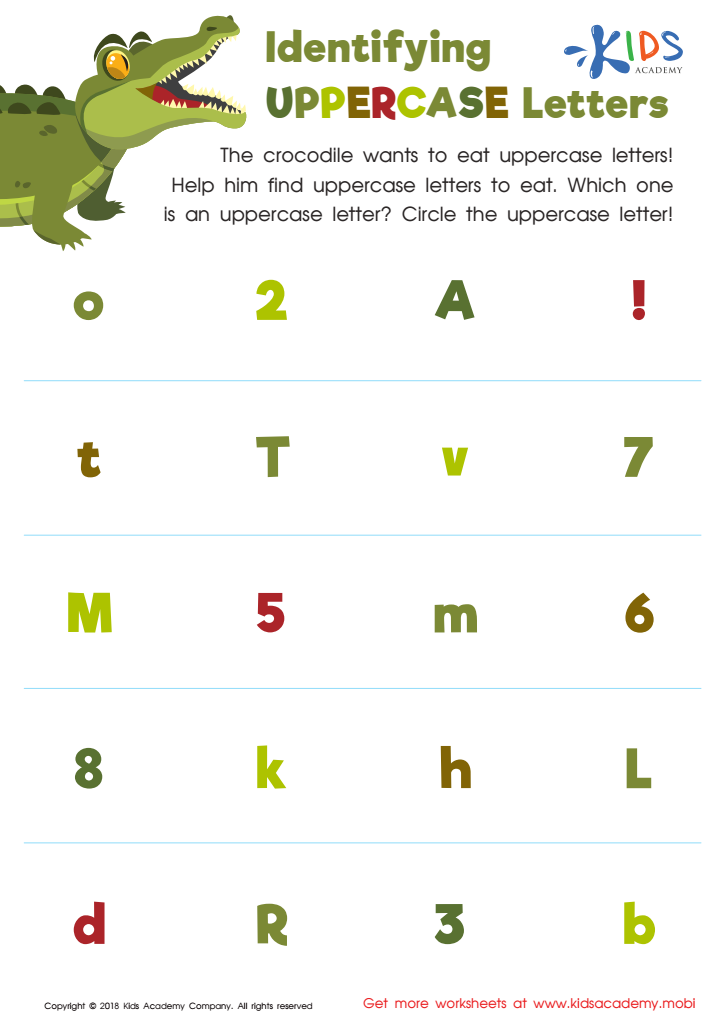
Identifying Uppercase Letters Worksheet
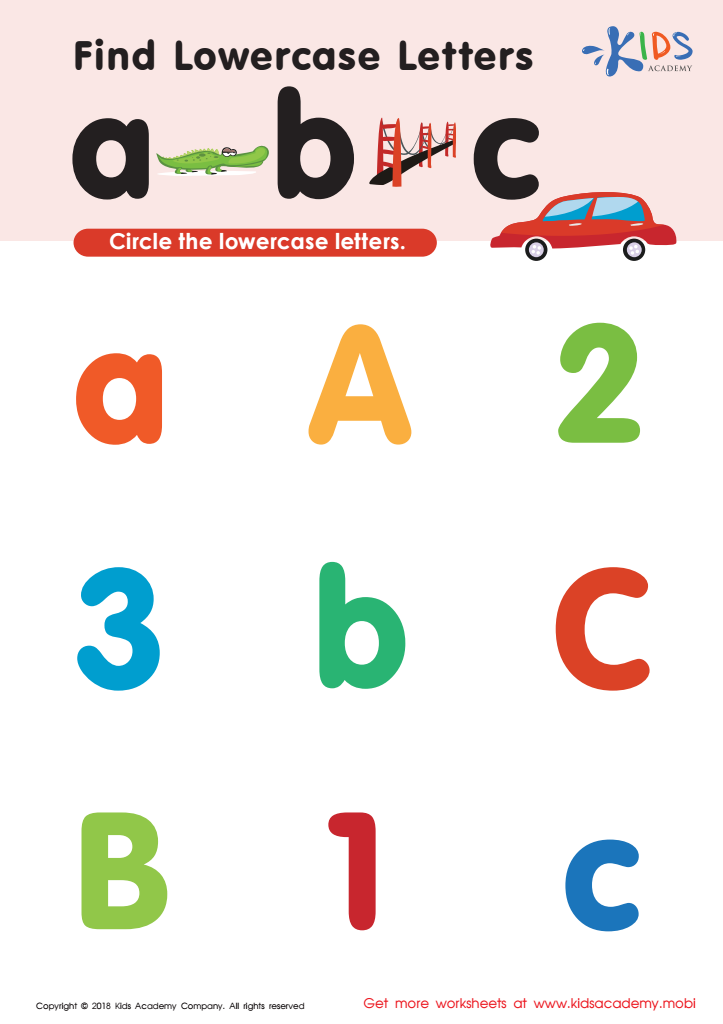
Find lowercase letters a b c Worksheet
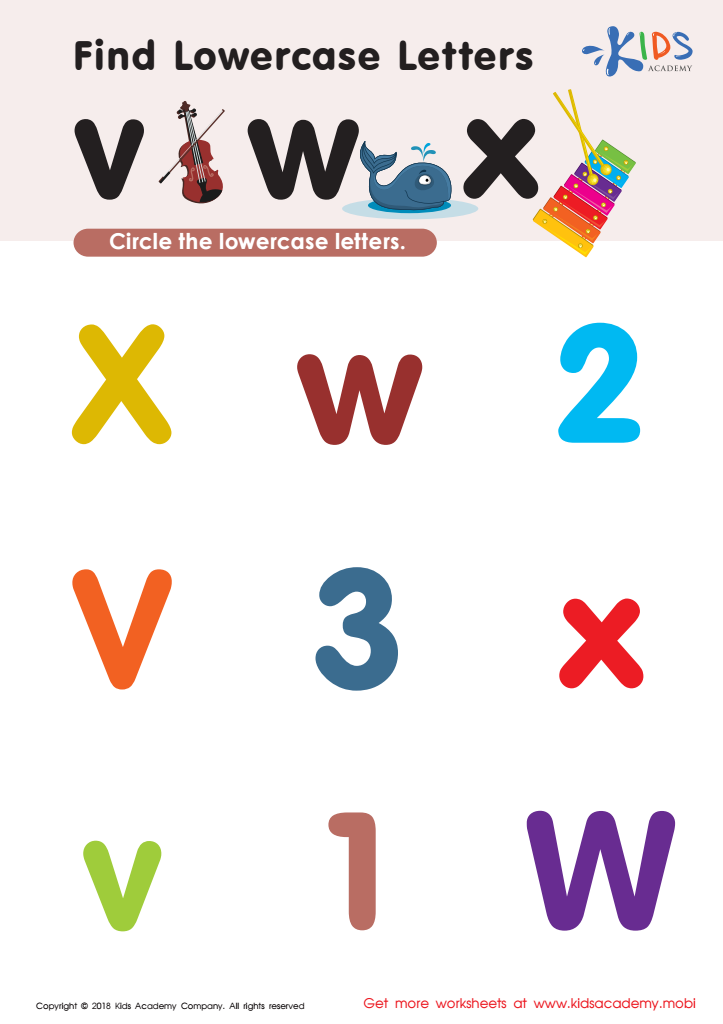
Find Lowercase Letters v w x Worksheet






Visual discrimination skills, particularly in recognizing upper and lowercase letters, are crucial for four-year-olds as they lay the foundation for effective reading and writing. These skills enable children to identify differences and similarities between letters, which is essential for literacy development. When children know how to distinguish uppercase from lowercase letters, they learn to decode text more effectively, facilitating smoother reading experiences. This recognition also supports more accurate spelling and writing, as they can properly use and form both upper and lowercase letters.
Early childhood education should emphasize these skills because this is a critical period for cognitive development. Children who develop strong visual discrimination skills tend to excel academically as they progress through school. They find it easier to grasp more complex literacy concepts, such as grammar and sentence structure, early on.
Moreover, mastering these skills boosts confidence and fosters a love for learning. When young children successfully identify and use upper and lowercase letters, they often feel a sense of accomplishment. This positive reinforcement encourages a proactive attitude toward education, making them more engaged and motivated learners. Therefore, parents and teachers should prioritize the development of visual discrimination skills to ensure children build a strong educational foundation during these formative years.







