
Alphabetical understanding Worksheets for 4-Year-Olds
3 filtered results
Difficulty Level
Grade
Age
-
From - To
Subject
Activity
Standards
Unlock your child's literacy potential with our "Alphabetical Understanding Worksheets for 4-Year-Olds." Specially crafted for young learners, these fun and engaging printable activities help kids master letter recognition, phonics, and alphabetical order. These worksheets are designed to blend education with play, making learning enjoyable and effective. Perfect for at-home practice or classroom use, each sheet provides colorful and interactive exercises to keep your little one captivated. Teach foundational skills that pave the way for reading and writing success. Download now and watch your child's alphabet knowledge soar with confidence! Suitable for preschoolers, parents, and educators.
Favorites
With answer key
Interactive
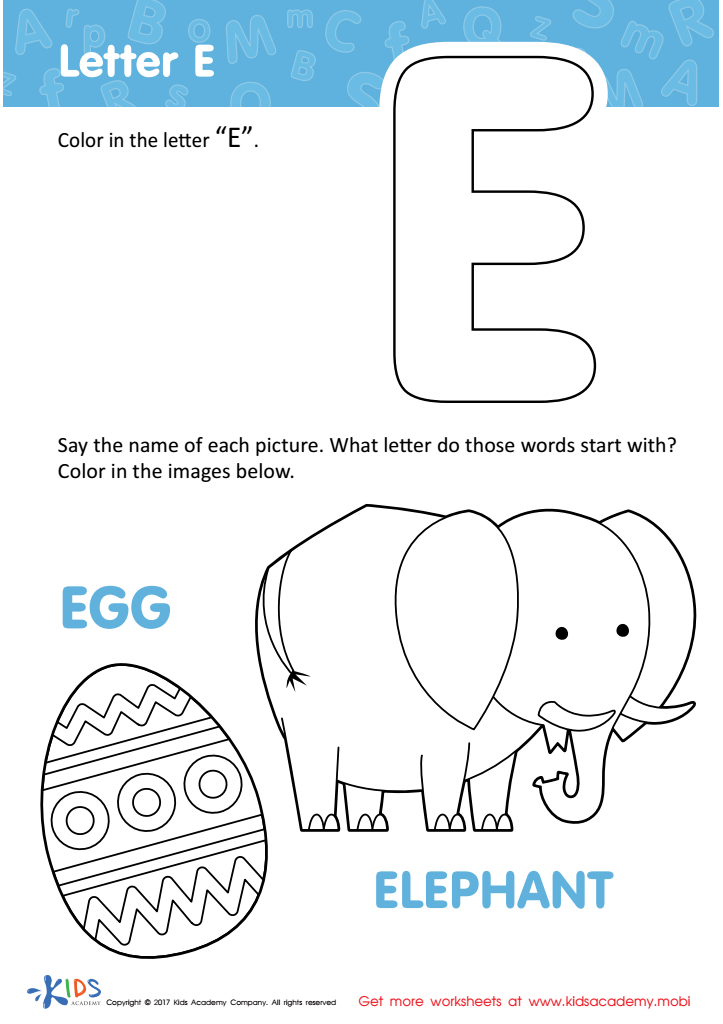
Letter E Coloring Sheet
Coloring pages are great for teaching kids the alphabet and words! This "E" page features a cute elephant and Easter egg. Kids will love it and learn the letter "E" at the same time. 80 words
Download (PDF)
 Assign to My Students
Assign to My Students
Letter E Coloring Sheet
Worksheet
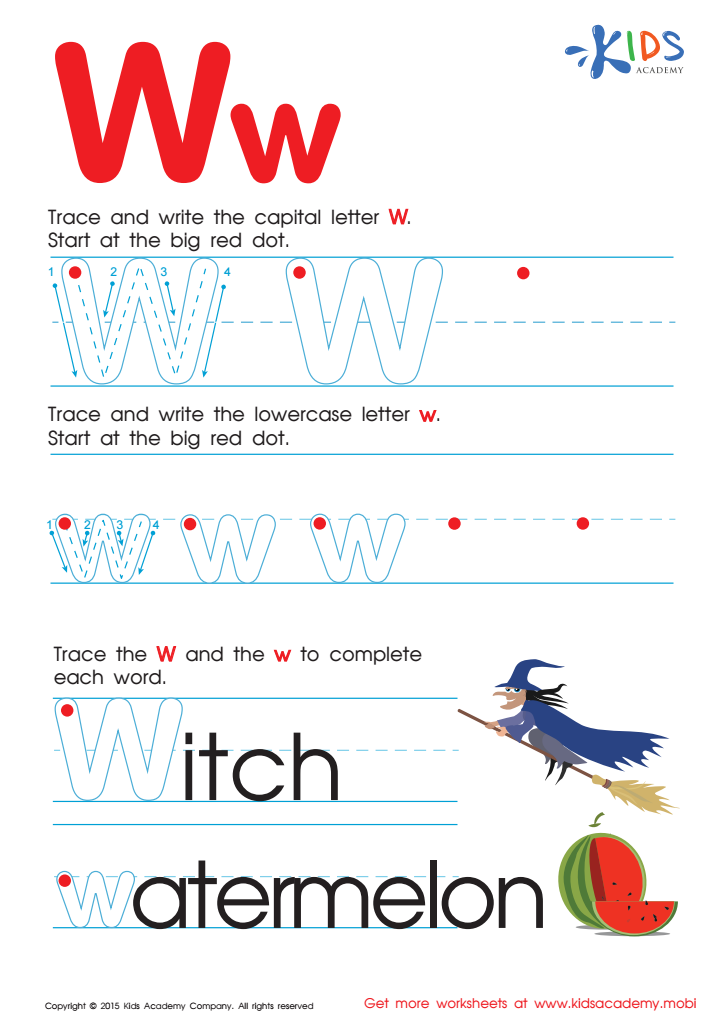
Letter W Tracing Page
Trace and write the capital and lowercase letter W with this free letter tracing worksheet by Kids Academy. Complete the words "Witch" (capital) and "watermelon" (lowercase). Check out our other kindergarten alphabet worksheets!
Letter W Tracing Page
Worksheet
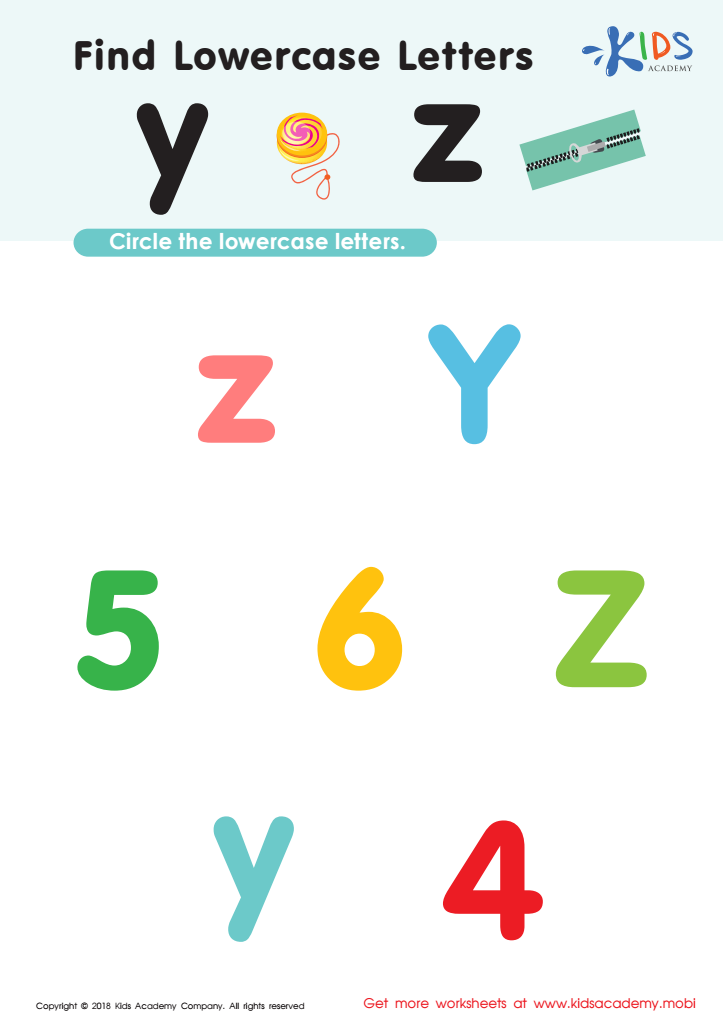
Find Lowercase Letters y z Worksheet
Help your kid learn the alphabet. Before they can move on to words and reading, they must first know the lower and uppercase letters. Show them how to find the letters y and z in this worksheet, which is filled with uppercase letters and numbers. Together, find and circle them.
Find Lowercase Letters y z Worksheet
Worksheet
Join Kids Academy for Free
Who is primarily going to use this learning content?





Alphabetical understanding forms the cornerstone of early literacy and is critically important for 4-year-olds. At this age, children are in a developmental stage where they are naturally curious and more able to absorb new information, making it an ideal time to introduce foundational skills like the alphabet.
First, knowing the alphabet helps children recognize letters in their names and everyday settings, thereby fostering a sense of familiarity and comfort with printed words. This early exposure not only sparks an interest in reading but also builds confidence.
Second, alphabetical knowledge is directly linked to phonemic awareness, the ability to hear, identify, and play with individual sounds in spoken words. Recognizing the association between letters and sounds is essential for decoding words, which is a critical skill for reading proficiency.
Third, early mastery of the alphabet supports vocabulary development. As children learn to identify letters and their corresponding sounds, they begin to form words, enriching their language skills and enabling more effective communication.
Moreover, research shows that early alphabetical understanding correlates with later academic success. Children who enter school with solid letter-recognition skills are more likely to become proficient readers. This foundational knowledge isn't just about rote memorization; it paves the way for cognitive development, critical thinking, and a lifelong love of learning.
Parents and teachers caring about alphabetical understanding is, therefore, an investment in a child's educational journey and overall development.








