
Basic math abilities Worksheets for 4-Year-Olds
3 filtered results
Difficulty Level
Grade
Age
-
From - To
Subject
Activity
Standards
Discover our engaging Basic Math Abilities Worksheets designed specifically for 4-year-olds! These interactive worksheets provide a fun and educational way for young learners to develop essential math skills. Through playful exercises, children will explore numbers, counting, shapes, and simple addition and subtraction. Our carefully crafted activities foster early problem-solving and critical thinking while keeping kids entertained. These printable resources are perfect for parents and teachers seeking to enhance children's math foundations at home or in the classroom. Make learning an exciting adventure as your little ones gain confidence in their math abilities—perfect for laying the groundwork for future academic success!
Favorites
With answer key
Interactive
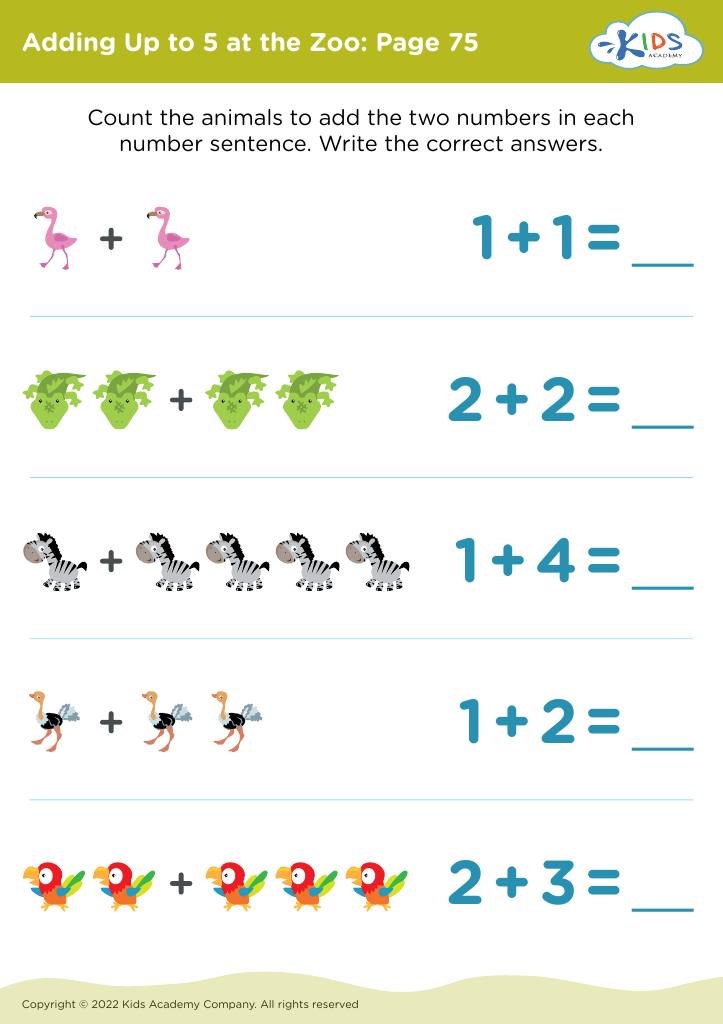
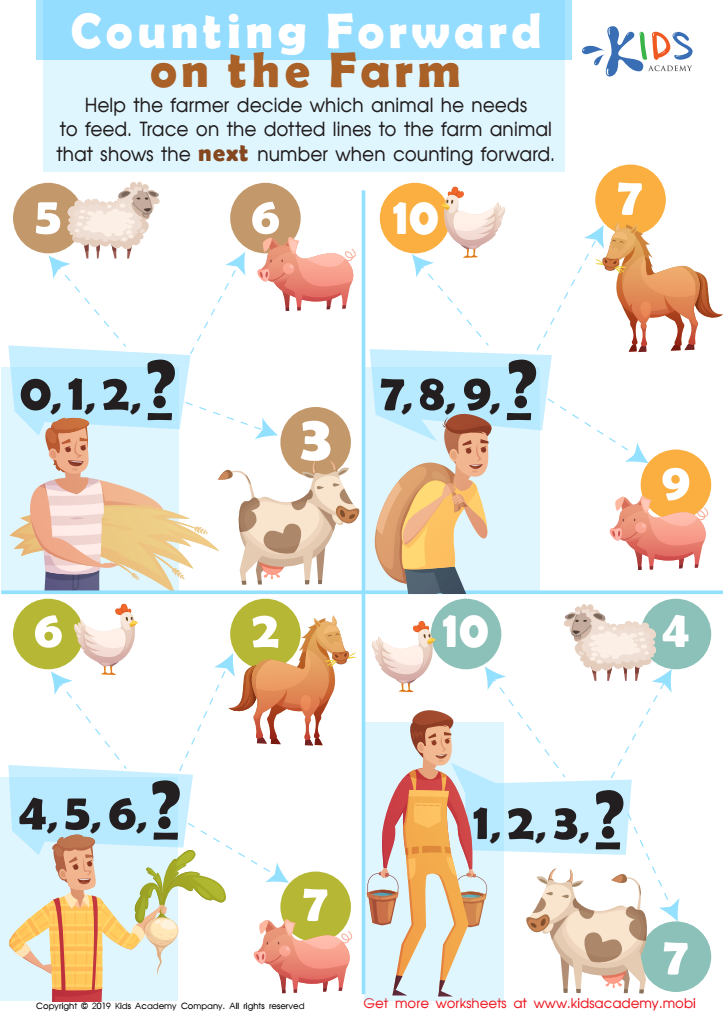
Counting Forward On the Farm Worksheet
Help your child practice counting with this fun worksheet. Have them help a farmer feed the right animal by counting on from a starting point. This activity will help them build number line thinking and refine fine motor skills.
 Assign to My Students
Counting Forward On the Farm Worksheet
Worksheet
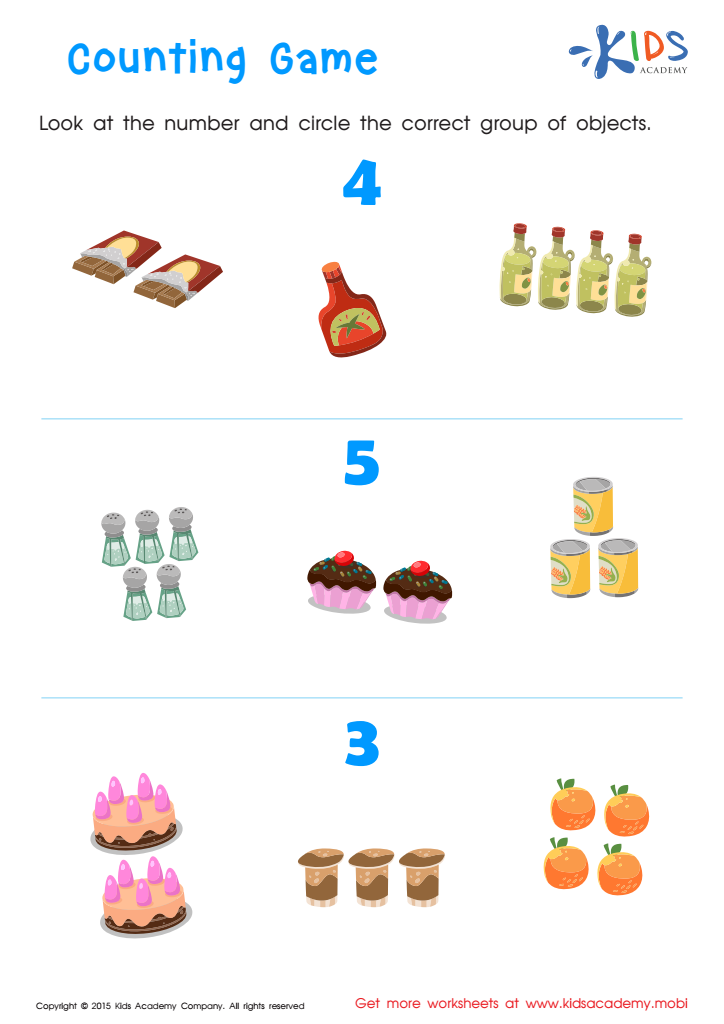
Counting Worksheet
Kids can connect printed numbers to groups of objects on this worksheet, helping them learn math by visually seeing item groups. Give your preschooler a fun, interactive way to learn counting!
Counting Worksheet
Worksheet
Join Kids Academy for Free
Who is primarily going to use this learning content?








Basic math abilities are crucial for 4-year-olds as they act as the foundation for future academic success and lifelong skills. At this age, children begin to develop essential numeracy concepts, such as counting, recognizing shapes, and understanding patterns. These skills are not merely academic; they play a vital role in everyday life, enhancing problem-solving abilities and critical thinking.
Caring about basic math abilities at this stage can significantly influence a child's confidence and attitude toward learning. When children become familiar with numbers and mathematical concepts early on, they are more likely to feel comfortable tackling more complex math problems later. Furthermore, incorporating math into daily routines—such as counting objects, discussing time, or measuring while cooking—makes learning engaging and relatable.
For parents and teachers, nurturing these skills is also about promoting cognitive development. Engaging children with math-rich environments encourages curiosity and fosters an exploration mentality. Moreover, children who develop strong foundational math skills are often better equipped for real-life challenges, from managing money to solving spatial puzzles. Therefore, creating an enriching learning environment is essential for ensuring children are ready not just for school, but for life.








