
Develop problem-solving abilities Worksheets for 4-Year-Olds
3 filtered results
Difficulty Level
Grade
Age
-
From - To
Subject
Activity
Standards
Nurture your child's cognitive skills with our "Develop Problem-Solving Abilities Worksheets for 4-Year-Olds," designed to foster logical thinking and creativity. Our engaging, age-appropriate activities feature fun puzzles, matching games, and pattern recognition exercises, all aimed at building foundational problem-solving skills. These printable worksheets are perfect for at-home learning or classroom use, offering young learners a stimulating and enjoyable way to enhance their critical thinking abilities. Encourage your child's curiosity and watch their confidence grow as they successfully tackle new challenges! Begin your child's journey to becoming a confident problem solver today with Kids Academy.
Favorites
With answer key
Interactive
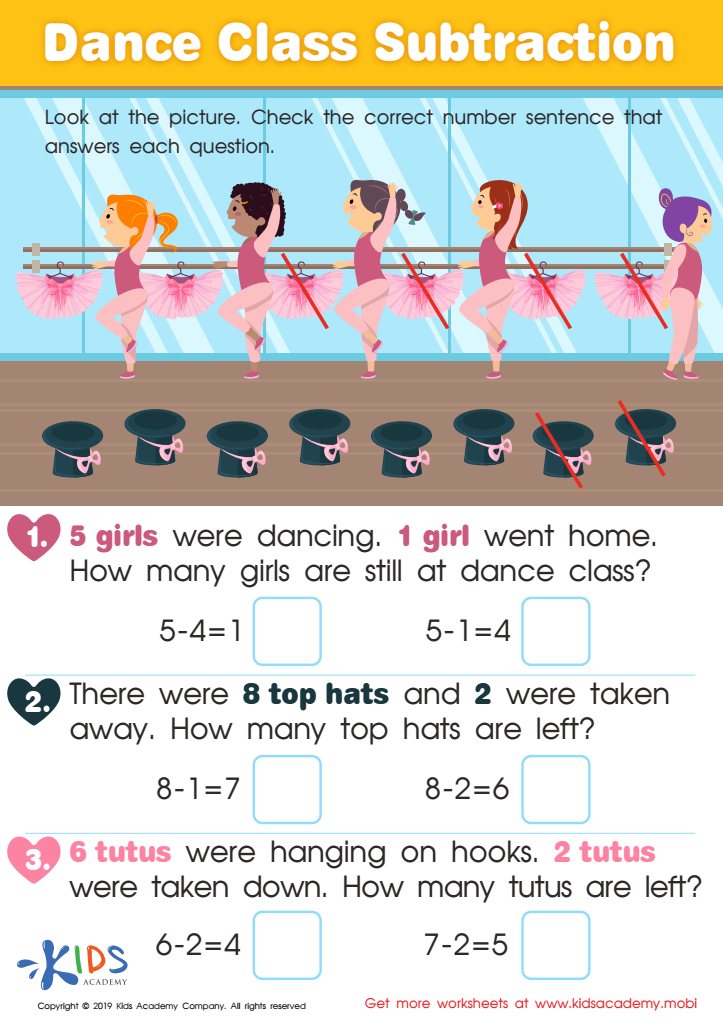
Dance Class Subtraction Worksheet
Dancing is an excellent form of exercise, and some people dance professionally, expressing their feelings through body movements. Help your kids identify the type of dance in the picture and answer the word problems in this worksheet. Encourage them to check the correct number sentence that answers the question.
 Assign to My Students
Dance Class Subtraction Worksheet
Worksheet
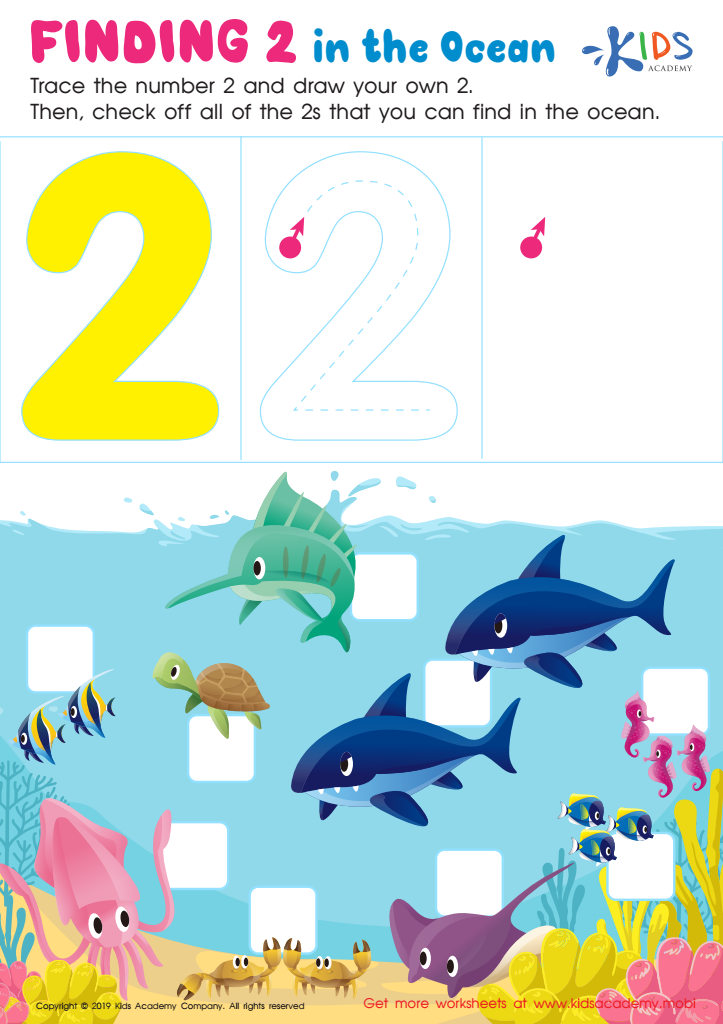
Finding 2: In the Ocean Worksheet
Kids start their math journey with basic numbers. Finger counting, number representation with pictures and this worksheet help build number sense. Kids trace lines and dots to write the number two and identify groups of two sea creatures for easy success and to feel proud of their math skills.
Finding 2: In the Ocean Worksheet
Worksheet
Join Kids Academy for Free
Who is primarily going to use this learning content?







Developing problem-solving abilities in 4-year-olds is essential for their growth and long-term success. At this age, children's brains are highly receptive and developing rapidly, making it the perfect time to cultivate foundational cognitive skills. Problem-solving abilities encourage critical thinking, reasoning, and perseverance, which are critical for academic achievements and everyday tasks.
For parents, fostering problem-solving skills helps children become more independent and resilient. These skills enable young ones to navigate challenges, both big and small, without undue frustration. By teaching children how to break down problems into manageable parts, parents can help them learn patience and creativity in finding solutions. This kind of support strengthens their self-esteem and confidence, as kids begin to understand their own competency and capacity for growth.
From a teacher's perspective, student problem-solving skills make the classroom environment more harmonious and conducive to learning. Children who can think through problems independently are often better communicators and collaborators, benefiting not just themselves but also their peers. Teachers can imbue these skills through hands-on activities, games, and discussions that require children to strategize, negotiate, and reflect on outcomes. This proactive approach sets a strong foundation for future learning, fostering well-rounded, adaptive children ready to face various academic and social challenges.








