Number comparison skills Worksheets for 4-Year-Olds
3 filtered results
-
From - To
Introduce your 4-year-old to the world of number comparison with our engaging worksheets! These specially designed activities from Kids Academy are perfect for developing early math skills. Each worksheet helps children learn to compare numbers using fun and interactive exercises that include matching, counting, and identifying which numbers are bigger or smaller. Our worksheets are crafted to be age-appropriate, ensuring that young learners grasp foundational concepts with ease and confidence. Prepare your child for future math success while keeping them entertained with our vibrant, educational printables. Discover the joy of learning with Kids Academy today!
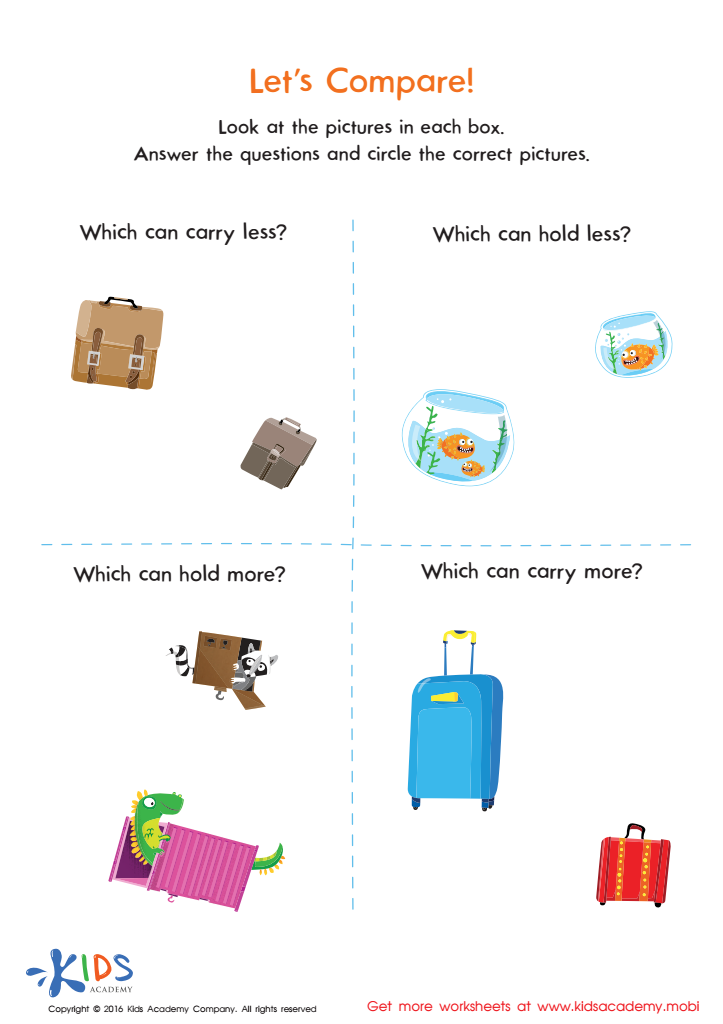
Let's Compare Worksheet: Big or Small
 Assign to My Students
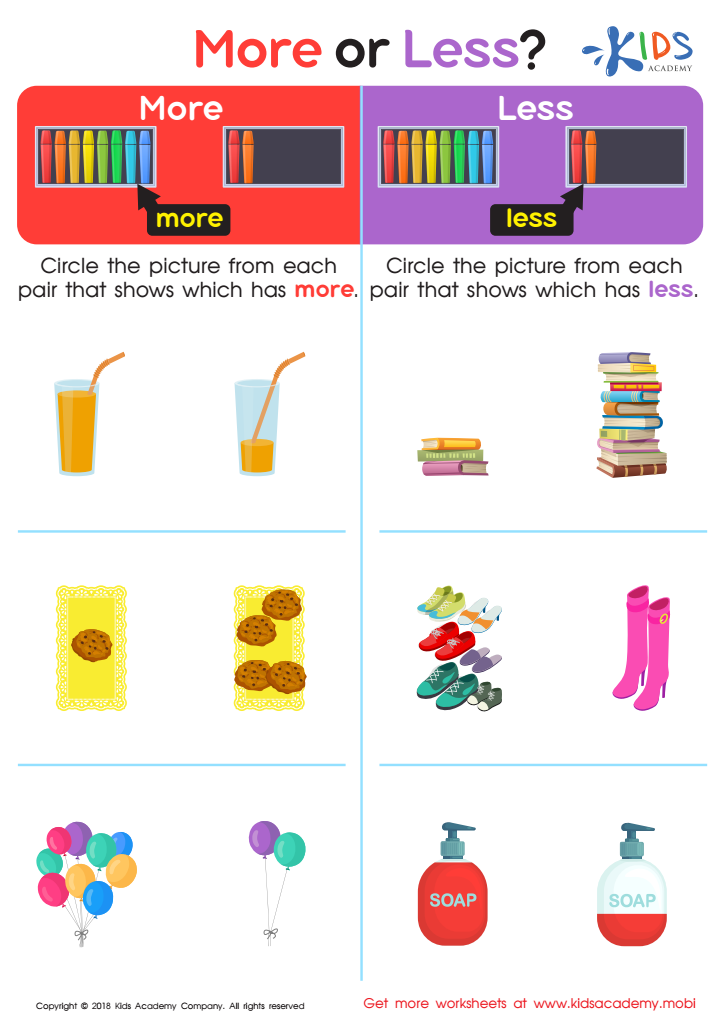
More or Less? Worksheet
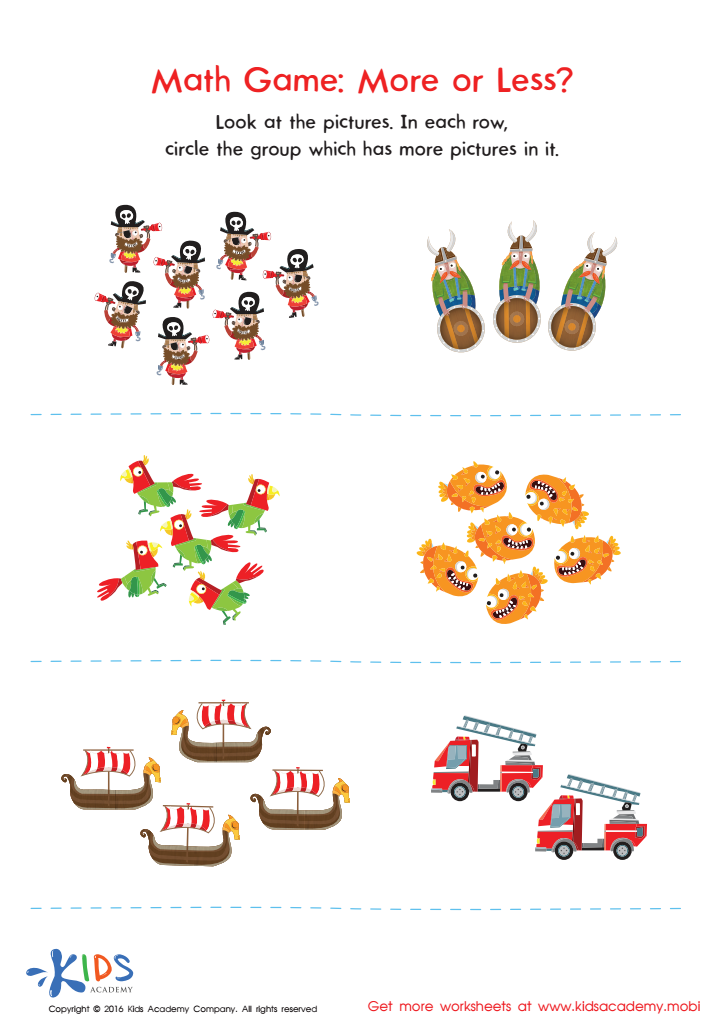
More or Less Worksheet







Number comparison skills are foundational to early mathematical understanding for 4-year-olds, and both parents and teachers should prioritize their development. These skills involve comparing numbers to determine which is greater, smaller, or if they are equal. Mastering number comparison fosters critical thinking and problem-solving abilities, essential for academic success in later years.
Firstly, number comparison skills are crucial for everyday practical tasks, such as determining which of two groups has more items or understanding basic quantities. This comprehension strengthens a child's confidence and independence in daily activities.
Secondly, these skills support the development of more advanced math concepts. Recognizing numerical differences aids in learning addition, subtraction, and even multiplication or division in the future. Children who are proficient in comparing numbers often find it easier to grasp math concepts in a formal educational setting.
Moreover, developing number comparison skills enhances cognitive development. This skillset encourages logical reasoning, pattern recognition, and analytical thinking. It stimulates brain areas responsible for higher-order thinking processes.
Lastly, number comparison is a part of standardized early childhood assessments. Ensuring a child is proficient aids in achieving these milestones, reflecting positively on their overall development. By focusing on these skills, parents and teachers lay a robust foundation for future academic achievement and a lifelong love of learning.








